 how-to
Does Homeowners Insurance Cover Rekeying Locks?
Table of Contents
- What Rekeying a Lock Means
- Does Homeowners Insurance Cover Rekeying Locks?
- Does Homeowners Insurance Cover Changing Locks After a Break-In?
- Rekeying vs. Changing Locks: Coverage Differences
- When Should You Rekey Your House Locks?
- How Much Does It Cost to Rekey a House?
- How to Verify Coverage and File a Claim
- Conclusion
- Frequently Asked Questions
Last Updated: October 20, 2026
What Rekeying a Lock Means
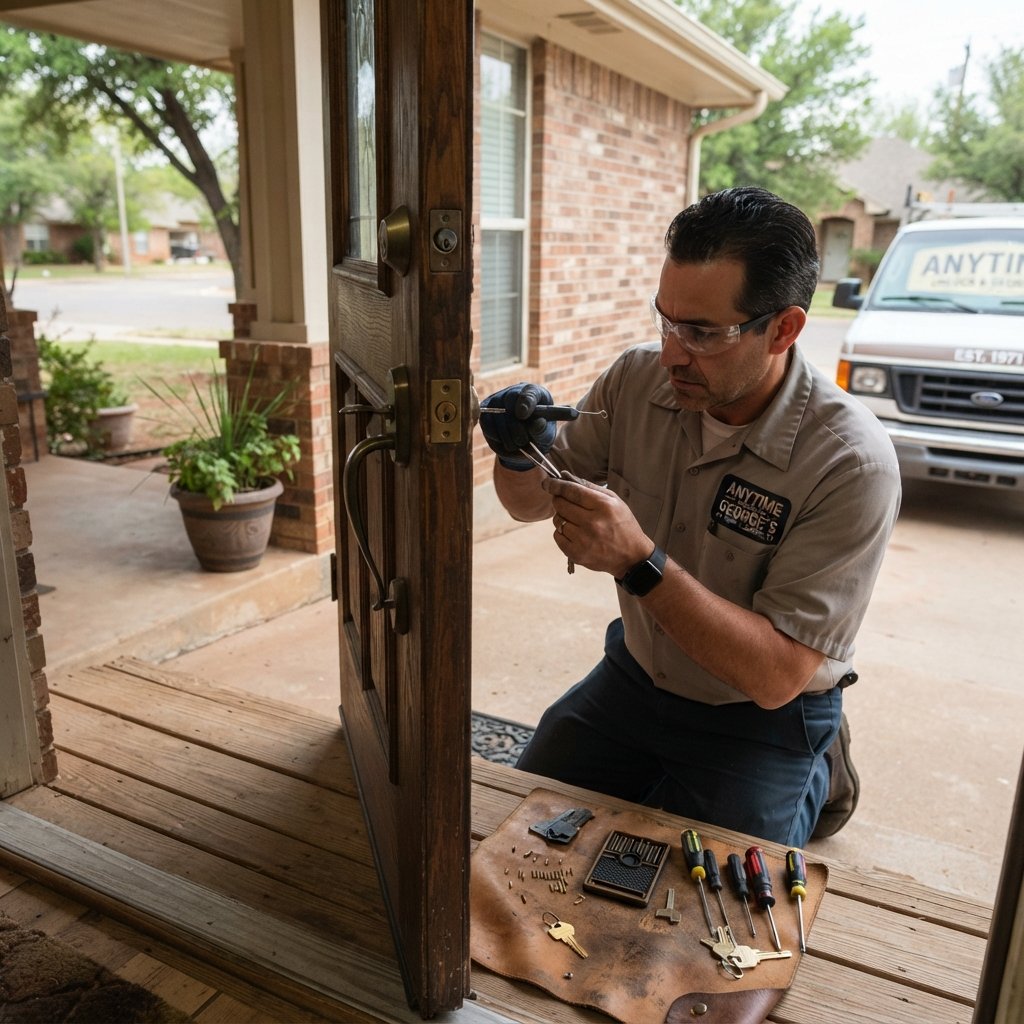
Rekeying a lock changes the internal pins inside your lock cylinder so your old keys no longer work. A locksmith removes the cylinder, swaps the pins, and reinstalls it. The lock stays in place; only new keys cut to the new pin configuration will open it.
Rekeying is useful when you move into a new home, lose your keys, or want to block an old tenant or previous owner. It's faster and cheaper than swapping out all your locks.
It takes one visit and costs less than new hardware, since you keep your existing locks and knobs.
Does Homeowners Insurance Cover Rekeying Locks?
The short answer: does homeowners insurance cover rekeying locks? A standard homeowners policy (HO-3 or HO-5 form) almost never pays for routine rekeying. It's treated as maintenance or a preventive security upgrade, and homeowners insurance responds to sudden, accidental, direct physical loss, fire, windstorm, hail, theft, vandalism, not upkeep. The answer changes when a covered event prompted the rekey.
To decide whether your situation is claimable, run it through this scenario framework to separate "call your insurer" from "call a locksmith."
| Scenario | Likely coverage outcome | Why |
|---|---|---|
| Moving into a new home | Not covered | No loss occurred; rekeying is preventive maintenance |
| Keys lost, no break-in | Usually not covered | No direct physical loss to insured property |
| Keys stolen, no break-in | Usually not covered; check endorsements | Theft of keys is not damage to the dwelling |
| Burglary with forced entry and damaged lock or frame | Damage may be covered under dwelling coverage | Forced entry is a covered peril (theft/burglary) and the lock is part of the dwelling |
| Burglary where entry was made with a key | Gray area; rekeying may be argued as restoring pre-loss condition | Depends on policy language and adjuster interpretation |
| Vandalism that damaged the lock | Damage may be covered | Vandalism is a named peril on most forms |
| Accidental lock damage (e.g., key snapped, cylinder jammed) | Usually not covered unless a covered peril caused it | Wear and tear and mechanical breakdown are excluded |
Which policy section would pay? If anything is covered, it is almost always Coverage A (Dwelling), because locks and door hardware are part of the structure. Coverage C (Personal Property) generally does not apply to the lock itself, and Personal Liability (Coverage E) is irrelevant to rekeying.
The event-triggered distinction matters. If a burglar kicked in your door and shattered the strike plate, the damaged lock and frame are a property-damage claim. If nothing was damaged and you simply want new keys because an old roommate moved out, that is prevention, and prevention is yours to fund.
One more distinction: a home warranty or home service contract is not homeowners insurance. Those products sometimes include lock or locksmith services as a convenience benefit, but they are service contracts with their own limits, trade-call fees, and exclusions.
Does Homeowners Insurance Cover Changing Locks After a Break-In?
If someone breaks into your home, your homeowners insurance may cover damage to your locks and doors.
If a burglar forced your door open and damaged the lock or frame, that's property damage, and your policy typically covers repairs or replacement. You'd file a claim for the broken door, damaged frame, or destroyed lock hardware.
Rekeying alone after a break-in is less likely to be covered. Insurance pays for repairing damage, not for changing locks as a security precaution; if the lock wasn't damaged, rekeying is optional work you choose to do.
However, if the burglar used a key to enter, some policies may view rekeying as necessary to restore your home to its pre-loss condition. This is a gray area that depends on your policy language and your insurer's interpretation.
File a claim for any physical damage to locks, doors, or frames. Be clear about what was damaged and what was stolen. Document everything with photos. Your insurance adjuster will determine what's covered.
Rekeying vs. Changing Locks: Coverage Differences
Rekeying keeps your existing lock hardware and changes only the internal pins. It's less expensive and faster. Your insurance typically does not cover rekeying as routine maintenance.
Changing locks means removing the old lock and installing a new one. It's more expensive but gives you brand-new hardware. If the old lock was damaged during a break-in, insurance may cover the replacement cost.
The coverage gap exists because insurance distinguishes between repair and prevention. Replacing a damaged lock is a repair. Rekeying an undamaged lock is prevention.
Some homeowners replace locks instead of rekeying after a break-in because they want new hardware anyway; if the old lock is damaged, insurance may cover part of the replacement.
| Situation | Rekeying Coverage | Lock Replacement Coverage |
|---|---|---|
| Lost keys (no damage) | Not covered | Not covered |
| Break-in with damaged lock | Not covered | May be covered |
| Break-in with undamaged lock | Not covered | Not covered |
| Stolen keys (no damage) | Not covered | Not covered |
| Moving to new home | Not covered | Not covered |
When Should You Rekey Your House Locks?
Moving into a new home is the most common reason. You don't know who has copies of the old keys. Previous owners, real estate agents, contractors, and neighbors might have access. Rekeying ensures only your keys work.
Lost keys are another reason: you can't know who might find them, and rekeying prevents anyone with those keys from entering.
Stolen keys require rekeying for the same reason. A thief might use stolen keys to break in later. Rekeying immediately removes that risk.
After a break-in or burglary, rekeying makes sense if you suspect the intruder had a key or want to change your security setup. Even if insurance covers the damage, rekeying is often your responsibility.
When a roommate or tenant moves out, rekeying prevents them from returning with old keys.
You don't need to rekey just because time has passed. Locks don't wear out or become less secure with age. Rekey only when your security situation changes.
How Much Does It Cost to Rekey a House?
Rekeying is a locksmith service, which is exactly why the claim-economics question matters: a small bill is often below the deductible, and filing a claim can cost more in the long run than paying cash.
Typical U.S. price ranges. National averages for residential rekeying generally fall in these bands, though every market and every locksmith differs:
- Single lock rekey: roughly $40 to $120 per lock, with many homeowners paying around $50 to $80 for a standard pin-tumbler cylinder.
- Whole-house rekey (three to four locks): commonly $100 to $250 when all locks are keyed alike in one visit.
- High-security or restricted-keyway cylinders: often $100 to $200 or more per lock, because the pins and key blanks are proprietary.
- Smart locks and electronic deadbolts: rekeying may not be possible; replacement or reprogramming is the usual path, and costs run higher.
- Service-call or trip fee: frequently $50 to $100 on top of the per-lock price, sometimes waived when bundled with other work.
- After-hours or emergency call: premiums of 50% or more over standard rates are common.
Keying all exterior doors to one key (keyed-alike service) usually adds little to the per-lock price and is the most common add-on homeowners request.
The deductible math. Most homeowners policies carry a deductible of $500 to $2,500, with $1,000 a common choice. Compare that to the bill:
- If your rekey quote is $150 and your deductible is $1,000, filing a claim recovers nothing. You pay the locksmith and keep your claims history clean.
- If a break-in destroyed two locks and a door frame and the repair quote is $1,800 against a $1,000 deductible, the claim may net $800, but weigh that against possible premium consequences.
- If the damage is only slightly above the deductible, paying out of pocket is often considered. A single claim can affect your premium at renewal, and multiple claims in a short window can lead to non-renewal in some states.
What else affects the bill. Number of locks, lock type (standard versus high-security versus smart), condition (corroded or painted-over cylinders take longer), on-site cylinder removal and reinstallation, and travel time. A written estimate before work begins is standard practice and protects you from surprise charges.
NAIC homeowner insurance resources
For an accurate quote, contact Anytime Unlock and George's Key Shop directly. We will assess your locks, confirm how many cylinders need service, and give you a clear estimate before any work starts. Our team has served homeowners since 1971.
How to Verify Coverage and File a Claim
If you think your homeowners insurance might cover rekeying or lock replacement, follow these steps to verify and file a claim.
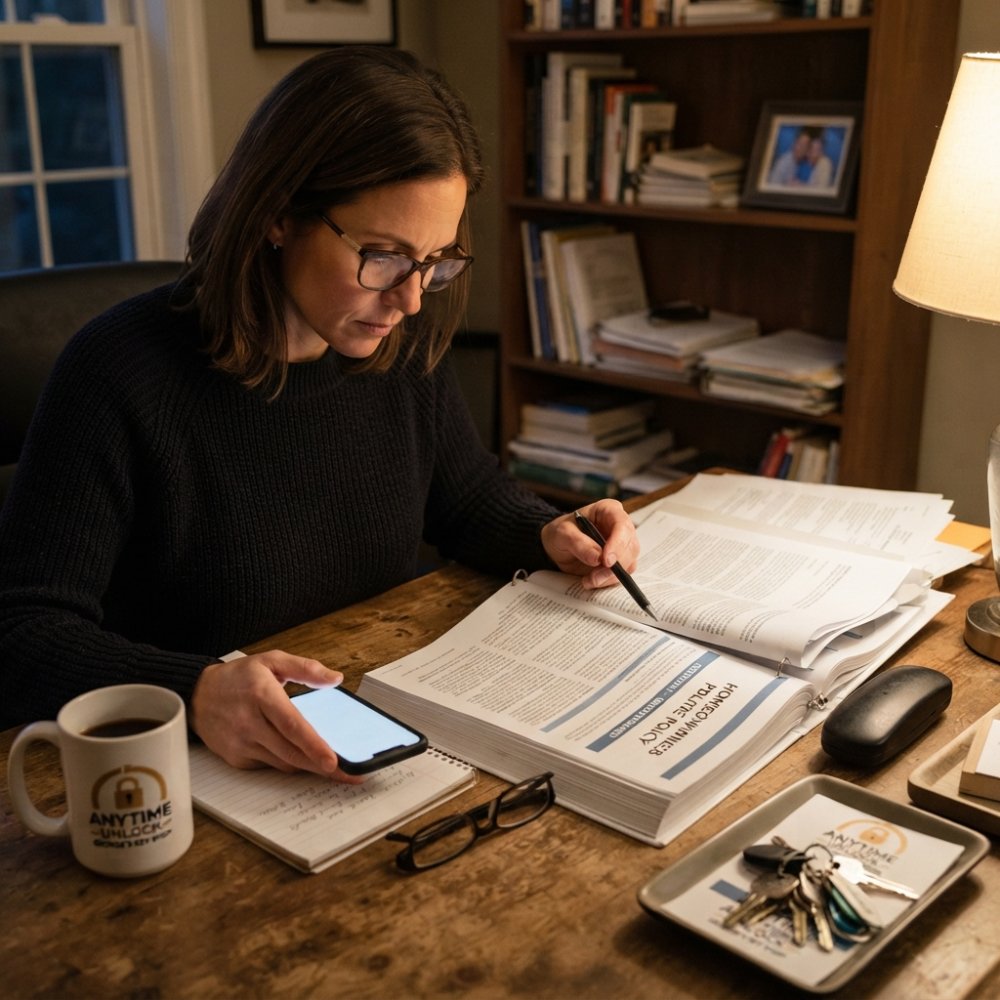
Step 1: Review your policy. Find your homeowners insurance policy document. Look for sections on property coverage, special endorsements, and exclusions.
Step 2: Call your insurance agent. Don't rely on the policy document alone.
Step 4: Contact your insurance company. Call the claims department, report the incident, and detail what happened, what was damaged, and what you're asking them to cover.
Step 5: Submit your claim. Complete the claim form your insurer provides, including photos, receipts, and a specific description of the damage or loss.
Step 6: Wait for the adjuster's decision. An insurance adjuster may visit your home to assess the damage. They'll determine what's covered and what isn't.
Step 7: Appeal if necessary. If your claim is denied and you believe it should be covered, ask your agent to review the denial.
If your insurer denies coverage for rekeying, you'll pay out of pocket, which is why understanding your policy before an incident happens matters.
Conclusion
Most homeowners insurance policies don't cover routine rekeying as a maintenance expense. However, if a break-in damaged your locks or doors, your policy may cover the repair or replacement costs. The key is understanding the difference between damage (covered) and prevention (usually not covered).
When you move into a new home, lose your keys, or experience a break-in, rekeying is often the right security choice. Contact Anytime Unlock and George's Key Shop for a free quote. Our team has provided reliable locksmith services since 1971, including residential rekeying, lock replacement, and emergency access solutions. We'll assess your situation, explain your options, and handle the work with transparent pricing and constant communication until the job is done. Get a free quote today and secure your home with confidence.
Frequently Asked Questions
What does rekeying a lock mean?
Rekeying involves changing the internal pins inside a lock cylinder so that old keys no longer work and new keys do. The lock hardware stays in place; only the mechanism is altered. This is different from replacing the entire lock. Rekeying is often the more affordable option when you need to deny access to previous key holders, such as after moving into a new home or when keys are lost or stolen.
Does homeowners insurance cover rekeying locks?
Most homeowners insurance policies do not cover routine rekeying as a maintenance or preventive measure. However, if rekeying is necessary due to a covered loss, such as a burglary, break-in, or theft of keys, your policy may reimburse the cost. Coverage depends on your specific policy terms, deductible, and whether the incident qualifies as a covered loss. Always review your policy or contact your insurer to confirm.
When should you rekey your house locks?
Rekey your locks after moving into a new home to ensure previous owners or tenants cannot access your property. You should also rekey after a break-in or burglary, if keys are lost or stolen, when a tenant moves out, or if you've given spare keys to contractors or service workers you no longer trust. Regular rekeying as part of a home security upgrade is a preventive measure not typically covered by insurance but worth considering for peace of mind.
How much does it cost to rekey a house?
Rekeying costs depend on the number of locks, lock type, and whether you hire a professional locksmith. For an accurate quote tailored to your home's specific locks and security needs, contact a professional locksmith who can assess your situation and provide current pricing. Many locksmiths offer free estimates before you commit to the service.