 listicle
Alternatives to Calling a Tow Truck for Car Lockout
Table of Contents
- Safe Steps to Try Before Calling for Help
- Roadside Assistance Car Lockout Coverage
- Mobile Locksmith Services vs. Towing
- Understanding Car Lockout Service Cost
- Spare Car Key Options to Prevent Future Lockouts
- Emergency Situations: Children or Pets Locked Inside
- When to Call a Professional Locksmith
- Frequently Asked Questions
Last Updated: October 21, 2026
Safe Steps to Try Before Calling for Help
First, stay calm and check every door and window systematically, sometimes a door you thought was locked isn't, or a window is slightly ajar.
If all entry points are sealed, call someone you trust who has a spare key, often the fastest and cheapest solution, since a friend can reach you before any professional service could arrive.
Check all doors and windows
Walk around your vehicle and press each door handle firmly, don't just tug lightly. Check the trunk too, some vehicles have interior trunk release mechanisms you can reach if the trunk opens even slightly.
This takes five minutes and eliminates the need for a service call in roughly 10-15% of lockouts.
Call a trusted friend or family member with a spare key
If you gave a spare key to someone you know, contact them immediately, they can bring it to your location at no cost, especially if they live or work nearby.
If you have a spare with parents, siblings, or close friends, it's your best first option among alternatives to calling a tow truck for car lockout situations.
Contact your vehicle's manufacturer or dealership
Your manufacturer's customer service line may have model-specific unlocking information. Some dealerships offer emergency key services, but these cost more and take longer since you must visit their location.
This works best if you're near a dealership and can wait; for true emergencies, it's rarely the fastest path.
Roadside Assistance Car Lockout Coverage
Many drivers already pay for lockout help without knowing it. Before paying out of pocket, check your auto insurance, auto club memberships, and credit card or vehicle-purchase programs.
Insurance-based roadside assistance programs
Many auto insurers offer roadside assistance as an add-on or higher-tier perk, usually covering lockout service, jump-starts, flat-tire changes, fuel delivery, and towing within a mileage limit. Two details matter most:
- Per-call limits and annual caps. Some policies cover a set number of service calls per year, and some charge a small service fee per dispatch even when the service itself is covered.
- Reimbursement vs. dispatch. Some insurers send a provider directly; others reimburse you after you pay a provider and submit a receipt. Reimbursement plans often require you to use a licensed provider and keep an itemized invoice.
Call the number on your insurance card and ask: Is lockout service included, is there a per-call fee, and do you dispatch a provider or reimburse me? Note the representative's name and date.
Membership programs and auto clubs
Auto club memberships such as AAA sell roadside assistance as a membership rather than insurance. The tier determines your annual service calls and towing distance. Lockout service is typically included, but read the fine print:
- Service-call limits. Entry-level plans often cap the number of calls per membership year; higher tiers raise the cap.
- Member vs. vehicle. Some plans cover the member in any vehicle; others cover a specific vehicle regardless of who is driving.
- Response expectations. Auto clubs dispatch from a network of contracted providers, so response time depends on your location and the time of day.
Pricing varies by tier and region, so confirm the current rate and exact lockout terms before joining.
Credit card, dealer, and purchase programs
Some credit cards bundle roadside assistance as a cardholder benefit, and some vehicle purchases or leases include a complimentary program for a set period. Check your cardholder guide and purchase paperwork, and confirm the end date, dealer programs often expire.
What coverage usually does not include
Coverage rarely pays for everything. Common exclusions:
- Keys locked inside vs. keys lost. Many plans cover lockout entry but not the cost of cutting and programming a replacement key or fob.
- After-hours or holiday surcharges charged by the dispatched provider.
- Damage caused during entry, which is usually handled between you and the provider.
Ask the dispatcher what the provider will charge beyond your coverage before agreeing to dispatch, that one question prevents most billing surprises.
Mobile Locksmith Services vs. Towing
A tow truck moves a vehicle that cannot be driven; a mobile locksmith opens a locked one. For a simple lockout, calling a tow provider usually means paying for a service you don't need, and sometimes the vehicle is towed to a shop before anyone attempts entry.
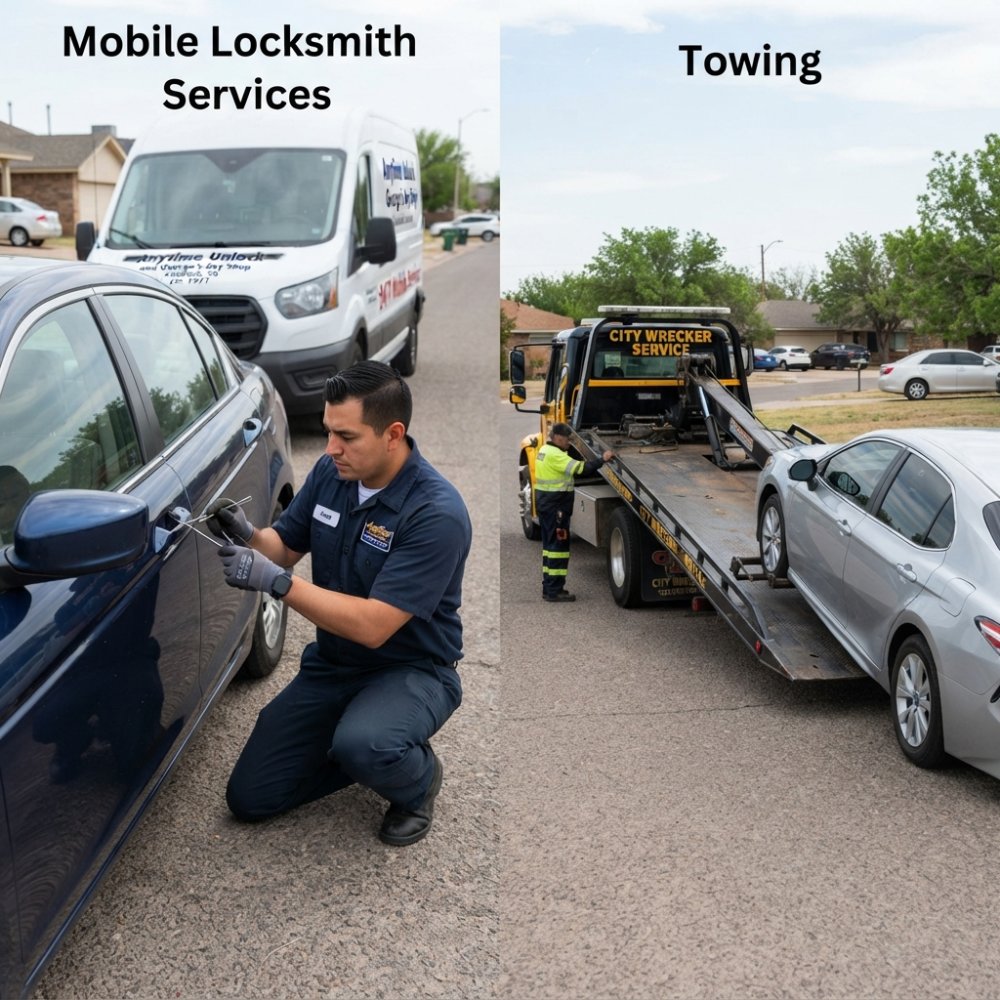
What each provider actually does
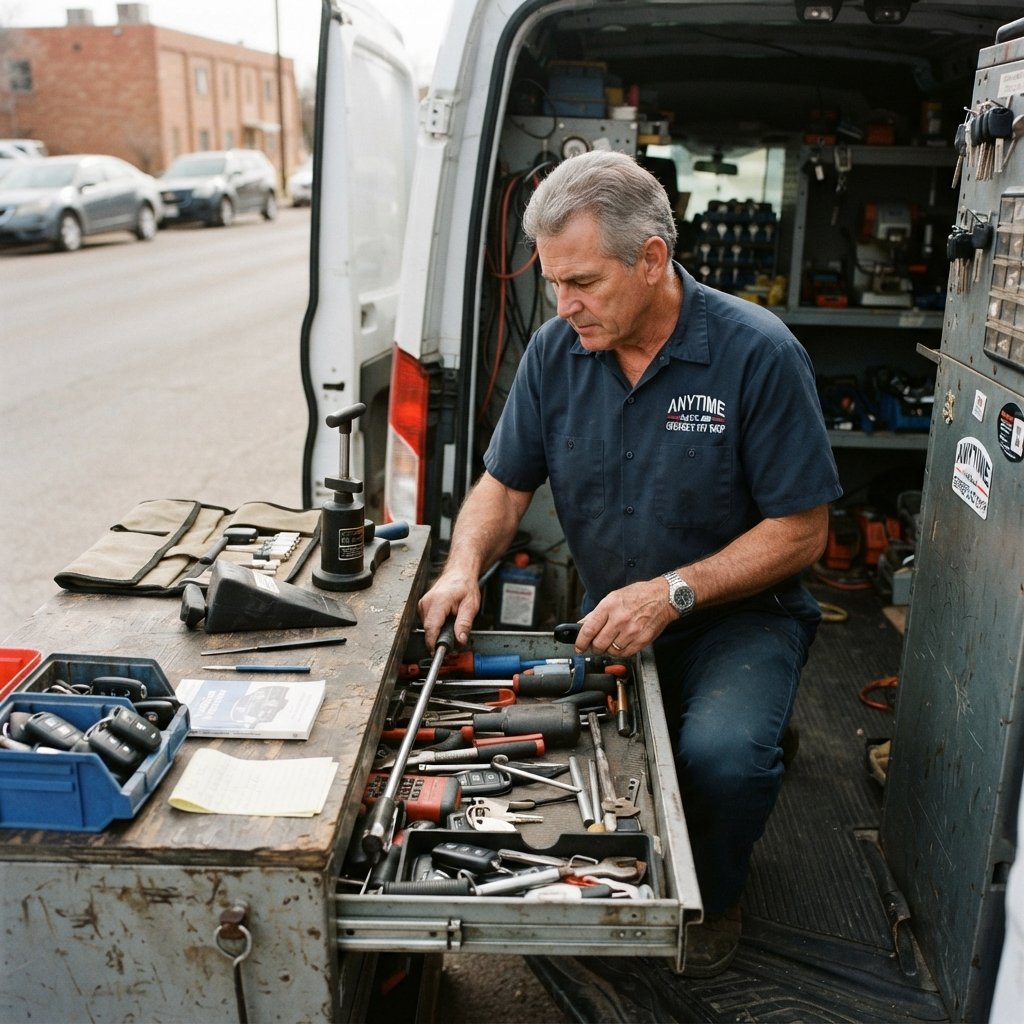
- Mobile locksmith. Arrives with lockout-specific tools such as wedges, long-reach tools, and air bags designed to create a small gap without bending the door frame. The technician works the lock or interior handle directly, and you drive away when the door opens.
- Tow provider. Arrives with a truck and towing equipment. Some offer lockout service as an add-on, but their equipment and training are built around moving vehicles. If they cannot open the door, the next step is often a tow to a dealership or shop, adding cost and time.
- Dealership service department. Can cut and program keys and fobs, but usually requires the vehicle to be brought to the dealership. That makes it a poor fit for a lockout unless a spare key is available.
Why non-destructive entry matters
Modern doors contain side-impact airbags, wiring harnesses, weather seals, and sensors inside the panel. Prying with improvised tools can bend the frame, tear a seal, or damage a sensor, and repairs can cost far more than the lockout service. Ask any provider: "Do you use non-destructive entry tools, and what happens if the door or seal is damaged?" A clear answer is a good sign; a vague one is not.
When towing is the right call
Towing is the correct choice in specific situations:
- The key is lost, not locked inside, and the vehicle cannot be started or moved safely.
- The vehicle has a mechanical or electrical fault that prevents entry even after the door is opened.
- The vehicle is in a location where entry work is unsafe, such as a travel lane or a dangerous shoulder.
If any of these apply, ask the dispatcher whether a lockout technician can be sent first. Many providers will tell you honestly whether entry is likely before you pay for a tow.
How to verify a locksmith before dispatch
Lockout scams are common, so verify before dispatch:
- Ask for the business name and physical address, not just a phone number, and look the business up.
- Ask for a flat, all-in quote before dispatch, including any service-call fee, after-hours fee, and vehicle-type surcharge.
- Ask whether the technician will show identification on arrival and whether the company is licensed and insured.
Finding a mobile locksmith in an emergency
Search "mobile locksmith" or "car lockout" plus your area, and read recent reviews mentioning lockout service. Ask for the response-time estimate and flat quote in the same call, a provider that gives both clearly is usually the safer choice.
Understanding Car Lockout Service Cost
Pricing varies, but understanding the structure helps you avoid surprises and scams.
Transparent pricing and flat-rate quotes
Legitimate locksmiths provide flat-rate quotes before dispatching. This means you know the exact cost before the technician arrives, no surprises when the bill comes.
Ask about what the quote includes: Is it just the unlock, or does it include a service call fee? Are there additional charges for specific vehicle types?
Avoiding lockout service scams
Some providers quote one price over the phone, then demand significantly more on arrival. Never agree to service without a confirmed flat rate, an unusually cheap quote may be a bait-and-switch.
Verify the locksmith is licensed and insured, and look up their business name before they arrive, scammers often use generic names or won't provide clear identification, while legitimate businesses are transparent about credentials and pricing.
Spare Car Key Options to Prevent Future Lockouts
The best solution to lockouts is preventing them entirely. Understanding your key options helps you choose backups wisely.
Traditional spare keys and key fobs
A traditional mechanical spare key costs little and works on older vehicles, keep one with a trusted person and one in a secure location away from your vehicle.
If you lose your only fob, you'll need a replacement programmed, which is more expensive than a simple mechanical key copy.
Transponder keys and smart-key programming
Transponder keys contain a chip that communicates with your vehicle's security system. They can't be copied at a hardware store, they must be programmed specifically for your car.
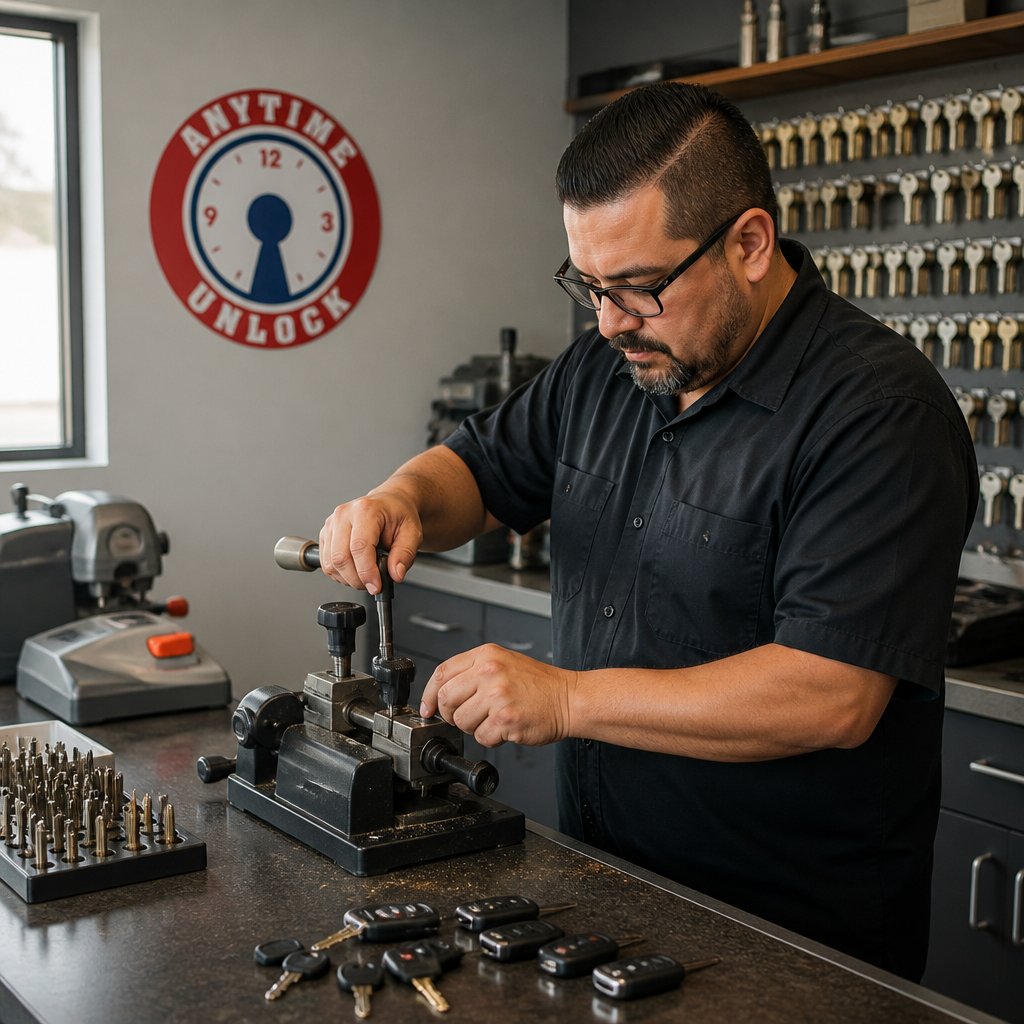
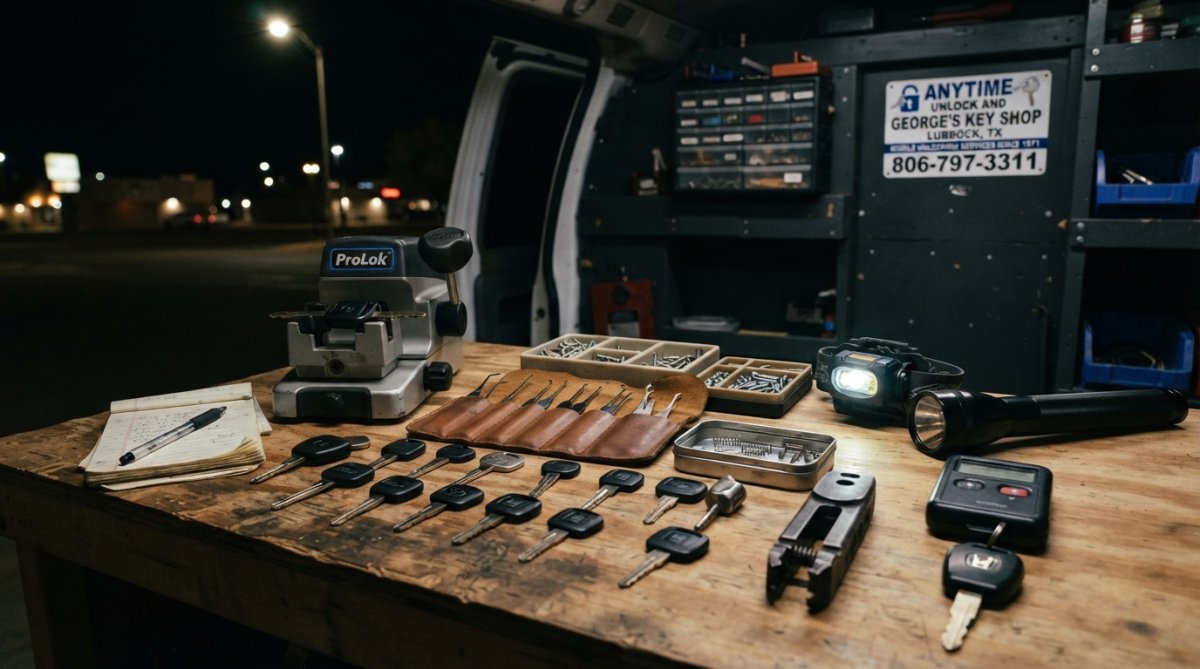
Programming these keys requires specialized equipment. Dealerships charge premium prices for this service. Mobile locksmiths like Anytime Unlock and George's Key Shop offer key programming services at lower costs than dealerships while providing the same quality and reliability.
Emergency Situations: Children or Pets Locked Inside
If a child or pet is locked in your vehicle, call 911 first. Police and emergency responders can authorize emergency entry if there's genuine danger.
While waiting, try to keep the person or animal calm. Don't attempt to break windows or force locks yourself, this can cause injury.
When to Call a Professional Locksmith
Knowing when DIY attempts won't work saves time and frustration.
Modern vehicle security and why DIY methods fail
Older vehicles with simple locks could sometimes be opened with improvised tools, but modern security systems prevent this.
Smart keys and keyless entry systems can't be bypassed with traditional lockout methods. These systems are designed specifically to prevent unauthorized access. Trying to force your way in will likely cause expensive damage.
Smart-key and key-fob problems requiring professional help
If your key fob won't work, the problem might be a dead battery, a faulty fob, or a security system malfunction.
Dead fob batteries are easy to replace if you know how. For most vehicles, the battery compartment is accessible without tools.
Getting locked out of your car doesn't automatically mean calling a tow truck.
Frequently Asked Questions
What should I do if I'm locked out of my car right now?
First, check all doors and windows to confirm the lockout. If you have a trusted friend or family member with a spare key nearby, call them. If not, contact your vehicle's dealership or a mobile locksmith service. Many roadside assistance programs and auto club memberships cover car lockouts at no additional cost. If a child or pet is inside, call emergency services immediately. A professional locksmith can typically unlock your vehicle without damage in 15-30 minutes.
How much does car lockout service cost compared to towing?
Locksmith pricing depends on your vehicle type, the time of day, and your location. Mobile locksmiths don't require vehicle transport. Many roadside assistance plans and auto club memberships cover lockout calls entirely. Before any service arrives, ask for a flat-rate quote to avoid surprise charges. Contact a local locksmith for a transparent estimate based on your specific situation.
Can roadside assistance unlock my car without towing it?
Yes. Many roadside assistance programs and auto insurance policies include lockout service as part of their coverage. These services dispatch a mobile locksmith or unlock specialist to your location, which is faster and less expensive than towing. Check your insurance policy or auto club membership to see if lockout assistance is included. If covered, you may only pay a service fee or nothing at all. This is often a better option than calling a tow truck for a simple lockout.
What are the best spare car key options to prevent lockouts?
Keep at least one physical spare key in a secure location away from your vehicle, such as with a trusted friend or family member. For modern vehicles, consider having a spare transponder key or key fob programmed by a professional locksmith. Some newer vehicles offer smartphone apps or keyless entry systems as backup access methods. A professional locksmith can help you create and program spare keys tailored to your vehicle's security system.
Why shouldn't I try DIY methods to unlock my car?
Modern vehicles have sophisticated security systems and reinforced door frames that make DIY unlocking methods risky and often ineffective. Attempting to force entry can damage your vehicle's paint, door seals, and interior electronics, resulting in costly repairs that exceed locksmith fees. Professional locksmiths use specialized tools designed for non-destructive entry on specific vehicle models. If your car has a smart-key or key-fob system, DIY attempts won't work at all. A licensed locksmith ensures safe, damage-free access.