 how-to
How to Prepare a Rental Home for a Lock Change
Last Updated: November 4, 2026
Quick Summary
How to prepare a rental home for a lock change starts with confirming who has the right to make one. Check your lease's security section and your state's landlord-tenant statute, then request the change in writing before any work begins.
- Read your lease's security or keys section before touching any lock.
- Check your state's residential landlord-tenant statute for lock and key rules.
- Put your lock-change request in writing and keep a copy.
- Photograph each lock, strike plate and door before work starts.
- Get landlord approval in writing before replacing hardware, not just before rekeying.
Table of Contents
- Know Your Tenant Rights Regarding Lock Changes
- How to Request a Lock Change From Your Landlord
- Gather Your Lease, Keys and Move-In Records
- Clear the Work Area and Document the Condition of Each Lock
- Rekeying vs. Replacing Hardware and What Each Costs
- Hiring a Professional Locksmith for Rental Properties
- Booking Your Rental Lock Change With Anytime Unlock and George's Key Shop
- Frequently Asked Questions
Know Your Tenant Rights Regarding Lock Changes
How to prepare a rental home for a lock change starts with knowing who has the right to make one. The short answer: tenant rights around lock changes depend on your lease and your state's landlord-tenant statute, so check both before you act.
Most leases say the landlord controls the locks and must keep copies of every key. Some states may require landlords to change locks between tenancies, and others leave it to the lease. That's why you should read the security section of yours first.
- Check your lease for any clause on locks, keys or security
- Look for language about who pays for changes
- Confirm whether a written request is required
- Note any clause that names a specific lock brand or key-control system
The legal framework you're actually working inside
Lock-change rules sit at the intersection of three bodies of law, and each one can change the answer:
- Your lease. A lease is a contract, and its lock provisions can govern unless a state statute overrides them. Look for a "security" or "keys" addendum, many landlords bury the lock rule there rather than in the main body.
- State landlord-tenant law. Many states have a residential landlord-tenant statute, and some address locks directly. Lock rules differ from state to state, so check the statute that applies where you live.
- Local housing codes. Some municipalities may add their own lock requirements for rental units. Check with your local housing authority.
A check-your-local-laws checklist
Because the rules vary so widely, work through this list before you touch a lock:
- Find your state's residential landlord-tenant statute. Search "[your state] residential landlord tenant act locks" and read the section on locks and keys.
- Check whether your state requires the landlord to rekey between tenants. If it does, the change may be the landlord's obligation.
- Check whether your state lets a tenant change locks unilaterally. Some statutes address this, often with notice requirements.
- Check your city or county housing code for deadbolt, strike plate, and peephole requirements on rental units.
- Check your lease for a key-control clause. Some lease agreements address key duplication or rekeying, so check for any such clause.
- Check for a notice period. Where a tenant may change a lock, the applicable statute or lease may require written notice to the landlord.
Notice requirements in practice
Where a statute or lease requires notice, the notice should be in writing and identify the property and lock. If you skip required steps, a lock change can become a lease violation and may affect your security deposit.
Watch out: Do not assume a "right to quiet enjoyment" or a "right to security" clause gives you the right to change locks on your own.
If your lease is silent and your state statute doesn't address the question, a written request protects you both.
How to Request a Lock Change From Your Landlord
Put your request in writing. Email or a letter works, and it should name the locks, the reason and the date you want the work done.
A simple request covers four things:
- Your name and the rental address
- Which locks you want changed or rekeyed
- The reason, such as a move-in or a lost key
- Your preferred dates and how you'll give access
Keep a copy. If the landlord doesn't respond, the record helps if you need to escalate.
Gather Your Lease, Keys and Move-In Records
Before any work starts, pull together the paperwork that shows what the locks are and who holds keys. Having it ready saves time on the day of the service.
- Your signed lease, including any addendum on security
- The move-in inspection checklist
- A list of every key holder you know about
- Any receipts from past lock work
If you can't find a move-in record, ask the landlord for a copy now. You'll want it if a dispute comes up later.
Clear the Work Area and Document the Condition of Each Lock
Clear the space around each door so the locksmith can work safely, because part of learning how to prepare a rental home for a lock change is making sure the work area is ready.
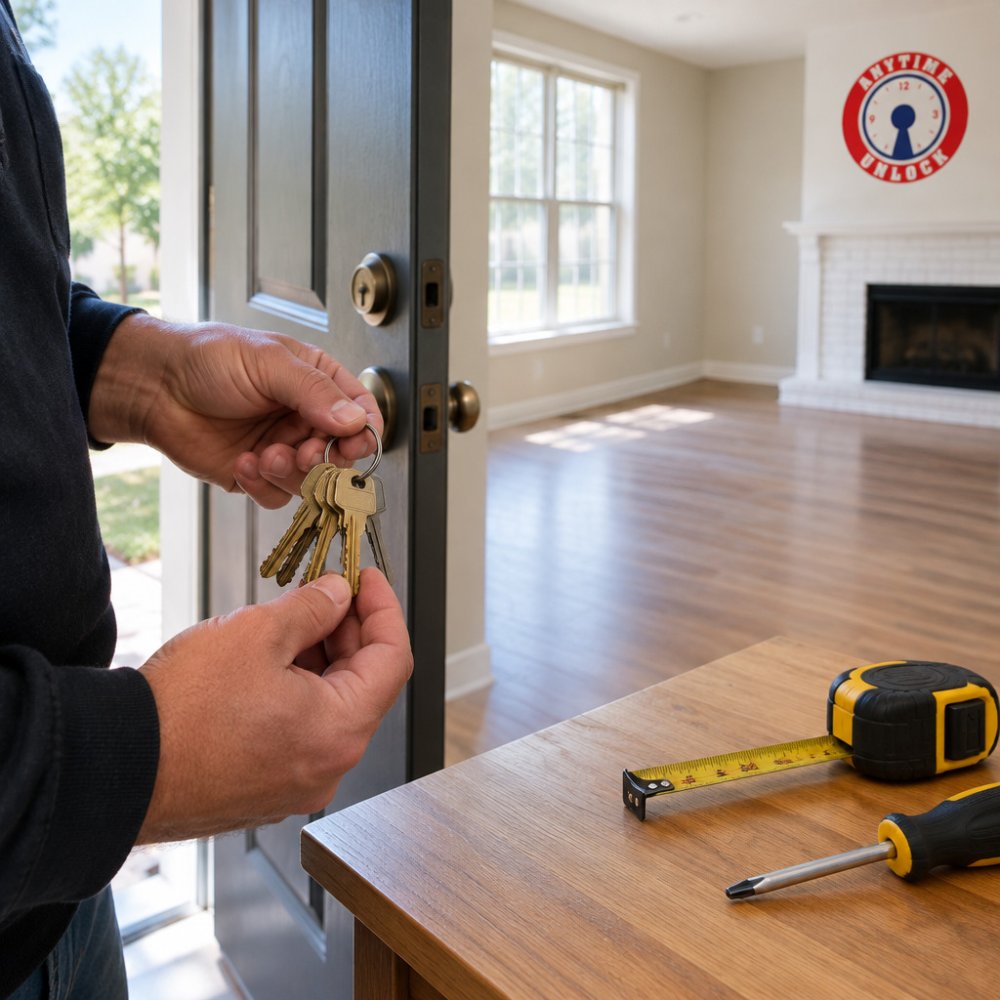
Before work starts, photograph each lock, the strike plate and the door. Note any scratches, loose screws or damage. This record protects your security deposit later, because it shows the condition the locks were in when you began.
Watch out: Don't remove a lock yourself to "save time." A DIY pull can damage the lock cylinder or strike plate, and the landlord may hold you responsible.
Rekeying vs. Replacing Hardware and What Each Costs
Rekeying changes the internal pins in the lock cylinder so your existing key no longer works. The hardware stays in place. Replacing means swapping the whole lock or deadbolt for new hardware. The two jobs solve different problems, and picking the wrong one is the most common way renters overspend on a lock change.
When rekeying is the right call
Rekeying is usually the right choice when the hardware is sound and the only problem is who holds a key. That covers:
- A new tenant moving in and the prior tenant's keys still being out there
- A lost key or a key that was lent to a contractor, dog walker, or neighbor
- A roommate moving out
- A breakup or a change in who has access
Rekeying preserves the existing hardware, so it keeps the door's finish, strike plate alignment, and warranty intact. It is also the option most leases contemplate, because it doesn't change the appearance of the door.
When replacement is the right call
Replacement is the right choice when the hardware itself is the problem:
-
The lock is a low-grade builder's-grade knob with no deadbolt
-
The cylinder is worn, the key sticks, or the lock has been forced
-
You want a keypad or smart lock (see the note below)
-
The existing hardware is a restricted keyway the landlord controls
What each option typically costs
Pricing depends on the lock, the number of locks, and whether the job is a rekey or a full replacement. As a general pattern in the U.S. market:
- Rekeying a single cylinder: commonly in the range of roughly $20 to $60 per lock in labor and pins, with mobile service calls adding a trip charge.
- Replacing a standard deadbolt: commonly in the range of roughly $40 to $120 per lock installed, depending on hardware grade.
- Replacing a knob-and-deadbolt combo: commonly higher, since it's two pieces of hardware and two installations.
- After-hours or emergency calls: typically carry a premium over standard business-hour rates.
Contact Anytime Unlock and George's Key Shop for a current quote on your specific doors. For a clearer picture of what rekeying involves, see How Many Keys Come With Rekeying Service and Cost to Rekey Home Locks Professionally: 2026 Guide. You can also read The Real Cost of Rekeying a Home: 2026 Price Guide for lock grades and service fees.
The security-deposit angle most guides skip
Whether you rekey or replace matters at move-out, because the two jobs leave different evidence behind. A rekey leaves the original hardware in place. A replacement swaps hardware, and if the new lock does not match the landlord's key-control system or the original finish, the landlord may treat it as an unauthorized alteration.
A few practical rules follow from that:
- Get approval in writing before you replace hardware, not just before you rekey. A rekey is usually reversible; a replacement may not be.
- Keep the original hardware. If you replace a lock, bag the old cylinder and deadbolt and store them. Reinstalling the original at move-out is the cleanest way to avoid a deduction.
- Match the finish and grade. A satin nickel Grade 2 deadbolt swapped for a polished brass Grade 3 is a visible, chargeable difference.
- Photograph before and after. Your move-in photos plus post-work photos are the record that decides most deposit disputes.
- Don't discard the landlord's keys. If the lease requires the landlord to hold a key, a replacement that locks them out is a lease violation regardless of who paid.
A note on smart locks in rentals
Smart locks and keypads are increasingly common, and they raise a specific rental problem: most of them replace the entire deadbolt, including the interior thumb turn, and many require a hub or app account tied to the installer. If you install one without approval, you've likely altered the landlord's hardware and created a key-control gap. If your lease permits a smart lock, ask the landlord whether they want to hold the master code or a physical backup key, and plan to restore the original deadbolt at move-out.
What to ask before you book
Whichever route you choose, confirm four things with the locksmith before the job starts: whether the price is for a rekey or a replacement, how many keys are included, whether the old hardware will be returned to you, and whether the work will be documented on a receipt you can show your landlord.
The two jobs solve different problems, and the table below sets out which one fits each situation.
| Option | Best for | Key difference |
|---|---|---|
| Rekeying | Sound hardware; key holders changed | Keeps existing hardware and finish |
| Replacing | Worn, forced or low-grade hardware | Swaps the whole lock or deadbolt |
| Smart lock | Keypad or app access | Usually replaces the full deadbolt; needs approval |
Hiring a Professional Locksmith for Rental Properties
A professional locksmith can rekey or replace locks, and can provide a set of keys. Ask whether the service includes a full set of keys and whether the work will be documented.
Look for a locksmith who:
- Confirms the price before the job starts
- Provides a receipt listing the locks serviced
- Gives you the key count in writing
Booking Your Rental Lock Change With Anytime Unlock and George's Key Shop
Once your landlord has approved the change, you can schedule the work. Anytime Unlock and George's Key Shop has served Lubbock since 1971 and offers 24/7 mobile service. Book your residential rekey and our team can come to you. Have your lease and move-in records ready when you call.
Frequently Asked Questions
Can you legally change the locks on a rental property?
As a tenant, you generally need your landlord's permission before changing or adding locks, because the lease usually treats the property's hardware as the owner's. Many leases include a clause addressing this directly. Some states and cities may have rules about locks in rental units, so check your lease and local tenant laws before making any change. If you change a lock without consent, you risk a lease violation and possible deductions from your security deposit.
Do I need my landlord's permission to change the locks?
In most cases, yes. Put your request in writing, describe the lock type and who will perform the work, and offer to provide a copy of any new key. Keep a record of the request and the landlord's response. If the landlord approves, ask for the approval in writing before the locksmith arrives. Written consent protects both you and the landlord if a dispute about the work comes up later.
What happens if I change the locks without notifying the landlord?
The landlord may treat the change as an unauthorized modification, which can violate your lease. Possible consequences may include costs to restore the original lock or effects on your security deposit. The landlord may also lack access in an emergency, such as a fire or a plumbing leak. Notifying the landlord and providing a spare key avoids most of these problems.
How much does it cost to rekey a rental home?
Rekeying costs depend on the number of locks, the lock types, and whether the work happens during business hours or after hours. For current pricing, contact Anytime Unlock and George's Key Shop directly for a quote.
Ready to get your rental's locks sorted? Get a Free Quote from Anytime Unlock and George's Key Shop today.