 ultimate-guide
The Real Cost of Rekeying a Home: 2026 Price Guide
Table of Contents
- What Drives the Real Cost of Rekeying a Home
- Rekeying vs Changing Locks: Which One Do You Need?
- Average Locksmith Service Call Fee and Labor Rates
- DIY Lock Rekeying Kit Cost vs Professional Service
- Emergency vs Standard Business Hour Rates
- Smart Lock Compatibility and Master Key Systems
- Frequently Asked Questions
Last Updated: September 18, 2026
What Drives the Real Cost of Rekeying a Home
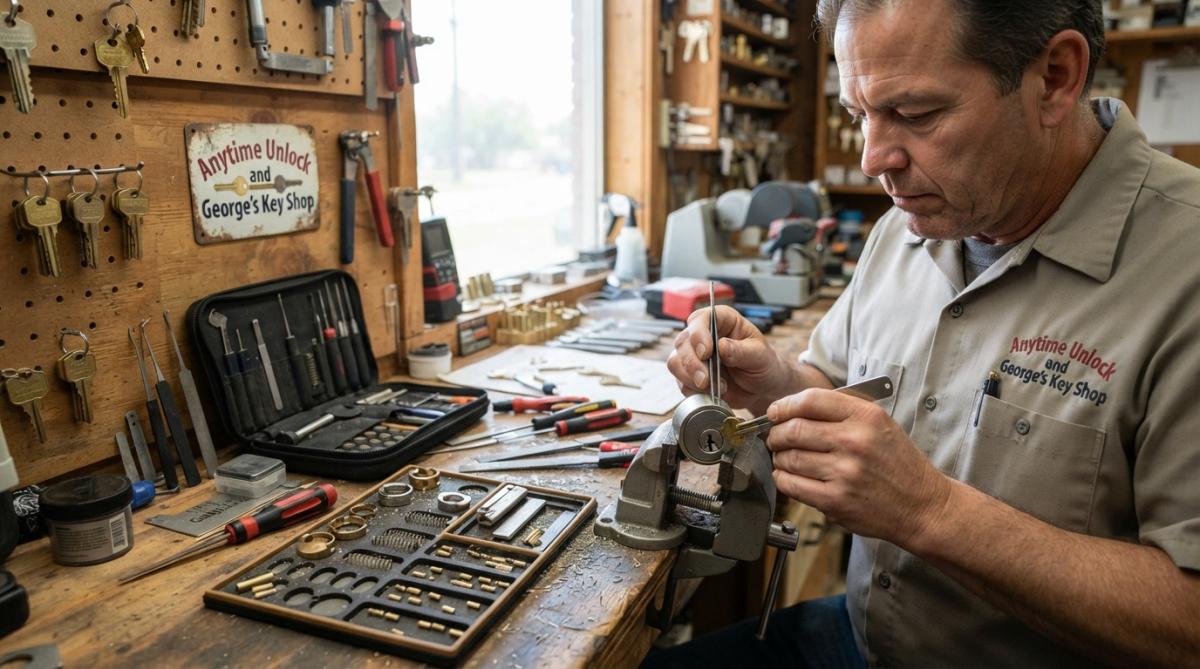
The real cost of rekeying home in 2026 depends on four variables: the number of locks, the security grade of each cylinder, mobile service versus a shop visit, and when you call. Any quote ignoring these is guesswork.
Lock Type and Security Grade
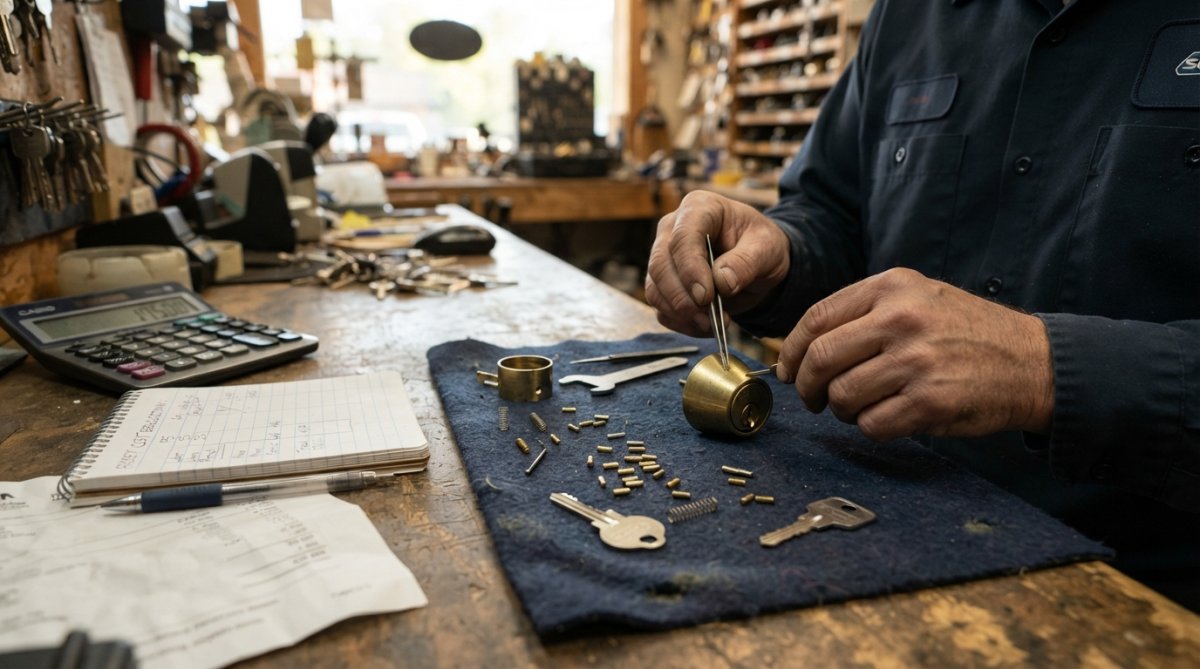
Lock type is the single biggest cost driver because it determines how long the job takes. A builder-grade knob lock rekeys in minutes; a high-security deadbolt with restricted keyways or a non-standard cylinder can require specialized tools.
Number of Locks and Entry Points
Most homes have three to six exterior entry points, and each one adds to the total. Each deadbolt and each knob or lever lock counts separately.
Rekeying vs Changing Locks: Which One Do You Need?
Rekeying home is almost always the right choice when the hardware is in good condition and you only need new keys. It means replacing the internal pins inside the existing cylinder so old keys no longer work, while the lock body, finish, and mounting stay put.
Here's the decision framework we use:
| Situation | Best Choice | Why |
|---|---|---|
| Just moved in, hardware is fine | Rekey | Cheapest path to new keys |
| Lost keys, no sign of break-in | Rekey | Old keys stop working immediately |
| Lock is sticking or damaged | Replace | Rekeying won't fix mechanical wear |
| Upgrading to smart lock | Replace | Rekeying doesn't add connectivity |
| Rental turnover between tenants | Rekey | Fast, low-cost, keeps existing hardware |
Average Locksmith Service Call Fee and Labor Rates
-
Service call / trip fee, a flat dispatch charge covering drive time and the first few minutes on site. It applies whether you rekey one lock or six.
-
Per-lock rekey labor, the charge for re-pinning each cylinder. This is where the count matters most.
-
Parts, replacement pins, springs, and occasionally a new cylinder or key blank. Standard rekeys usually use pins and springs the technician carries, so parts are often bundled, but high-security or restricted-keyway cylinders may need a specific pin kit or new cylinder.
-
Keys, usually priced per key. A household that wants four keys per adult pays more than one that wants two.
-
One bundles the trip fee into the per-lock rate; the other lists it separately, so totals aren't comparable line by line.
-
One includes keys; the other charges per key on top.
-
One assumes standard builder-grade cylinders; the other prices a high-security cylinder needing a different pin kit.
-
One is a mobile service with a stocked truck; the other is a shop requiring you to remove and bring in the cylinders yourself (cheaper labor, but you do the removal and reinstallation).
What to ask before anyone is dispatched:
- What is the service call fee, and does it cover the first lock or is it purely a trip charge?
- What is the per-lock rate, and does it change after the first lock?
- Are keys included, and if not, what is the per-key price?
- Is the quote inclusive of tax?
- Is there an after-hours, weekend, or holiday surcharge, and what triggers it?
- If a cylinder turns out to be non-standard, what is the upcharge?
Regional price variance, the part most guides skip. Two identical houses in two markets can see meaningfully different quotes, and it isn't random. The biggest drivers:
- Density of licensed locksmiths. Competing mobile locksmiths tend to lower trip fees and per-lock rates; rural areas with one or two providers reflect longer drives and less competition.
- Fuel and drive time. A mobile locksmith's trip fee is partly fuel and vehicle-cost recovery, so markets with long distances between jobs carry higher trip fees than dense metros.
- State and local licensing requirements. Licensing, bonding, or background-check mandates show up in labor rates; markets without them may be cheaper but less accountable.
- Cost of living and local labor rates. The same 45-minute rekey costs more in a high-cost metro than a lower-cost region.
- After-hours coverage. Where 24/7 mobile service is common, emergency rates face more competition; where it isn't, fewer options mean higher premiums.
DIY Lock Rekeying Kit Cost vs Professional Service
What's actually in a kit, and what it's for:
-
Plug follower, a rod that pushes the plug out of the cylinder body while keeping the top pins and springs from spilling out.
-
Pin tweezers, fine-tipped tweezers for placing and removing the small bottom pins inside the plug.
-
Cylinder removal tool / retaining clip tool, for releasing the clip or screw holding the plug in the housing. Some kits include a specific tool; some rely on a small screwdriver.
-
Replacement pins and springs, the actual rekeying material. A limited pin assortment only covers a limited range of key cuts.
-
Key gauge or caliper, for measuring pin lengths to match the new key's bitting. Without this, you're guessing.
-
High-security cylinders with restricted keyways or side pins
-
Non-standard or older cylinder designs where parts aren't interchangeable
-
Smart locks, which replace the cylinder entirely and aren't rekeyed traditionally
-
Mixed-brand homes where each brand uses a different pin length system
-
One or two standard locks, same brand, standard cylinders: DIY can pencil out. The kit is a one-time purchase, the process is learnable, and the downside of a mistake is a trip to the hardware store.
-
Three or more locks, or any non-standard cylinder: the time cost climbs fast, and the odds of needing a pro for at least one lock go up. Spend a weekend and still call a locksmith for two locks, and you paid twice.
-
High-security or restricted-keyway cylinders: don't DIY. The pin kits and tools are specialized, and a mistake can damage a cylinder that's expensive or impossible to replace at a big-box store.
-
You want a warranty: DIY has none. A professional rekey may carry a workmanship warranty if a cylinder fails or a key stops working.
When professional service clearly wins:
- You have more than two or three locks to rekey
- Your locks include high-security or non-standard cylinders
- You want the work warrantied
- You don't want to risk damaging a cylinder you can't easily replace
- You need the job done today, not this weekend
The security-grade angle most DIY guides miss. The American National Standards Institute grades residential lock hardware on a three-tier scale, and the grade affects how serviceable the cylinder is. A Grade 3 builder lock is easiest to rekey and most forgiving of a first-timer's mistakes; a Grade 1 deadbolt is built to tighter tolerances, so a mis-set pin or bent spring is more likely to cause a bind or failure. With Grade 1 hardware, the case for professional service is stronger, not because the process differs, but because the consequences of a mistake do.
Emergency vs Standard Business Hour Rates
Emergency and after-hours service costs more than standard business hour rates, and that premium is legitimate. A locksmith who answers at 2 AM is paying for on-call staff, mobile inventory, and the cost of being available when nobody else is.
Smart Lock Compatibility and Master Key Systems
Smart locks and master key systems change the rekeying equation, and most guides skip both. If you're planning to install a smart lock, rekeying the existing cylinder is often wasted money because the smart lock replaces the cylinder entirely. Check compatibility before spending on a rekey you'll undo in a month.
Frequently Asked Questions
Is it cheaper to replace locks or rekey them?
Rekeying is almost always cheaper than replacing locks. Rekeying changes the internal pins so old keys no longer work, but you keep the existing hardware. Replacing locks means buying new deadbolts or knobs plus installation. If your locks are in good condition and meet current security standards, rekeying is the cost-effective choice. Only replace if the hardware is damaged, outdated, or you want to upgrade to smart locks.
How much does it cost to rekey an entire house?
The real cost of rekeying a home depends on the number of locks, lock type, and whether you hire a professional or DIY. Most homes have 3 to 5 exterior locks. A locksmith typically charges per lock plus a service call fee, so total cost rises with each additional cylinder. For an accurate quote, contact a local locksmith with your lock count and type. DIY kits cost less but require mechanical skill.
Does a locksmith charge per lock or per house?
Most locksmiths charge per lock, not per house. The average locksmith service call fee covers the trip, then each lock rekey is billed individually. Some companies offer flat rates for multiple locks or whole-house packages. Always ask for a breakdown before work begins. A per-lock model means a 5-lock home costs more than a 2-lock home, but you only pay for what you need.
Can I rekey my own locks to save money?
You can rekey your own locks if you are comfortable with small mechanical parts. DIY lock rekeying kit cost is low, but kits are often lock-brand specific. You will need to remove the cylinder, replace pins, and test the new key. Mistakes can jam the lock or leave it insecure. If you are unsure, hiring a professional ensures the job is done correctly and your home stays protected.
How long does it take for a professional to rekey a home?
A professional locksmith typically takes 15 to 30 minutes per lock. A whole-house rekey with 4 to 6 locks usually takes 1 to 2 hours. Time varies with lock type, accessibility, and whether any locks are stuck or damaged. Emergency calls may take longer if the locksmith is busy. Scheduling a standard appointment often means faster service and lower rates than after-hours calls.
What factors influence the cost of professional rekeying?
Key factors include the number of locks, lock brand and type (standard, high-security, smart), your location, and time of service. Emergency or after-hours calls cost more. High-security locks may require special pins or tools. Some locksmiths charge a service call fee plus per-lock labor. Always ask for a written estimate covering parts, labor, and any trip charges before authorizing work.