 ultimate-guide
Rekeying Locks After Moving: Your 2026 Home Guide
Table of Contents
- Why Rekeying Locks After Moving Should Be Your First Priority
- Rekey vs Replace Locks: Which Makes Sense for Your New Home?
- How Rekeying Works: Cylinders, Pins, and Keyways Explained
- Cost to Rekey House Locks: What Drives the Price
- Locksmith Services for New Homeowners: What to Expect
- Smart Locks, Insurance, and Lock Grading: What Most Guides Skip
- Key Control, Duplication Risks, and Master Key Systems
- Conclusion: Secure Your New Home the Right Way
- Frequently Asked Questions
Last Updated: September 30, 2026
Why Rekeying Locks After Moving Should Be Your First Priority
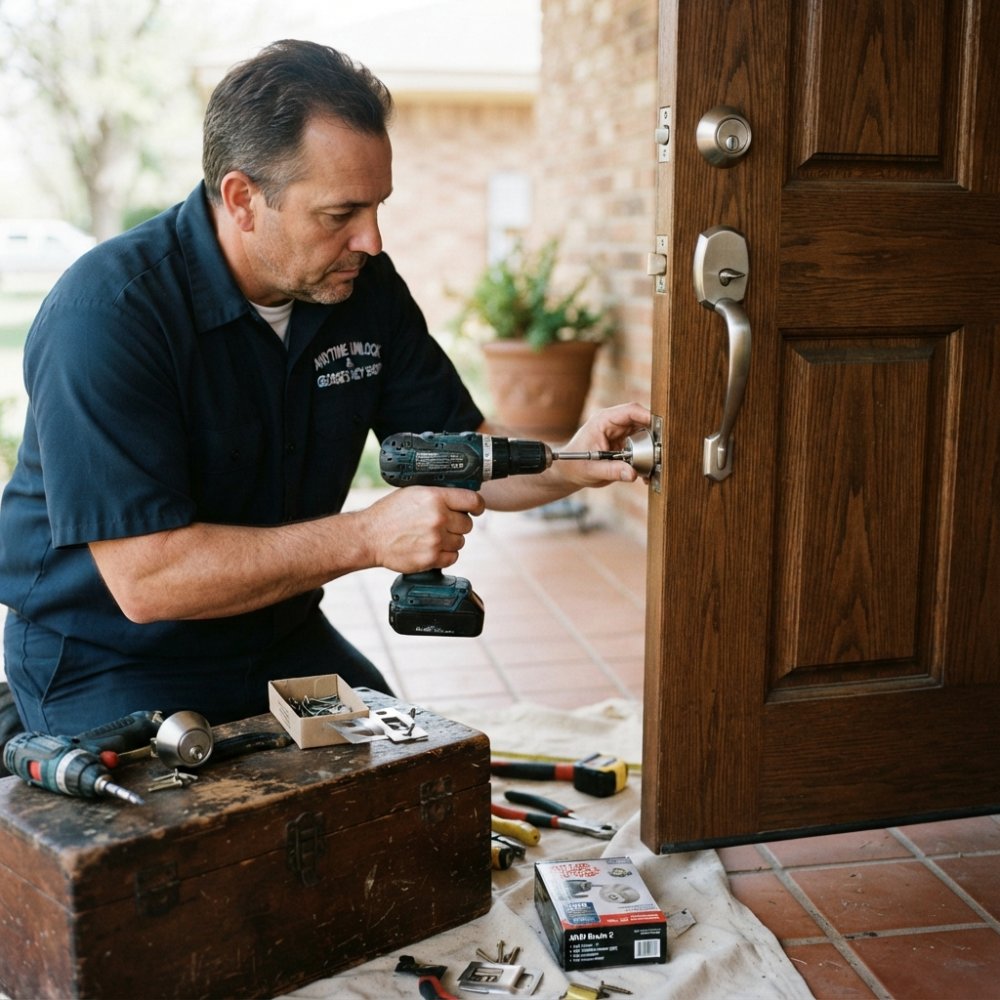
Rekeying locks after moving changes the internal pin configuration of your existing lock cylinders so old keys no longer work, typically the single most important security step for a new homeowner. At Anytime Unlock and George's Key Shop, we've handled rekeys for new owners since 1971, and the pattern never changes: the first week in a new house is when you're most exposed.
Rekey vs Replace Locks: Which Makes Sense for Your New Home?
The short answer: rekey when your locks are in good condition and you just need old keys to stop working; replace when the hardware is worn, damaged, or below modern security standards. Rekeying is the cost-effective default for most move-ins.
When Rekeying Is the Smarter Choice
Rekeying wins when the lock mechanism is solid but the key situation is unknown. If your deadbolts throw smoothly, the cylinders aren't loose, and the hardware looks reasonably modern, a locksmith can reset the pins and hand you fresh keys.
- You have no idea how many copies of the old keys exist
- The existing locks are quality brands in good working order
- You want one key to open every exterior door
- You're renting and the landlord approves a rekey
- The cylinders are standard pin-tumbler designs (the vast majority of residential deadbolts and knobs)
When a Full Lock Replacement Is Worth It
Replacement makes sense when the hardware itself is the problem, not just the keys. Worn cylinders, sticky deadbolts, or builder-grade locks that fail a basic security assessment are worth swapping.
- The lock is damaged, corroded, or jammed
- The cylinder is a non-standard or high-security design that requires proprietary pins
- You're upgrading to a higher security grade (see the grading section below)
- You want a smart lock with keypad or app access
- The existing hardware is flimsy, thin gauge, loose mounting, or a strike plate held by short screws
- The lock is a discontinued model with no parts availability
How to Tell the Difference in Five Minutes
Walk your exterior doors and check four things:
- Throw the bolt. If it binds, grinds, or needs a shoulder to seat, the mechanism is tired.
- Wiggle the cylinder. Any play in the plug or housing means wear.
- Look at the faceplate and strike. A strike plate secured with 3/4-inch screws is a builder-grade tell; 3-inch screws into the framing are a sign someone cared.
- Check the brand and grade. A name-brand deadbolt with a Grade 1 or Grade 2 rating is worth rekeying. An unbranded lock with no rating is worth replacing.
If you're weighing this decision, a quick Consumer Reports guidance on door lock security can help you judge whether your current hardware is worth keeping.
| Situation | Rekey | Replace |
|---|---|---|
| Locks in good condition, standard cylinder | Yes | No |
| Worn, corroded, or binding hardware | No | Yes |
| Non-standard or proprietary cylinder | No | Yes |
| Upgrading to smart lock | No | Yes |
| One key for all doors | Yes | Maybe |
| Tight budget | Yes | No |
| Grade 1 or Grade 2 hardware | Yes | No |
| Unrated builder-grade hardware | Maybe | Yes |
How Rekeying Works: Cylinders, Pins, and Keyways Explained
Rekeying works by removing the lock cylinder, swapping the pins inside the plug to match a new key, and reinstalling it, so the lock mechanism stays but the key changes. The housing, strike plate, and deadbolt body remain untouched.
Cost to Rekey House Locks: What Drives the Price
Pricing for rekeying depends on the number of locks, the lock type, and whether you need mobile service, so it varies by job. We don't quote flat numbers because a single deadbolt and a five-door house with mixed hardware are completely different jobs.
What moves the price up or down:
- Number of cylinders. More locks, more labor.
- Lock type. Standard deadbolts are straightforward; some high-security cylinders take longer.
- Mobile vs. shop service. A mobile locksmith brings the work to your door.
- Key duplication. Extra copies and master key setups add cost.
- Condition. Seized or damaged cylinders take more time.
Locksmith Services for New Homeowners: What to Expect
A professional locksmith visit for a rekey usually takes under an hour for a typical home: assess, rekey, test, and hand over new keys.
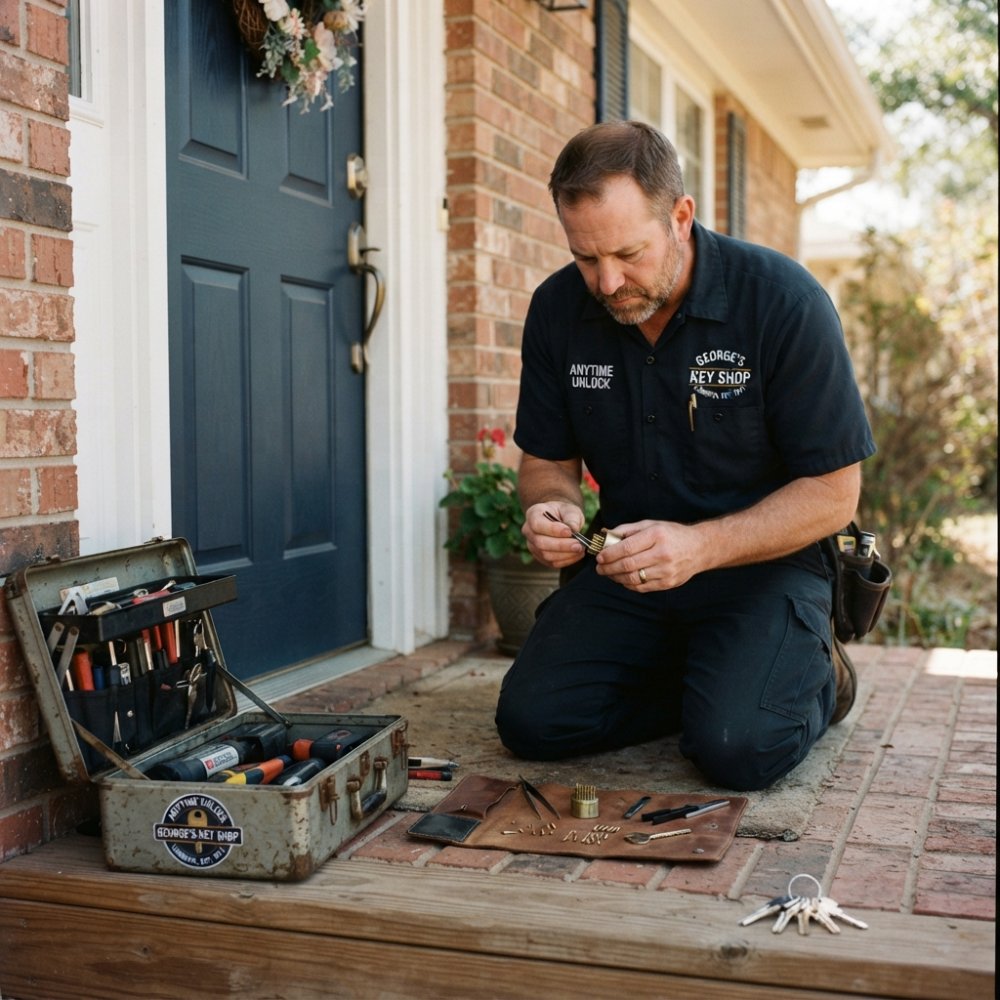
- Security assessment. The tech checks every entry point, notes the lock types, and flags anything worn.
- Rekey each cylinder. Pins are swapped to match your new key.
- Test operation. Every lock is cycled to confirm smooth function.
- Key handoff. You get your new keys, and the old ones are now useless.
DIY Re-Keying Kits vs Professional Service
DIY re-keying kits exist and can work if you're handy and your locks are standard, but kits are brand-specific, and mismatched pins or a dropped tumbler can leave a lock jammed. For a single lock, DIY is reasonable; for a whole house with multiple entry points, professional service is faster and includes a security assessment. Anytime Unlock and George's Key Shop offers 24/7 mobile service, so scheduling around a move doesn't mean taking a day off.
Smart Locks, Insurance, and Lock Grading: What Most Guides Skip
Three things almost every rekeying guide ignores: whether your new smart lock can be rekeyed at all, what your insurer actually expects, and how lock grades should shape your rekey-or-replace call.
Smart Lock Compatibility: Not Every Electronic Lock Can Be Rekeyed
Smart locks fall into two broad categories, and the difference determines whether a move-in rekey is even possible.
Before you buy, check three things:
- Does the product page mention a standard keyway? If it lists a Schlage SC1, Kwikset KW1, or similar, it's almost certainly rekeyable.
- Can the cylinder be removed without disassembling the electronics? If yes, a locksmith can rekey it.
- Does the manufacturer sell a rekey kit? Kwikset's SmartKey system, for example, lets homeowners rekey compatible locks themselves with a simple tool, no locksmith visit required.
Insurance Requirements: What Your Policy May Actually Say
Homeowners insurance policies rarely mandate a specific lock brand, but many require baseline protections on exterior doors. Common policy language includes:
- Deadbolts on all exterior doors. A knob lock alone often doesn't satisfy the requirement.
- Minimum deadbolt throw. A 1-inch bolt is the common standard; shorter throws may not qualify.
- Locks in good working order. A jammed or non-functional lock can be treated as a maintenance issue and used to reduce or deny a claim.
- Proof of forced entry for theft claims. This is where rekeying matters: if a burglar used a key that was never returned, some insurers scrutinize whether the homeowner took reasonable steps to secure the property after move-in.
Lock Grading Standards: The Number That Should Drive Your Decision
Locks are rated under the ANSI/BHMA lock grading standards, which run from Grade 3 to Grade 1. The grade reflects how the lock performs under cycle testing, impact, and forced-entry attempts.
- Grade 3, basic residential. Builder-grade hardware. Acceptable but the minimum.
- Grade 2, mid-range residential. Noticeably better resistance and durability.
- Grade 1, highest residential and light commercial. The standard for doors you actually care about.
Key Control, Duplication Risks, and Master Key Systems
Key control is the practice of limiting who can copy your keys, and it's why a rekey matters even if the old keys "probably" got tossed. Standard keys can be duplicated at any hardware store in minutes, exactly the risk you're trying to eliminate.
Conclusion: Secure Your New Home the Right Way
The gap between "I moved in" and "I rekeyed" is the window where old keys still work, and closing it is the cheapest security upgrade a new homeowner can make. Rekeying locks after moving protects your entry points, resets key control, and gives you one key for the whole house.
Frequently Asked Questions
Is it necessary to rekey locks after moving into a new house?
Yes. You have no way of knowing who holds copies of the old keys: previous owners, contractors, cleaners, or neighbors. Rekeying locks changes the internal pins so old keys stop working, while keeping your existing hardware. It is faster and less expensive than replacing every lock, and it closes the most obvious gap in your new home's door security.
How much does it cost to rekey house locks?
The cost to rekey house locks depends on how many locks you have, the type of cylinders, and whether you need mobile service. Most homeowners pay per cylinder, so a house with four exterior doors costs more than one with two. For an accurate quote on your property, contact a licensed locksmith directly and ask for a written estimate before work begins.
Can I rekey my own locks or should I hire a professional?
DIY re-keying kits are sold at hardware stores and work on some standard cylinders, but they require matching your existing keyway and pin stack correctly. Mistakes can leave a lock jammed or less secure. A professional locksmith has the tools to handle multiple lock brands, confirms the lock integrity afterward, and can typically finish a whole house in under an hour.
What is the difference between rekeying and replacing a lock?
Rekeying changes the pins inside the existing lock cylinder so only your new key works. Replacing a lock means removing the old hardware and installing a new deadbolt or knob set. Rekeying costs less and preserves hardware you already own; replacement makes sense when the lock is damaged, outdated, or you want to upgrade to a higher security grade or a smart lock.
How long does it take for a locksmith to rekey a house?
A single lock usually takes 10 to 15 minutes. A typical home with three or four exterior entry points is often finished in under an hour, including testing each key. If you also need new keys cut, deadbolts replaced, or a master key system set up, plan for a longer visit. Ask the locksmith for a time estimate when you book.
Does rekeying affect my homeowner's insurance coverage?
Some policies and rental agreements require working deadbolts on all exterior doors, and a few insurers ask about key control after a property transfer. Rekeying supports those requirements by limiting who can enter. Check your policy documents or ask your agent whether your coverage includes specific lock or entry-point conditions before you file a claim.
Can I rekey a smart lock or should I replace it?
Most smart locks use a standard keyway cylinder, so a locksmith can rekey the mechanical backup key while leaving the electronic functions untouched. If the smart lock is older, unsupported by its app, or uses a proprietary cylinder, replacement is usually the better path. Ask the locksmith to confirm compatibility with your specific model before scheduling.