 ultimate-guide
Benefits of Professional Lock Rekeying: 2026 Guide
Table of Contents
- What Professional Lock Rekeying Actually Does to Your Locks
- Rekey vs Replace Locks: Which Makes Sense for Your Home
- The Real Cost to Rekey Locks and What Drives It
- When to Change House Locks: 5 Situations That Call for It
- Security Limits of Rekeying Nobody Tells You About
- DIY Rekeying Kits vs Hiring a Locksmith Technician
- Smart Locks and Master Key Systems: What Rekeying Can and Cannot Fix
- Frequently Asked Questions
Last Updated: September 27, 2026
What Professional Lock Rekeying Actually Does to Your Locks
Professional lock rekeying changes the internal pins and tumblers inside a lock cylinder so a new key operates the lock while old keys stop working entirely. This guide from Anytime Unlock and George’s Key Shop covers what that involves, when it makes sense, and where it falls short.
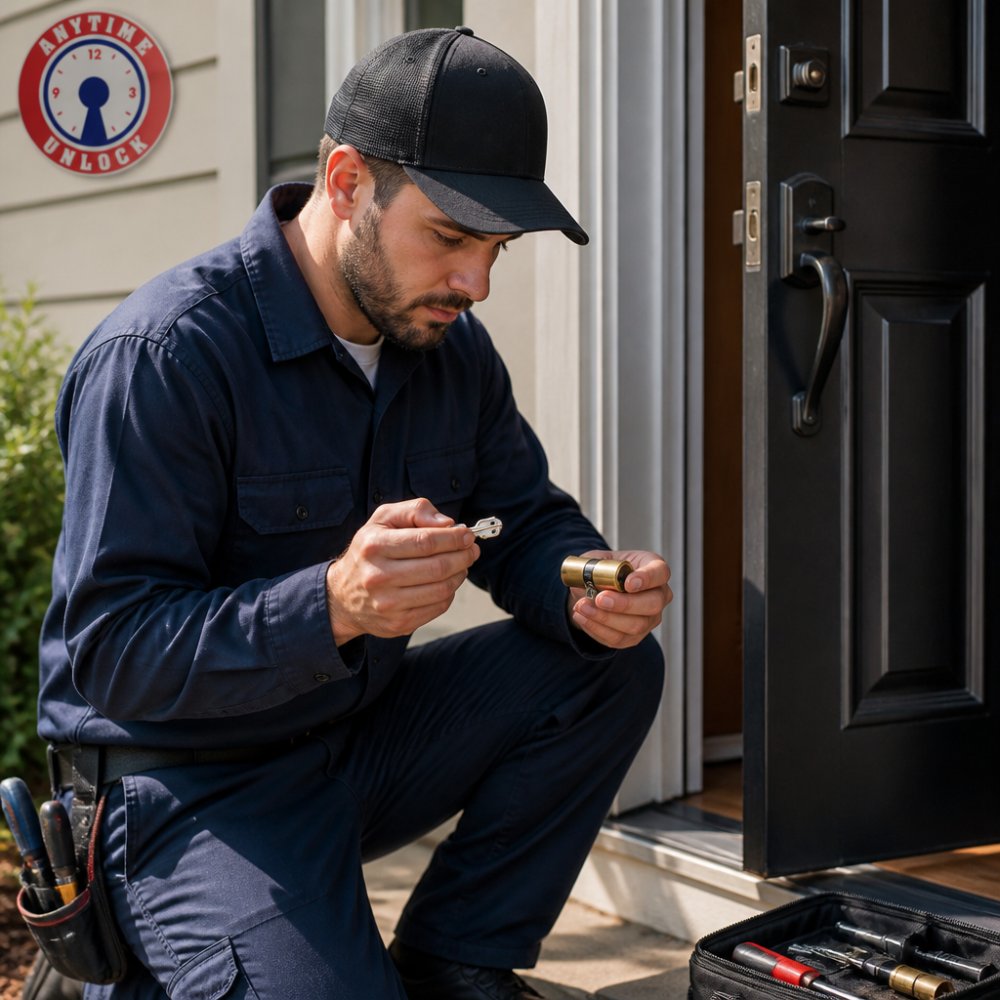
How Pins and Tumblers Determine Which Key Works
Inside every pin-tumbler cylinder sits a row of spring-loaded pins. A key’s jagged cuts push each pin to a precise height; when every pin lands correctly, the cylinder rotates and the lock opens.
Rekey vs Replace Locks: Which Makes Sense for Your Home
Rekeying wins when the hardware is sound and you only need new keys. Replacement wins when the hardware is damaged, outdated, or you want a different security rating. Three questions decide it: Is the cylinder sound? Does the hardware meet a modern standard? Do you want the same lock back, or a better one?
Here's how the two compare:
| Factor | Rekey | Replace |
|---|---|---|
| Hardware cost | None, you keep existing locks | New locks for every entry point |
| Labor | Lower, one visit per lock | Higher, removal and installation |
| Key control | Old keys stop working | Old keys stop working |
| Security rating | Unchanged | Can be upgraded |
| Hardware condition | Must be sound | Any condition |
| Best for | Good-condition locks, new homeowners | Damaged or low-rated hardware |
The Hardware Condition Test
Before deciding, check the cylinder. It's a rekey candidate if:
- The key slides in smoothly and turns without grinding or catching
- The plug doesn't wobble or feel loose in the housing
- There's no visible corrosion, cracking, or pitting on the cylinder face
- The deadbolt throws fully and the door doesn't need to be pushed or lifted to lock
Security Ratings: What You're Actually Comparing
Residential locks are graded under ANSI/BHMA A156.36 (deadbolts) and A156.39 (bored and preassembled locksets): Grade 3 (builder-grade), Grade 2 (mid-range), and Grade 1 (highest residential and light commercial).
When Replacement Is the Only Safe Option
Replacement becomes necessary in a few specific cases:
- The cylinder is cracked, corroded, or the key sticks and grinds
- The lock is a builder-grade model with no real pick resistance
- You want to move to a higher security rating or a different entry system
- The door hardware is loose, misaligned, or the deadbolt no longer seats fully
- The lock uses a restricted or discontinued keyway you can't get blanks for
- You're switching to a smart lock or electronic deadbolt that doesn't use a pin-tumbler keyway
A locksmith can tell you in minutes which case you're in. Guess wrong and you either waste money on locks you didn't need or trust a failing cylinder.
The Middle Path: Rekey Now, Upgrade Later
You don't have to pick one for the whole house. A common approach: rekey every entry point now for key control, then replace the two or three doors that matter most, front entry, back door, garage entry, with higher-grade hardware over the next few months. That spreads the cost and upgrades where an intruder would try first.
The Real Cost to Rekey Locks and What Drives It
The cost to rekey locks depends on how many cylinders you have, their type, and whether they're accessible in one visit. There's no flat national rate, any company quoting one before seeing your doors is guessing. Here's what moves the number and how to compare quotes on the same job.
What Actually Drives the Price
- Number of locks. Each cylinder is a separate job. One deadbolt is a quick stop; four exterior doors plus a garage entry is a half-day.
- Lock type. Standard residential knobs and deadbolts are quick. Commercial hardware, high-security cylinders (Medeco, Mul-T-Lock, and similar restricted-keyway brands), and unusual or discontinued brands take longer and may need special pin kits.
- Cylinder type. A standard pin-tumbler cylinder rekeys in minutes. A removable-core cylinder (common in commercial buildings and some apartment complexes) uses a control key to pull the core, and the rekey is a different procedure. Smart locks with a mechanical keyway often need the electronic side reset separately.
- Access and condition. Painted-over, corroded, or stuck cylinders add labor, a cylinder that won't come out cleanly turns a 10-minute job into 45.
- Timing. After-hours, weekend, and emergency calls carry different rates than scheduled weekday visits. A lockout at 2 a.m. is priced differently than a planned rekey on a Tuesday morning.
- Travel and mobile service. A mobile locksmith brings the work to your door. Some shops charge a trip fee; others fold it into the per-lock price.
- Key duplication. If you want extra copies of the new key, that's usually a small per-key charge on top of the rekey.
How Quotes Are Usually Structured
Most locksmiths quote one of two ways:
- Per lock. A flat price per cylinder, plus any trip or after-hours fee, easiest to compare.
- Per visit plus per lock. A service-call fee to get the technician to your door, then a per-lock rate. Watch that fee, it's what makes a cheap per-lock quote expensive at the end.
Ask specifically: Does this cover every lock I listed? Is there a trip fee? An after-hours surcharge? Are extra keys included or extra? A quote answering all four is one you can compare.
Reading a Quote Without Getting Burned
The honest answer is that pricing depends on your specific setup. Anytime Unlock and George's Key Shop provides free quotes so you know the number before anyone touches a lock, with no surprise charges when the technician arrives.
Why Rekeying Still Beats Replacement on Cost
Even at the high end, rekeying is almost always cheaper because you pay for labor and pins, not hardware. Replacing four exterior locks means four locksets plus installation; rekeying them means one visit and pins. The gap widens with higher-end hardware, replacing quality Grade 1 or Grade 2 locks just to change keys throws away hardware you already paid for.
When to Change House Locks: 5 Situations That Call for It
Knowing when to change house locks, or at minimum rekey them, comes down to who else might hold a working key.
- You just moved in. You have no idea how many copies the seller, realtor, contractors, or neighbors kept.
- A key was lost or stolen. A lost key is a key in someone else’s pocket until the lock stops accepting it.
- A roommate, tenant, or partner moved out. Returned keys don’t prove copies weren’t made.
- A contractor or service worker had access. Trusted people are still people, and copies are cheap to make.
- You’ve had a break-in or a close call. Even an attempted entry justifies a full security reset.
Security Limits of Rekeying Nobody Tells You About
Rekeying solves the key problem. It does not solve the lock problem.
- Weak strike plates and short screws that let a door frame split under force
- Poor cylinder quality that offers little resistance to picking
- Exposed hinges that can be pulled
- Sliding doors and windows that were never secured in the first place
DIY Rekeying Kits vs Hiring a Locksmith Technician
A rekeying kit costs less than a service call and can work for a confident DIYer with standard locks, but the risks are why most homeowners hand it off.
DIY risks:
- Springs and pins launch across the room and vanish, leaving a lock that won’t reassemble
- Wrong pin sizes produce a lock that works sometimes and jams other times
- A cylinder that seems fine can be damaged during removal, and now you’re buying a replacement anyway
- If the rekey fails mid-job, your door may not lock at all until someone fixes it
Professional advantages:
- Correct pin kits and cylinder-specific parts on the truck
- The cylinder gets inspected while it's out
- Every lock gets keyed to the same new key in one visit
- Breakage is handled on the spot
Smart Locks and Master Key Systems: What Rekeying Can and Cannot Fix
Rekeying applies to mechanical pin-tumbler locks. That boundary matters, because more homes now mix mechanical and electronic hardware.
Frequently Asked Questions
What are the benefits of rekeying a lock instead of replacing it?
Rekeying changes the internal pins and tumblers so old keys stop working, while you keep the existing lock hardware. It costs less than full replacement, takes less time, and preserves the finish and fit of your current deadbolts. For homeowners who just moved in or lost a key, it delivers the same practical result as new locks: no unauthorized access through old keys.
How much should it cost to rekey a lock?
The cost to rekey locks depends on how many cylinders you have, the lock type, and whether it is a standard or high-security mechanism. Labor costs and trip charges vary by provider. Request a free quote with your lock count and door types for an accurate figure before any work begins.
Does rekeying a lock compromise its security?
No. A proper rekey by a trained locksmith technician restores the lock to its original working condition with new pins matched to your new key. Lock integrity is not reduced. The main limitation is that rekeying cannot fix worn or damaged hardware, and it does not upgrade a low-grade cylinder. If the lock body is failing, replacement is the better call.
When should a homeowner consider professional rekeying services?
Call a locksmith after moving into a new home, after a roommate or tenant moves out, following a lost or stolen key, or any time you cannot account for every copy of a key. These are the standard moments when to change house locks or rekey them. A professional can rekey multiple entry points in one visit, including deadbolts and knob locks.