 how-to
How to Reset a Car Key Fob After Battery Change
Last Updated: October 30, 2026
Quick Summary
To reset car key fob settings after a battery change, first confirm the new battery is the correct type and installed with the positive side facing up, then test the fob near the car. If it still fails, try a reset procedure from your owner's manual, since most cars need a short ignition-and-button sequence to re-pair the fob.
- Check the battery type, usually a CR2032 or CR2025, and confirm the positive side faces up.
- Test the fob within about 3 feet of the driver's door before assuming it is broken.
- If the engine will not start and the security light flashes, the immobilizer is the likely fault.
- Dealer-only programming applies when your manual says to see a dealer; guessing can trigger a lockout.
- Call a locksmith or dealer if neither the original fob nor a known-good spare works.
Table of Contents
- Why a Key Fob Stops Working After a Battery Change
- Check the Battery and Installation First
- Diagnose the Fault: Fob, Battery, Vehicle, or Programming
- How to Reprogram a Key Fob After Battery Replacement
- How to Sync a Key Fob to a Car
- Model Limits, Immobilizer Faults, and When to Call a Locksmith
- Get Your Key Fob Working Again With Anytime Unlock and George's Key Shop
- Frequently Asked Questions
Your car key fob stopped working after you swapped the battery, and now you're wondering if you just broke something expensive. Usually you haven't. In most cases the fob needs a short reset or a fresh pairing with the car, and you can often do it yourself in a few minutes. This guide walks you through how to reset car key fob after a battery change, how to tell whether the fault is the battery, the fob, the car, or the programming, and when it's time to call a locksmith.
Why a Key Fob Stops Working After a Battery Change
A key fob is a small radio transmitter. When you press a button, it sends a coded signal that the car's receiver checks before it unlocks the doors or starts the engine.
The most common reasons are:
- The new battery is installed with the wrong polarity
- The fob's buttons lose their stored settings during the swap
- A battery is partly drained or of poor quality
Most of these problems are simple to fix, and a quick check often shows you how to reset car key fob settings without any tools.
Check the Battery and Installation First
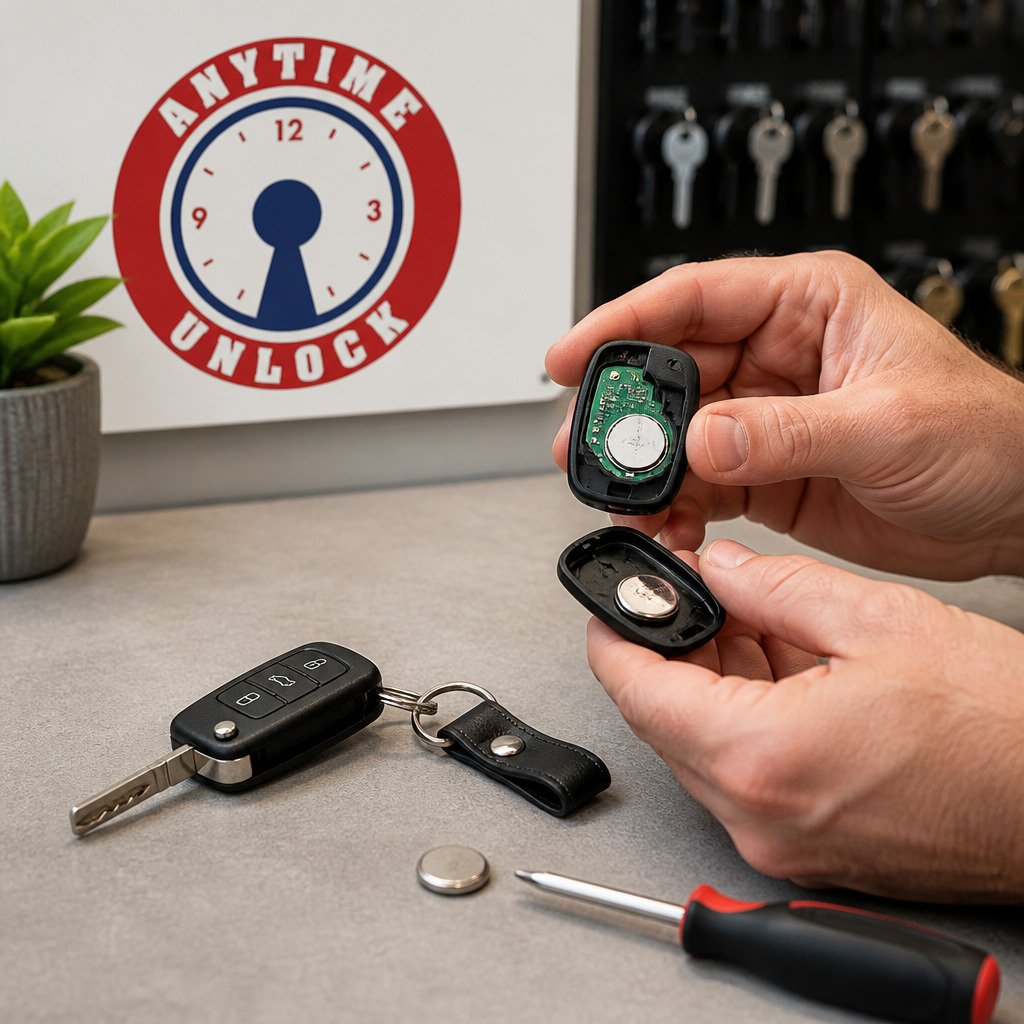
Start with the basics. Open the fob carefully, most use a small flat tool or a fingernail in the seam, and look at the battery.
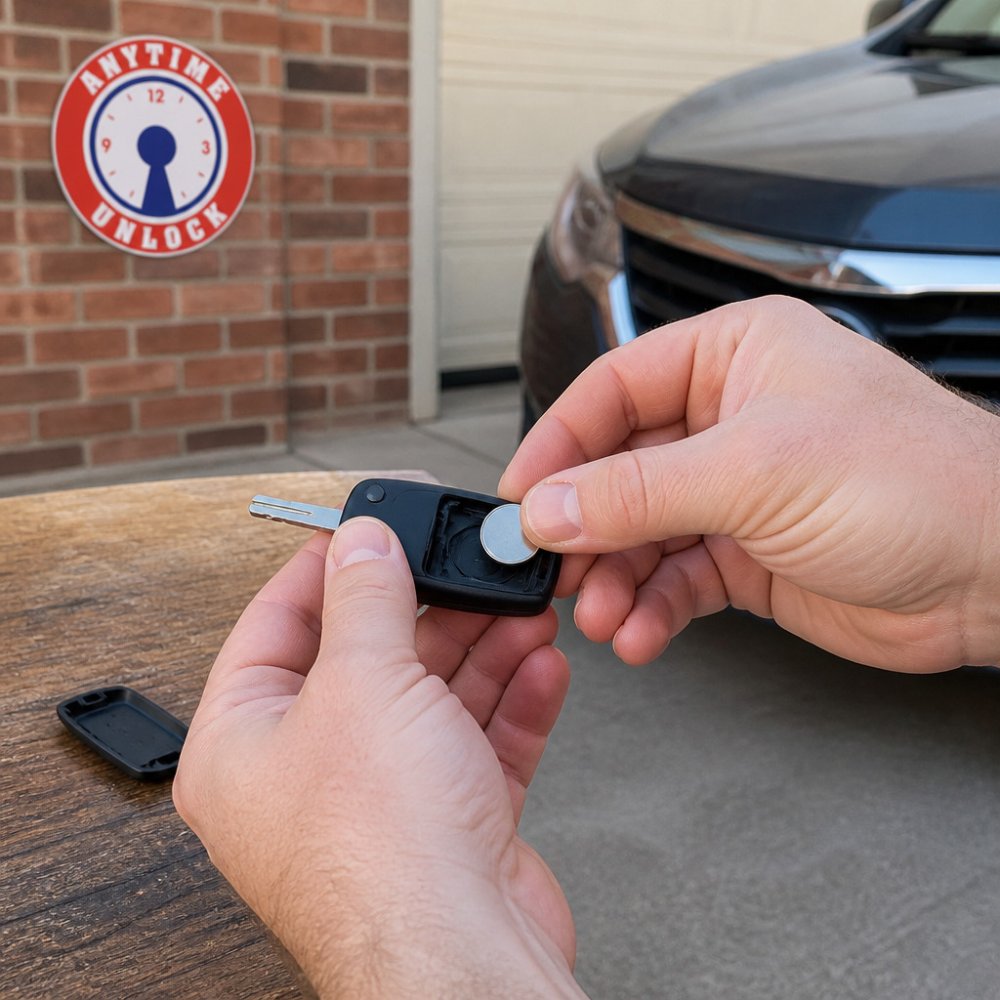
- Confirm the battery type. Most fobs use a coin cell such as a CR2032 or CR2025. Check the number printed on the old battery or in your owner's manual.
- Check the polarity. The positive (+) side usually faces up, toward the cover. Reversed batteries will not power the fob.
- Clean the contacts. Wipe the battery and the metal contacts with a dry cloth or a cotton swab. Do not touch the contacts with bare, oily fingers.
Once the battery is in correctly, test the fob by pressing the lock button while standing close to the car. A working fob usually makes the door locks respond or the hazard lights flash.
Diagnose the Fault: Fob, Battery, Vehicle, or Programming
Most guides give you a list of possible causes and leave you to guess. This section gives you a decision path: each test produces a result, and the result tells you which branch to take next. Work through it in order. Stop as soon as a test points clearly to one cause, and do not attempt a reprogramming procedure until you have ruled out the simpler faults.
Test 1: Does the fob transmit at all?
Stand within about 3 feet of the driver's door and press the lock button while watching the fob and the car.
- No light, no click, no door response. The fob is not transmitting. Go to Test 2.
- Fob light flashes but the car does nothing. The fob has power but the car is not receiving or accepting the signal. Go to Test 4.
- Doors lock or unlock normally. The fob and receiver are working. The problem is intermittent or distance-related. Go to Test 3.
Test 2: Is the battery installed and making contact?
Open the fob and confirm three things: the battery number matches the old cell or the owner's manual (common sizes are CR2032, CR2025, and CR1632), the positive (+) side faces the correct direction marked in the case, and the metal retaining tabs press firmly on the battery. A battery that is correct but slightly too thin for the holder will lose contact when the case is closed.
- Battery reversed, loose, or wrong size. Correct it, reseat the cover until it clicks, and retest. If the fob now works, you are done.
- Battery correct and seated but still no transmission. Try a fresh cell from a sealed package. Coin cells lose voltage on the shelf, and a cell that tests fine in a package may still be too weak under load. If a fresh cell still produces nothing, the fob itself has failed. Go to Test 5.
Test 3: Is the problem distance, interference, or a weak fob?
A fob that works only when held against the door handle is usually weak, not unprogrammed. Two other causes mimic this pattern: radio interference and a failing fob button.
- Works close, fails at 30 feet. Replace the battery with a fresh name-brand cell before assuming a programming fault.
- Works in some locations but not others. Interference is likely. Cell towers, airport radar, large parking structures, and aftermarket phone chargers can swamp the fob's signal. Move the car 100 feet and retest.
- One button works, another does not. The button membrane or its contact pad is worn. This is a fob repair, not a reset.
Test 4: Is the car receiving the signal?
If the fob transmits but the car ignores it, the fault may be on the vehicle side. The receiver, antenna, wiring, and body control module all sit between the fob and the door locks.
- Try the spare fob. If the spare works, the original fob is the problem. If neither fob works, the vehicle side is the problem.
- Check the car battery. A weak 12-volt battery causes receivers and body modules to behave erratically. If the engine cranks slowly or the interior lights dim, charge or replace the car battery before any reprogramming.
- Look for recent body or glass work. A replaced windshield with a metallic tint, a new dash cam wired into the wrong circuit, or a repaired door can disturb the antenna or its wiring.
If the spare fob also fails and the car battery is healthy, the fault is in the vehicle's receiver or antenna system. That is a diagnostic-shop job, not a driveway reset.
Test 5: Is the fob damaged?
Inspect the case for cracks, the buttons for tears, and the circuit board for corrosion or a dark burn mark. Water damage often leaves a green or white crust on the board. A fob that has been through the washing machine may work for a day and then fail as corrosion spreads. Damaged fobs are replaced, not reset.
Test 6: Is the engine start affected?
This is the split that most guides blur. Press the lock button, then try to start the engine.
- Buttons fail but the engine starts. The remote function is at fault. The immobilizer has already recognized the transponder chip, so the key is authorized. This is usually a fob battery, fob button, or pairing issue.
- Engine will not start and the security light flashes. The immobilizer does not recognize the transponder chip. A button-press reset will not fix this. Go to the immobilizer section below.
- Engine starts only when the fob is held against the start button or ignition. The fob battery is too weak to power the transponder coil at normal distance. Replace the battery first.
What each result means
| Result | Likely cause | Next step |
|---|---|---|
| No fob light, no car response | Battery or fob failure | Recheck battery, try fresh cell, then replace fob |
| Fob light, no car response, spare works | Original fob fault | Replace or repair fob |
| Fob light, no car response, spare also fails | Vehicle receiver or antenna | Diagnostic shop |
| Works close only | Weak battery or interference | Fresh battery, move location |
| Buttons fail, engine starts | Remote or pairing fault | Reset or pair the fob |
| Engine will not start, security light on | Immobilizer or transponder | Dealer or locksmith with programming equipment |
Use this table as your map. Only the rows that point to a remote or pairing fault justify the reset procedures in the next section.
How to Reprogram a Key Fob After Battery Replacement
Many cars can be reset without any special tools. The exact steps depend on the make, model, and year, so check your owner's manual first. The general approach looks like this:
- Get in the driver's seat and close all the doors.
- Turn the ignition on and off a set number of times, often three or four, as the manual describes.
- Press a fob button while the car is in programming mode.
- Wait for the door locks to cycle or the horn to chirp to confirm the pairing.
- Test the fob from outside the car.
Some vehicles only need the reset when the battery has been out for a while. Others only respond to a reset with a second working fob present. If the procedure in your manual does not match what you see, stop and try a different method rather than guessing.
Reset Procedure When the Ignition Is Involved
Some reset methods depend on how the ignition is turned. Pay close attention to these points:
- Use the correct key position. Turn the key to the position the manual specifies, not just to "on" or "off" by feel.
- Keep the timing steady. Many procedures require quick, even cycles, so count them out rather than rushing.
- Watch for a confirmation. A chirp, a light flash, or a lock cycle usually means the car accepted the change.
If the reset fails, check that the car battery itself is in good shape. A weak car battery can cause fob problems that look like programming faults.
How to Sync a Key Fob to a Car
Syncing, also called pairing, links the fob's signal to the car's receiver. It is a separate step from a basic battery swap, and it is often needed when the fob was disconnected for a long time or a new fob was added.
A typical sync works like this:
- Sit in the driver's seat with all doors closed
- Put the key in the ignition in the required position
- Press the lock or unlock button on the fob within the time window the manual allows
Keep in mind that some cars allow only a limited number of fobs to be paired at once. If you add a fob beyond that limit, the car may not accept it, and you will need to remove an old one first.
Model Limits, Immobilizer Faults, and When to Call a Locksmith
Not every fob can be reset at home, and the difference is not random. It follows the vehicle's model year, the type of fob, and whether the car uses a transponder immobilizer, a rolling-code remote, or both. Understanding those limits before you start saves you from following instructions that were never meant for your car.
Why self-programming works on some vehicles and not others
Older vehicles, roughly those from the 1990s through the mid-2000s, often use simple remote systems that enter a programming mode through an ignition cycle or a door-lock sequence.
A practical rule: if your owner's manual describes a do-it-yourself fob programming procedure, the car supports it. If the manual says "see your dealer," the vehicle requires equipment you do not have.
Compatibility checks before you attempt a reset
Run these checks before any programming attempt:
- Match the fob part number. Fobs that look identical can operate on different radio frequencies. A fob from a different trim level or model year may fit the ignition but never pair.
- Confirm the fob type. A remote head key, a smart key with push-button start, and a flip-key remote each use different pairing steps. The procedure for one will not work on another.
- Check the fob count limit. Many vehicles accept a fixed maximum number of fobs, commonly four to eight. If the limit is full, the car will reject a new fob until an old one is erased with a diagnostic tool.
Immobilizer and transponder faults versus remote-button faults
These are two separate systems that share one key, and confusing them is the most common reason people replace a fob that was never broken.
- The remote system locks and unlocks the doors. It runs on the fob's battery and transmits a radio signal to a receiver in the car.
- The immobilizer system authorizes the engine to start. It reads a passive transponder chip in the key, which needs no battery of its own, through a coil around the ignition or start button.
That difference explains the symptom patterns:
- Buttons dead, engine starts. The remote side has failed, but the transponder chip was read successfully. The fob battery, the fob's remote circuit, or the pairing is at fault. A reset may help.
- Buttons work, engine will not start, security light flashes. The remote side is fine, but the immobilizer is not reading the chip. This is a transponder or immobilizer fault. A button-press reset will not fix it, and repeated attempts can deepen a lockout.
- Both dead. Start with the fob battery. If a fresh battery restores neither function, the fob or the vehicle's receiver is at fault.
A transponder chip does not need the fob battery to be read at close range, which is why a dead fob can still start a car when held against the start button.
When to stop and call a locksmith or dealer
Stop self-diagnosing and call a professional when any of these is true:
- The engine will not start and the security light stays on or flashes after a fresh battery and a correct reset attempt.
- Neither the original fob nor a known-good spare works, pointing to a vehicle-side receiver or immobilizer fault.
- The fob is physically damaged, water-logged, or has a cracked circuit board.
A locksmith with automotive programming equipment may be able to pair a fob and clear some immobilizer faults on-site. A dealer is typically the option when the vehicle needs module-level reprogramming or a software update. Either way, have your vehicle identification number, proof of ownership, the fob part number, and a record of the steps you already tried.
Get Your Key Fob Working Again With Anytime Unlock and George's Key Shop
If your fob still won't respond after a battery change, Anytime Unlock and George's Key Shop can help. Anytime Unlock and George's Key Shop is the oldest locksmith company in Lubbock, established in 1971. Our team handles automotive lockouts and key programming, and we offer 24/7 mobile service so help can come to you wherever your car is parked.
For more on key programming, visit our key programming services page or get a free quote before you commit to a repair.
Frequently Asked Questions
Do I need to reprogram my key fob after changing the battery?
Usually not. Most key fobs keep their pairing when the battery is replaced quickly, and the fob continues to work with the vehicle. Reprogramming is typically needed only when the battery is out long enough for the fob to lose its memory, or when the fob does not respond after a correct battery installation. Try the simple checks first: confirm the battery polarity, press a button a few times near the vehicle, and test the fob at the door and at the ignition. If the fob still fails, follow the reset or programming steps in this guide, or contact a locksmith for a diagnosis before paying for a new fob.
How do I reset a car key fob after replacing the battery?
Start by reinstalling the battery with the positive side facing the correct way and pressing the buttons to clear any residual charge. Test the lock and unlock buttons at close range. If the fob still does not respond, many vehicles use a reset sequence that involves turning the ignition on and off a set number of times while holding the fob near the start button, or pressing the lock and unlock buttons in a specific order. The exact sequence depends on the make, model, and model year, so check the vehicle owner's manual before trying any procedure. If you cannot find the sequence, a locksmith can confirm the correct method for your vehicle.
Why is my key fob not working after a battery change?
The most common causes are a battery installed with the wrong polarity, a weak or low-quality replacement battery, a damaged battery contact, or a fob that lost its programming during the battery swap. Less common causes include physical damage inside the fob, moisture, or a problem with the vehicle's receiver or antenna. Check the battery orientation and test with a fresh battery first. If the vehicle still does not respond, the issue may be in the vehicle's receiver or immobilizer, which requires a diagnostic check rather than a simple reset.
When should I call an automotive locksmith for key fob problems?
Call a locksmith when the fob still fails after a correct battery installation, when the vehicle does not detect the key, when the immobilizer warning light stays on, or when the fob needs to be programmed or replaced. A locksmith can read the vehicle's system, confirm whether the fault is in the fob or the car, and program a replacement or spare fob. A locksmith offering key programming and mobile service may help avoid the cost of towing a vehicle to a dealership for a basic programming job.