 how-to
How to Secure a Storefront After Losing a Key
Last Updated: November 6, 2026
Quick Summary
Lock every entrance, keep the alarm on, and call a locksmith right away to rekey or replace the affected locks. Rekey when the lock is sound, but replace it if it is damaged or the key controls several doors, so the lost key cannot be used to get into the storefront after losing a key.
- Search for 15 to 20 minutes before assuming the key is gone.
- Check for forced-entry marks, missing inventory, or camera footage showing the key being handled.
- Rekey when the lock is sound and the key was simply lost.
- Replace the lock if it is damaged, worn, or below commercial standards.
- Rekey every lock a master or keyed-alike key could open, not just the front door.
Table of Contents
- What to Do Immediately After Discovering a Storefront Key Is Missing
- Assessing Whether the Key Was Lost or Stolen
- Identifying Which Doors and Locks the Key Can Open
- Rekey or Replace: How to Choose the Right Lock Fix
- Securing the Premises Until a Locksmith Arrives
- Protecting Against Lost Master Keys and Restricting Staff Access
- Documenting the Incident and Booking Your Lock Service Next
- Frequently Asked Questions
What to Do Immediately After Discovering a Storefront Key Is Missing
Losing a storefront key is stressful, but the first hour matters most, so act quickly if you find yourself dealing with a storefront after losing a key. Your goal is simple: stop anyone from using that key to get in. Start by retracing your steps, checking the usual spots, and asking staff whether they last saw it. Then act fast, because a lost key can be a security risk for the whole building.
Here is the order we recommend:
- Search for 15 to 20 minutes. Check the register, the back office, staff lockers, and any place the key was last used.
- Write down who had the key. Include employees, cleaners, landlords, and anyone who borrowed it.
- Call your locksmith right away. Ask what the job will involve.
- Keep the door secured while you wait. Lock it, keep the alarm on, and do not leave the storefront unattended.
Do not wait to see if the key turns up. A stolen key used at 2 AM can cost you far more than the cost of a lock service.
Assessing Whether the Key Was Lost or Stolen
Before you pick a fix, figure out what likely happened. A key that fell out of a pocket is a different problem from one that may have been taken on purpose.
Look for these signs of theft:
- Signs of forced entry, such as scratches around the lock or a bent frame
- Missing inventory, cash, or equipment
- A key that disappeared right after a staff change or a fired employee
- Security camera footage showing someone handling the key
If you see any of these, treat it as a possible break-in. Call the police and tell them you suspect the key was stolen. Keep the camera footage and write down the exact time you last saw the key.
A common mistake is assuming a lost key is harmless. Even a key that was only misplaced may have been picked up by someone who should not have it, so treat any storefront after losing a key as a possible security issue until you know otherwise.
Identifying Which Doors and Locks the Key Can Open
Next, figure out what the key opens. Many storefronts use one key for several locks, such as the front door, a back door, a storage room, and a safe.
Make a quick list:
- Every door the key fits, including side and rear entrances
- Interior locks like the office, stockroom, or cash drawer
- Any gate, roll-up door, or padlock that shares the key
Check your key tags and paperwork. If you have a key code, your locksmith can use it to match the key to the right locks. If you do not have a list, ask your locksmith to test the locks on site so nothing gets missed.
Rekey or Replace: How to Choose the Right Lock Fix
Once you know which locks are affected, decide between rekeying and replacing.
Rekeying changes the internal pins of a lock so the old key no longer works. Your locksmith keeps the same hardware and gives you new keys.
Replacing swaps out the whole lock. You may need this when the lock is damaged, worn, or does not meet your security needs, and when the key system itself is compromised.
Use this decision tree, in order:
- Is the lock damaged or showing forced-entry marks? Replace it. A bent frame, scratched cylinder, or loose strike plate means the hardware may already be compromised, and rekeying a damaged lock just gives you a new key for a weak lock.
- Is the missing key a master key or part of a keyed-alike system? If one key opens several doors, rekeying only the front door leaves the other doors exposed. Rekey every lock in the system, or replace the system with one that lets you issue distinct keys per door.
- Can you reliably exclude the key from returning? If the key was lost in a controlled area and you are confident it cannot be used, rekeying the affected locks is enough. If it was stolen, lost near the business, or attached to identifying information, treat it as exposed and rekey all locks it can operate.
- Is the lock old, hard to operate, or below current commercial standards? Replace it. A storefront entrance should have a commercial-grade deadbolt and a cylinder that resists picking and bumping; an aging residential-grade lock is a liability regardless of the key situation.
- Are several keys unaccounted for? Replace or rekey every lock in the affected system, and consider moving to an electronic access control system so future key losses do not require hardware changes.
A common pattern is to rekey the front door and forget the back door, storage room, and roll-up gate that shared the same key.
Watch out: do not let a locksmith rekey only the lock you point to without testing the rest of the keyed system, a master key that still opens the rear entrance defeats the purpose of the service call.
If you are unsure, ask your locksmith to inspect the lock and the key system on site. Most will tell you on the spot whether rekeying is enough or whether replacement is the safer call.
The article lays out how to decide between the two fixes, so this table summarises those choices side by side.
| Option | Best for | Key difference |
|---|---|---|
| Rekeying | Sound lock, key simply lost | Keeps hardware, issues new keys |
| Replacing | Damaged, worn, or non-compliant lock | Swaps the whole lock |
| Rekey all locks | Master key or keyed-alike system | Covers every door the key opened |
| Replace system | Key system compromised | Enables distinct keys per door |
Securing the Premises Until a Locksmith Arrives
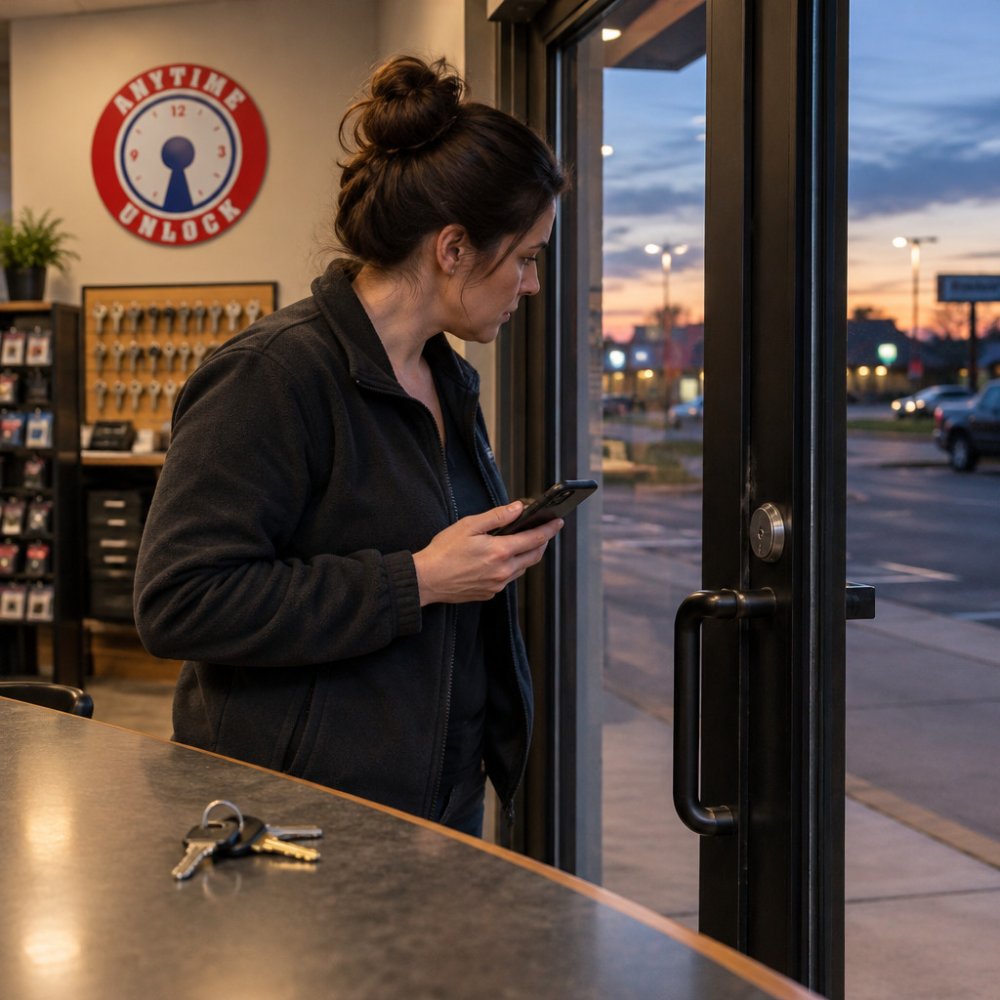
While you wait, reduce your risk. Start with the doors and windows you can control right now.
- Lock every entrance and confirm the deadbolt is engaged
- Turn on your alarm system if you have one
- Close blinds or shades so people cannot see inside
- Move valuables to a locked back room or safe
- Keep a staff member on site if you can
If the lock is damaged, avoid trying to force it. A poorly handled repair can make the problem worse. Use a temporary barrier like a padlocked hasp or a plywood board if the glass or frame is broken, and make sure it is secure.
Watch out: do not hand the only key to someone who is not authorized to hold it, even if they say they need access. Confirm identity before anyone enters.
Protecting Against Lost Master Keys and Restricting Staff Access
A lost storefront key often exposes a bigger issue: no clear control over who holds keys. Fixing this now prevents the next problem, and it is the part most storefront guides skip.
Start with a simple key policy:
- Keep a key log. Record who has each key, when it was issued, and when it was returned.
- Limit master keys. Give master keys only to owners or managers who truly need them, and label them as master keys so they are never handed out casually.
- Collect keys when staff leave. Make key return part of every exit checklist, and confirm the return in writing.
- Review access every few months. Remove keys for former employees and vendors, and re-check who still holds a working key.
Then run a staff handover procedure for the replacement keys:
- Collect every remaining key from employees, cleaners, and vendors before you issue new ones. A new key system is only as good as the old keys you recover.
- Issue replacement keys in person and record the date, the recipient, and the key identifier in the key log. Do not leave replacement keys in a drawer or mailbox.
- Revoke temporary credentials. If you use an electronic access control system, remove the missing key's access and any temporary codes or cards issued to staff or contractors. Change keypad codes that were shared with anyone who should no longer have access.
- Confirm who receives each new key and set a return date for contractors and temporary staff.
If you have many keys to manage, consider an electronic access control system. These systems let you add or remove access without changing physical keys, and they give you a record of who entered and when. Ask your locksmith about commercial access control options for your storefront.
Watch out: do not hand a replacement key to a contractor or cleaner without recording it in the key log, an unrecorded key is the same problem you just paid to fix.
Anytime Unlock and George's Key Shop offers commercial locksmith services for storefronts and businesses.
Documenting the Incident and Booking Your Lock Service Next
After the lock is fixed, write down what happened while the details are fresh. Include the date, time, which key was lost, which locks were affected, and what you did to respond. Save receipts, the locksmith's invoice, and any camera footage.
This record helps you in three ways:
- It supports an insurance claim if one applies
- It shows the police what you know if a theft occurred
- It gives you a baseline for your key policy going forward
Then book your lock service without delay. Before you call, have this ready:
- A list of affected doors and locks
- Your storefront's hours and best time for the visit
- Any key codes or lock details you have on hand
Need help right now? Anytime Unlock and George’s Key Shop provides commercial locksmith services. Contact them to request a free quote and get your storefront secured.
Frequently Asked Questions
What should I do immediately after losing a storefront key?
Start by checking where you last had the key and who had access to it. Then notify managers and key holders, and secure the entrance you can reach right now with a temporary barrier or an extra lock. Call a locksmith as soon as you can, because the longer a lost key stays unaccounted for, the more time someone has to use it. Write down the time you discovered the loss, the doors it may open, and every person who could have held it. That record will help the locksmith and your insurance company later.
Should I rekey a storefront lock after losing a key?
Often, yes. Rekeying changes the internal pins so the lost key no longer works, and it usually costs less than replacing the lock. It is the right choice when the lock hardware is in good condition and the key is the only concern. If the lock is worn, damaged, or the key is a master key that opens several doors, replacing the lock or the cylinder may be the safer option. A locksmith can inspect the hardware and recommend which approach fits your situation.
Can a locksmith change a commercial lock without replacing the whole lock?
Yes. In many cases a commercial locksmith can rekey the cylinder or swap only the cylinder while keeping the existing deadbolt, handle, and frame. This approach keeps the cost lower and the installation faster. Some commercial locks, such as certain electronic or specialty models, may require a different method, so ask the locksmith to confirm the lock type before work begins. Pricing depends on the lock type, number of locks, and time of service, so request a quote before scheduling.
How can I prevent unauthorized access after an employee loses a key?
Collect a written list of every key holder and the doors each key opens. Rekey or replace the affected locks so the lost key stops working, then issue new keys only to people who need them. Keep a simple log showing who receives each key and when, and require staff to report lost keys immediately. Reviewing this log every few months helps you catch gaps before they become a security problem.
Losing a key is an inconvenience you can recover from quickly. Act fast, decide between rekeying and replacing, and tighten your key control so the next missing key does not turn into a bigger problem.