 ultimate-guide
Emergency Car Lockout Response Time: What to Expect
Table of Contents
- Average Locksmith Arrival Time: What the Numbers Look Like
- Factors Affecting Emergency Locksmith Response
- What to Do During a Car Lockout While You Wait
- How to Find a Reliable 24/7 Locksmith
- Emergency Car Lockout Response Time: Urban vs. Rural and After-Hours
- Emergency vs. Non-Emergency Lockout Service: What Changes
- Insurance, Roadside Assistance, and Verification: What Competitors Skip
- Frequently Asked Questions
Last Updated: September 20, 2026
Average Locksmith Arrival Time: What the Numbers Look Like
Emergency car lockout response time is the interval between the moment you call a locksmith and the moment a technician begins working on your vehicle. In most urban service areas, that window runs 20 to 45 minutes. Rural callers should expect longer.
Here's the part most callers don't realize: the number you hear on the phone is a dispatch estimate, not a guarantee. Dispatch time and drive time are two separate clocks. A shop with a five-minute dispatch process can still take 40 minutes to reach you if its nearest mobile locksmith unit is across town.
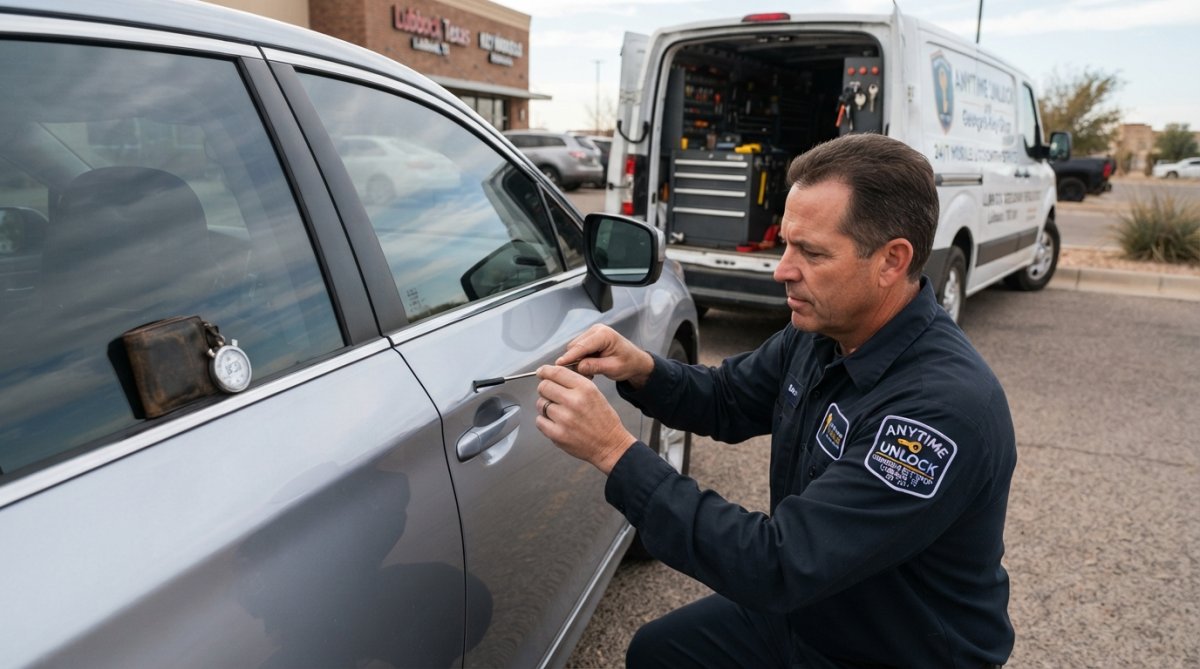
At Anytime Unlock and George's Key Shop, we've handled vehicle lockouts since 1971, and the pattern has barely changed: the arrival window depends far more on where the truck is when you call than on how fast the shop answers the phone.
A typical breakdown looks like this:
| Phase | Typical Duration | What's Happening |
|---|---|---|
| Call intake and verification | 2-5 minutes | Confirming identity, vehicle, and location |
| Technician dispatch | 3-10 minutes | Assigning the nearest mobile unit |
| Drive time | 10-30 minutes | Varies by traffic and distance |
| On-site unlock | 5-15 minutes | Depends on vehicle and lock type |
The lesson is simple. Ask for an estimated time of arrival (ETA) in minutes, not a vague promise like "soon."
Factors Affecting Emergency Locksmith Response
Several variables decide how fast a technician reaches you, and most are outside anyone's control. The trick is knowing which ones you can influence and which ones you simply have to plan around.
Distance and fleet density. This is the single biggest lever. A shop with a tight service radius and multiple mobile units can often arrive in 15 to 25 minutes, while a shop covering an entire metro area may quote 45 to 60 minutes because its nearest truck is 20 miles away. When you call, ask how many mobile units are currently on the road and where the closest one is staged.
Time of day. Weekday rush hours (roughly 7-9 a.m. and 4-7 p.m.) can add 10 to 20 minutes of drive time in dense areas. Overnight calls between midnight and 5 a.m. often move faster on the road but slower to dispatch, because fewer technicians are on shift and the ones working may be finishing another job.
Weather and seasonal impact. This is the factor most guides skip, and it matters more than people expect. Ice, snow, and freezing rain slow every mobile unit and increase call volume simultaneously, because cold snaps cause more lockouts (frozen latches, dead batteries, keys locked inside while warming up the car). A common pattern is that response windows stretch by 15 to 30 minutes during a winter storm, and some shops temporarily stop quoting firm ETAs until conditions improve. Summer heat waves create a different spike: more dead batteries and more calls from drivers who locked keys inside while loading or cooling the car. In both cases, the bottleneck is not the shop's willingness to help, it is physics and demand arriving at the same time.
Call volume at the dispatch center. When a cold snap or storm hits, lockout calls can triple within an hour. Even a well-staffed dispatch center has to queue jobs, and the queue is served in order of when calls came in, not by who is closest.
Vehicle type and lock system. Older mechanical locks with a traditional keyway typically open in 5 to 10 minutes once the technician is on site. Newer vehicles with electronic latches, side airbags, and laminated glass take longer because the technician has to work around sensors and cannot use the same tools. Jobs that require key fob programming or transponder key cutting add time on top of the unlock itself.
- Distance from the nearest mobile locksmith unit
- Time of day and peak traffic hours
- Current call volume at the dispatch center
- Weather conditions and seasonal demand spikes
- Vehicle type and lock system (mechanical vs. electronic)
- Whether the job needs key fob programming or just key retrieval
What to Do During a Car Lockout While You Wait
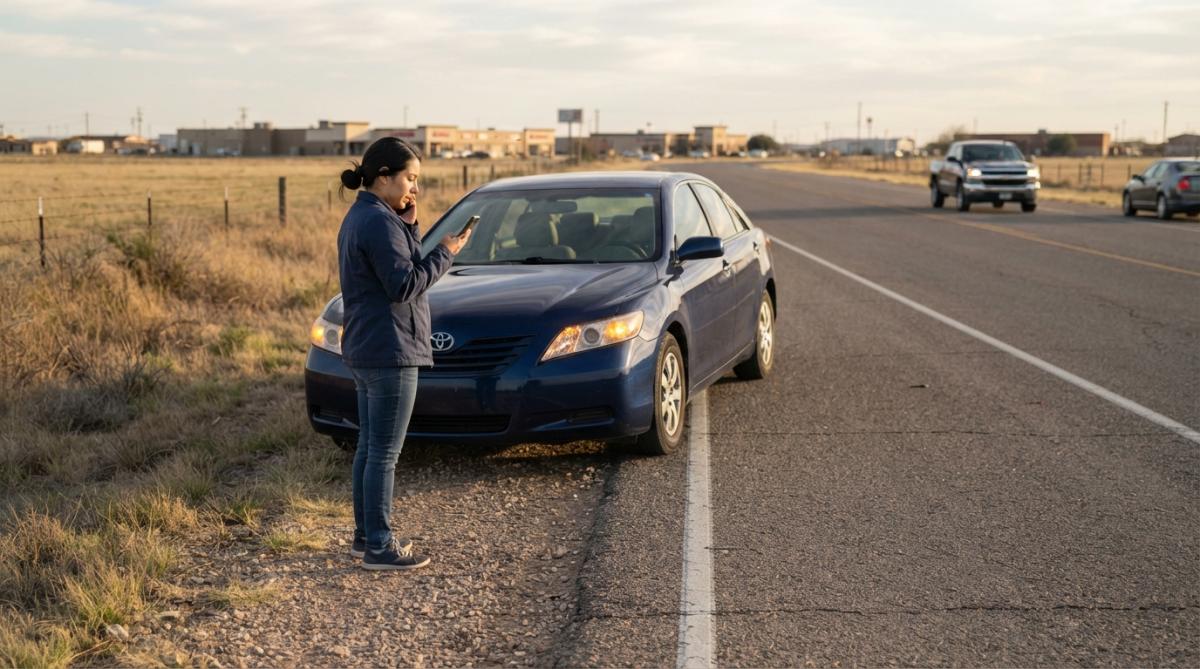
Stay with your vehicle and stay visible. If you're on a roadway, move to the shoulder or sidewalk, turn on your hazard lights, and wait on the side away from traffic. Do not stand in the lane, and do not try to wave down passing cars.
Use the wait productively. Confirm your exact location and send it to the dispatcher, especially if you're on an unfamiliar street or in a parking structure. Check whether roadside assistance through your insurer or auto club can cover part of the cost. Many policies include lockout service, and using it costs you nothing extra.
A few things to avoid while you wait:
- Don't leave the vehicle unattended if valuables are inside
- Don't accept help from unmarked strangers offering to "pop it open"
- Don't attempt to wedge the door or window yourself
That last point matters more than people think. DIY attempts with coat hangers and wedges bend door frames and damage weather stripping, and modern vehicles with side airbags can be genuinely dangerous to pry on. The repair bill often exceeds the cost of a professional lockout service. That's the DIY versus professional trade-off in one sentence.
How to Find a Reliable 24/7 Locksmith
A reliable 24/7 locksmith answers the phone at 2 a.m., quotes a clear service call fee before dispatch, and confirms identity on both ends of the call. Those three habits separate legitimate operators from the pop-up listings that flood search results after every storm.
Verification and safety protocols protect you. A professional shop will ask for your name, your vehicle's make and model, and proof of ownership or registration before opening anything. That's not suspicion, it's procedure. Any technician who skips those steps and opens a car on request alone is a liability.
Watch for these red flags:
- A price quoted on the phone that changes when the technician arrives
- No business address, license information, or established history
- Pressure to pay in cash only, before the work is done
- A technician who arrives in an unmarked vehicle with no uniform or ID
The Federal Trade Commission's consumer guidance on service scams recommends getting the total price, including the service call fee, before work begins. Legitimate shops welcome that question.
Longevity is a useful signal too. A company that has operated in the same area for decades has a reputation to protect and a local address you can verify.
Emergency Car Lockout Response Time: Urban vs. Rural and After-Hours
Urban density shortens response times; distance lengthens them. That much every guide says. What they leave out is the mechanism behind the number and what it means for you at 2 a.m.
Urban service areas. In a dense metro area, multiple mobile locksmith units may be staged within a few miles of your location.
Before you agree to a dispatch, ask directly: "Is the person coming to my car employed by your company?" If the answer is vague, or if the dispatcher can't tell you the technician's name, treat that as a red flag. A legitimate shop knows who it is sending.
Urban callers should expect 20 to 45 minutes in normal conditions; rural callers should expect 45 to 90 minutes or more. After-hours adds time on both ends because the overnight fleet is smaller. The single most useful thing you can do is give a precise location and confirm the technician's identity before they arrive.
Emergency vs. Non-Emergency Lockout Service: What Changes
Emergency lockout service prioritizes speed and dispatches the nearest available unit immediately. Non-emergency service, by contrast, is scheduled: you pick a time window, often at a lower rate, and the shop routes a technician accordingly.
What actually changes between the two:
- Dispatch priority. Emergency calls jump the queue. Scheduled work fills the gaps.
- Pricing structure. Emergency and after-hours calls usually carry a premium; scheduled service generally does not.
- Technician assignment. Emergencies go to whichever mobile unit is closest. Scheduled jobs go to whoever is available in that window.
- Documentation. Emergency calls often require faster identity verification, so have your registration or ID ready.
Insurance, Roadside Assistance, and Verification: What Competitors Skip
Two things most lockout guides never mention: your insurance may already cover this, and verification protects you as much as the shop.
Frequently Asked Questions
How long do emergency locksmiths take to arrive?
Emergency car lockout response time varies by location, traffic, and demand. In dense urban areas, arrival windows often fall between 15 and 30 minutes. Rural locations can stretch to 45 minutes or longer because of service radius and distance. Always ask the dispatcher for a specific ETA and a callback number before you hang up.
Can police help with a car lockout?
Police generally do not unlock vehicles. They may assist if a child or pet is trapped inside or if the situation poses an immediate safety risk, but routine vehicle lockouts are handled by a locksmith or roadside assistance program. Call a mobile locksmith directly for faster on-site assistance.
What factors influence the response time of a mobile locksmith?
Several things affect how fast a mobile locksmith reaches you: your geographic location, current traffic conditions, service demand at that hour, weather-related delays, and whether the technician is already on another call. Peak traffic hours and severe weather can add significant time, so build a buffer into your expectations.
Is it faster to call a locksmith or a roadside assistance program?
A local mobile locksmith usually arrives faster because they dispatch from within the service area and carry lock picking tools and key fob programming equipment on board. Roadside assistance programs often route through a national call center, which adds dispatch time. For a straightforward vehicle lockout, calling a local 24/7 locksmith directly is typically the quicker option.