 how-to
Rekey a Lock Without the Original Key: A How-To
Table of Contents
- Can You Rekey a Lock Without the Original Key?
- Rekey vs. Replace a Lock: Which Option Fits Your Situation
- How a Locksmith Makes a Key Without the Original
- Step-by-Step: Rekeying a Pin-Tumbler Lock
- Rekeying Kit for Door Locks: Tools and What to Expect
- Lost Key Deadbolt Options: Immediate Steps and Solutions
- Common Mistakes to Avoid When Rekeying Without the Original Key
- When to Call a Professional Locksmith
- Frequently Asked Questions
Last Updated: October 17, 2026
Can You Rekey a Lock Without the Original Key?
Yes, you can rekey a lock without the original key. The process involves removing the lock cylinder and replacing the internal pins that control which key fits.
We handle this regularly for homeowners who've lost keys, moved into new homes, or want to consolidate multiple locks to a single key. Rekeying doesn't require the original key at all, what matters is access to the lock cylinder itself.
Pin-tumbler locks (the most common residential type) open when the correct key lifts internal pins to a specific height called the shear line. Without the original key, you simply replace those pins with a new set that matches your new key.
Rekey vs. Replace a Lock: Which Option Fits Your Situation
Rekeying and replacing differ in cost, timeline, and best use. Understanding the difference helps you choose wisely.
Rekeying means keeping your existing lock hardware and changing only the internal pins so a different key opens it. You keep the same deadbolt, knob, or smart lock on your door. Replacing means removing the old lock entirely and installing a new one.
Choose rekeying when:
- Your lock hardware is in good working condition
- You want to save money
- You need the job done quickly
- You're moving into a new home and want to change who has keys
- You've lost a key and want to eliminate old copies
Choose replacing when:
- Your lock is damaged or broken
- The lock is old and unreliable
- You want to upgrade to a better security grade
- You're installing smart locks or keyless entry
- You want a different type of lock (changing from a keyed knob to a deadbolt, for example)
Rekeying typically costs less than replacement because you're only paying for labor and new pins; replacement involves new hardware, installation, and removal of the old lock. For most homeowners dealing with a lost key, rekeying is the practical choice.
How a Locksmith Makes a Key Without the Original
A locksmith creates a new key without the original by decoding the lock cylinder, identifying the specific pin heights inside your lock, then cutting a key that matches those heights.
Here's how locksmiths approach this:
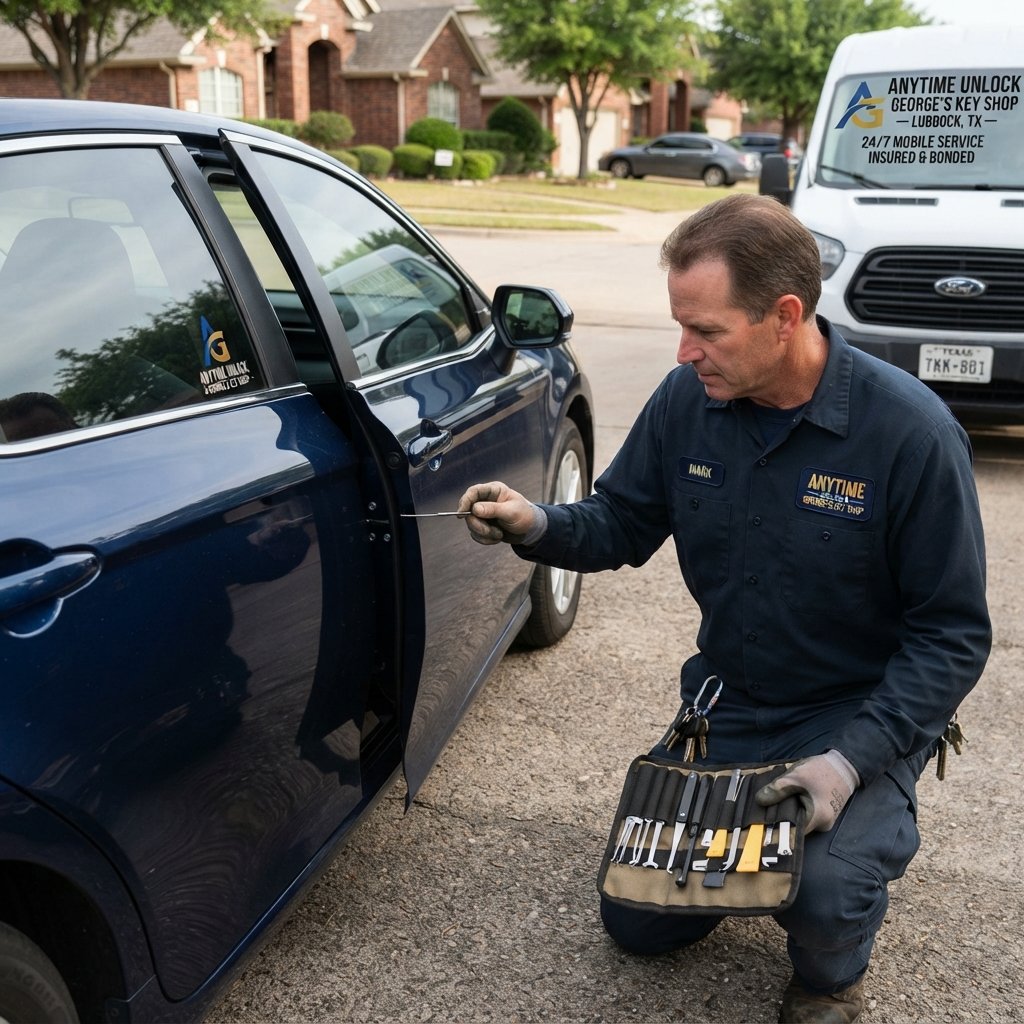
Decoding the lock, The locksmith uses a pick or decoder tool to feel each pin's position inside the lock. By gently lifting each pin to the shear line, they can measure or estimate its height. This tells them the exact code needed for a new key.
Reading the lock, Some locksmiths use specialized decoder equipment to identify pin positions without physically picking the lock.
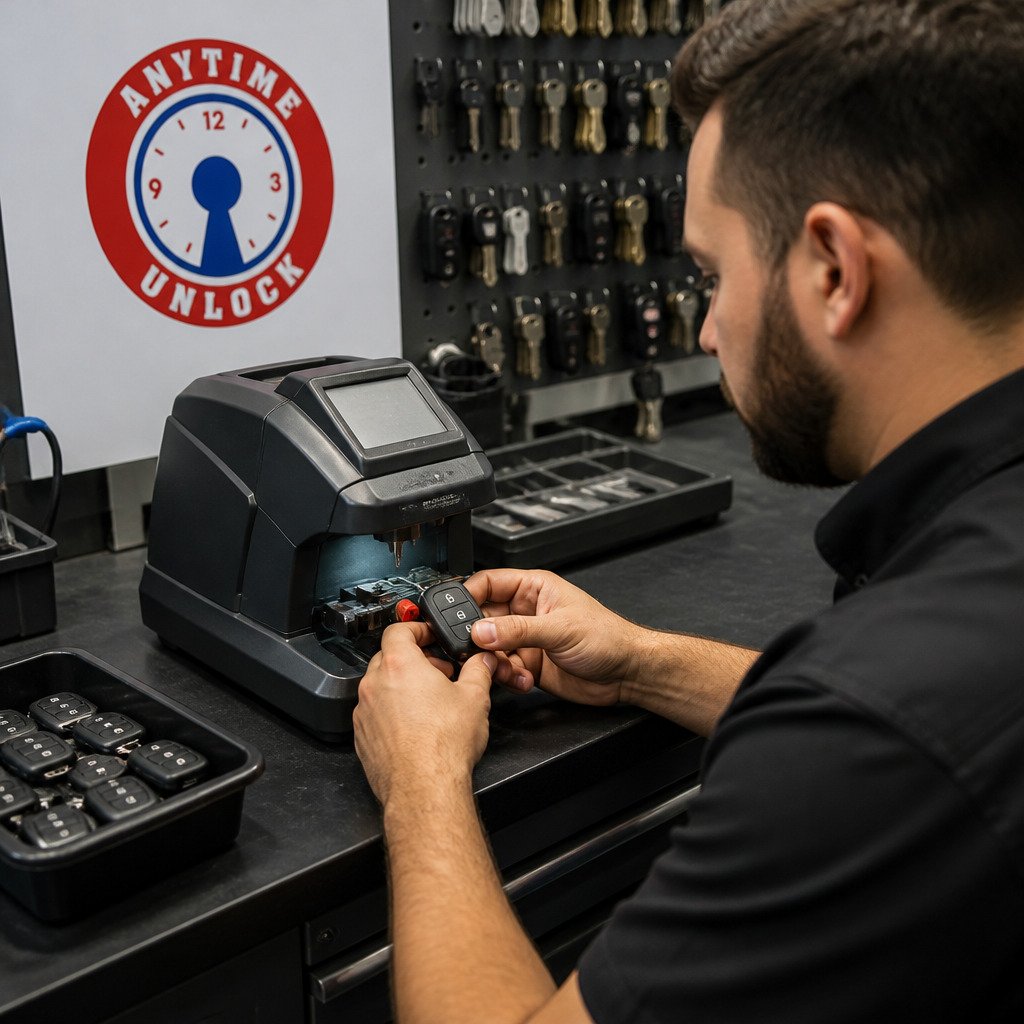
Cutting the key, Once the locksmith knows the code, they cut a key on a key-cutting machine that matches those pin heights.
This process is legal when you own the lock or have authorization from the owner. Locksmiths verify ownership before proceeding, typically a driver's license matching your address or property documentation.
The National Association of Locksmiths provides standards for ethical lock servicing
Step-by-Step: Rekeying a Pin-Tumbler Lock
Rekeying a pin-tumbler lock is hands-on work requiring focus and the right tools. If you're comfortable with detailed mechanical work, you can do it yourself; many homeowners hire a locksmith to avoid costly mistakes.
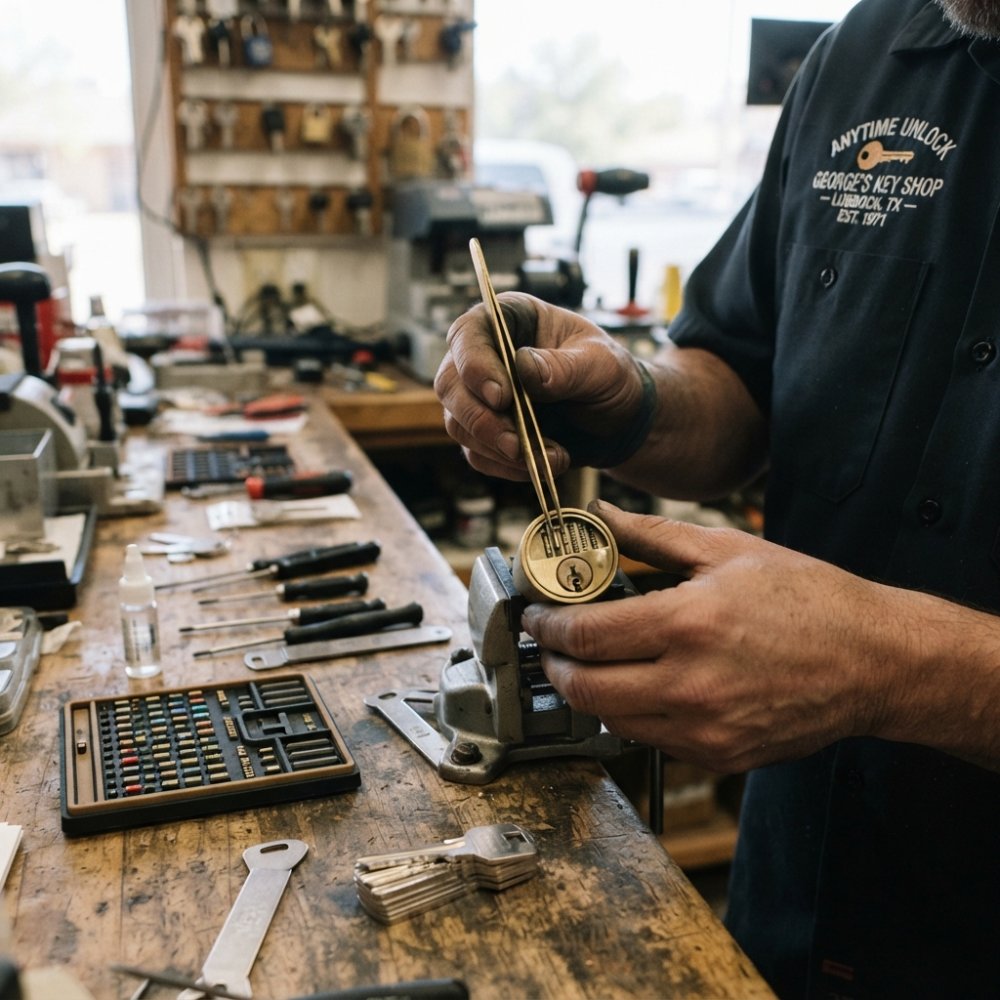
Step 1: Identify Your Lock Type and Cylinder
First, confirm you have a pin-tumbler lock. Most residential door locks, deadbolts, and padlocks use this design, if you see a round cylinder that turns with your key, it's likely pin-tumbler.
Measure the cylinder diameter (usually 1 inch for standard residential locks) and note whether it's a deadbolt, keyed knob, or padlock. Procedures vary slightly by type, though the core principle stays the same.
Open your lock with your current key (or have a locksmith open it). You need access to the cylinder to proceed. If the lock is jammed or broken, rekeying won't work, you'll need replacement instead.
Step 2: Remove the Lock Cylinder
Most residential locks can be removed without taking the entire assembly off the door. Insert your key and turn it to the 12 o'clock position (or the position marked on your lock) to align the cylinder's retaining pin with the removal slot.
Look for a small hole or slot on the lock body, usually on the side or bottom. Insert a small pin, paperclip, or the removal tool from your rekeying kit. Apply gentle pressure while pulling the cylinder straight out toward you.
If the cylinder won't budge, stop. Forcing it can damage the lock. At this point, calling a locksmith saves time and prevents costly mistakes.
Step 3: Disassemble and Replace the Pins
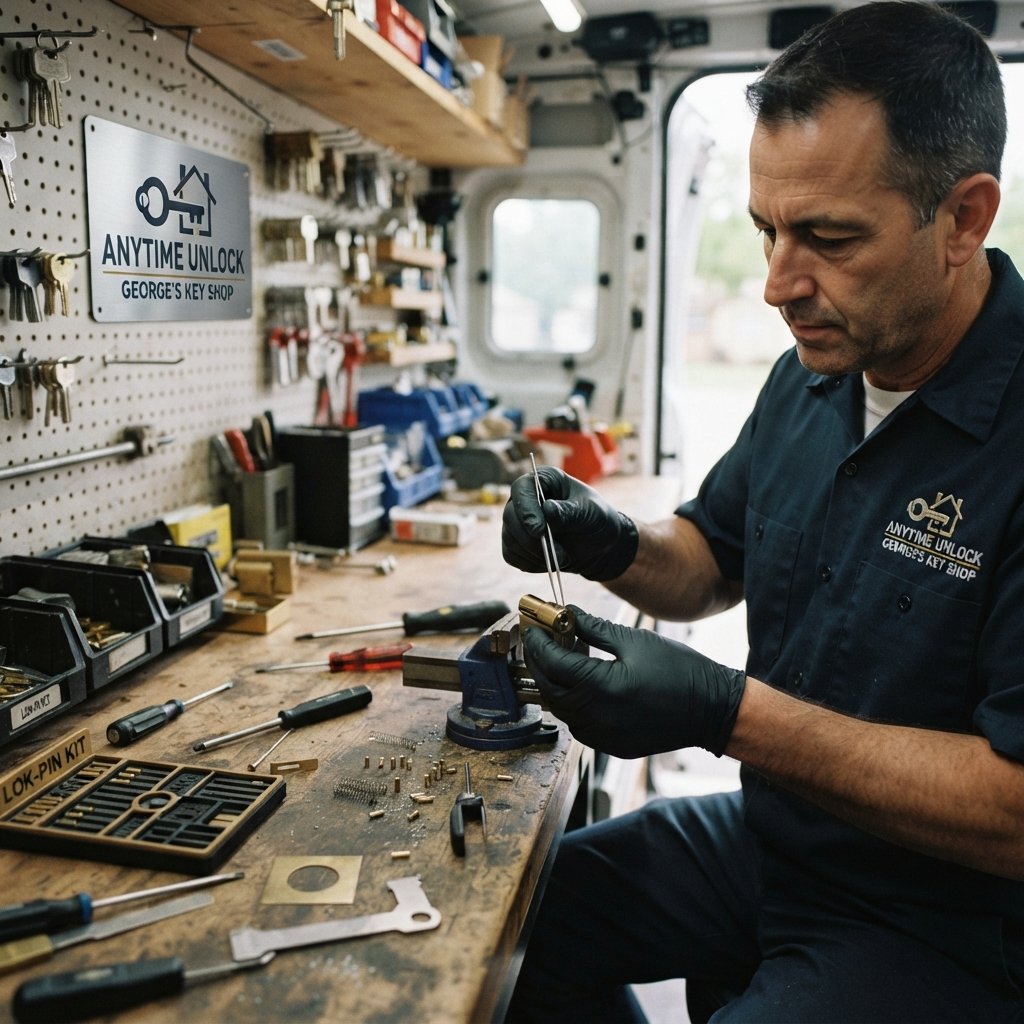
Once the cylinder is out, you'll see the plug (the part that turns) and the bible (the stationary housing). Carefully separate them.
Lay out the old pins in order so you remember which chamber they came from, then replace them with new pins matching your new key.
Insert your new key into the plug and align it with the bible. Place the new pins in the correct order for each chamber.
Once all new pins are in place, carefully reassemble the plug and bible. Make sure the pins sit properly in their chambers, misaligned pins will jam the lock.
Step 4: Reassemble and Test the Lock
Slide the cylinder back into the lock body, aligning the retaining pin slot, and push until you hear or feel a click. It should sit flush with the lock body.
Insert your new key and turn it gently. The lock should turn smoothly from locked to unlocked and back. If it jams or feels rough, stop. The pins may be misaligned.
Test the lock several times in both locked and unlocked positions. If it moves smoothly, you've successfully rekeyed it. Reinstall the lock and test from the outside.
If the lock jams, remove the cylinder again and check pin alignment. Misplaced pins are the most common cause of failure.
Rekeying Kit for Door Locks: Tools and What to Expect
A rekeying kit contains the basic tools to rekey pin-tumbler locks yourself, ranging from simple to comprehensive depending on the lock types you plan to work with.
Standard rekeying kit includes:
- Pin removal tool (removes the cylinder from the lock body)
- Pin gauge or follower (holds pins in place during reassembly)
- Assorted replacement pins in different heights
- Instructions specific to your lock type
What to expect from a kit:
- Cost varies based on the number of locks you can rekey
- Kits designed for residential locks typically handle 3-5 rekeys
- Some kits are lock-brand specific (Schlage, Kwikset, Master Lock)
- Universal kits work with most pin-tumbler locks but require more skill
When a kit isn't enough:
- If your lock is damaged, no kit will help
- If you're uncomfortable with mechanical work, mistakes are costly
- If you have multiple lock types, you may need multiple kits
- Smart locks and high-security locks require specialized tools
For a one-time rekey, buying a kit usually costs more than hiring a locksmith. If you're rekeying multiple locks or plan to do this regularly, a kit makes sense; otherwise, professional service is more practical.
Consumer Reports guide to home security and lock maintenance
Lost Key Deadbolt Options: Immediate Steps and Solutions
Losing a deadbolt key creates an immediate security concern, you don't know who might have found it. Here's what to do right now.
Immediate steps:
- Change your locks or rekey them as soon as possible
- If the key was on a keychain with your address, this becomes more urgent
- Contact your landlord if you rent, they may handle rekeying
- Alert neighbors if the key was found near your home
Your options:
Option 1: Rekey the deadbolt, Replace the internal pins so the old key no longer works.
Option 2: Replace the deadbolt, Remove the old deadbolt and install a new one.
Option 3: Install a smart lock, Replace your mechanical deadbolt with a keyless smart lock. You control access through codes, apps, or biometrics.
Option 4: Add a secondary lock, Keep your existing deadbolt and add a second lock (chain, slide bolt, or additional deadbolt).
For most people, rekeying within 24 hours is the best immediate solution.
Common Mistakes to Avoid When Rekeying Without the Original Key
Rekeying mistakes can damage your lock permanently or leave you locked out.
Mistake 1: Forcing the cylinder out, Pushing or twisting too hard can crack the lock body or strip the retaining pin. If the cylinder doesn't slide out smoothly, stop and call a professional.
Mistake 2: Mixing up pin order, Each chamber requires a specific pin height.
Mistake 3: Damaging the plug or bible, These components are precision-made.
Mistake 4: Using the wrong size pins, Pins come in different heights.
Mistake 6: Reassembling with dirty pins, Dust or debris inside the lock causes binding and jamming.
Mistake 7: Losing small parts, Pins, springs, and the retaining pin are tiny and easy to lose.
If you make a mistake and the lock jams, stop immediately. Continuing to force it will cause more damage.
When to Call a Professional Locksmith
Some situations are better left to professionals. Knowing when to call saves time, money, and frustration.
Call a locksmith when:
- Your lock is stuck, jammed, or difficult to open
- The cylinder won't slide out smoothly
- You're uncomfortable with mechanical work
- You need the job done quickly and correctly
- You have multiple locks to rekey and want consistency
- Your lock is high-security or specialty (smart locks, commercial locks)
- You need proof of ownership or authorization for insurance or legal reasons
Why professional service makes sense:
- Locksmiths have specialized tools that work faster and more reliably
- They can diagnose lock problems you might miss
- They verify ownership before proceeding, protecting your security
- They guarantee the work, if something goes wrong, they fix it
- They can rekey multiple locks to the same key in one visit
- They handle emergency lockouts and urgent situations
Anytime Unlock and George's Key Shop has served homeowners since 1971. We handle rekeying, lock replacement, and emergency lockouts 24/7. Our team verifies ownership, uses professional-grade tools, and guarantees the work.
For a free quote on rekeying or lock replacement, contact us today. We'll assess your locks, explain your options, and provide a clear price before we start any work.
ANSI standards for residential lock security and rekeying specifications
Frequently Asked Questions
Can a locksmith rekey a lock without the original key?
Yes. A locksmith can rekey a lock without the original key by decoding the lock cylinder or using key-cutting equipment to create a new key based on the lock's internal structure. This process involves either removing the lock from the door and disassembling it to access the pins, or using specialized tools to read the lock's keyway and cut a matching key. This is a standard service when keys are lost or stolen.
What's the difference between rekeying and replacing a lock?
Rekeying changes the internal pins so a new key operates the existing lock cylinder, keeping the same hardware in place. Replacing a lock removes the old cylinder entirely and installs a new one with a new key. Rekeying is faster and costs less, but replacement may be necessary if the lock is damaged, incompatible with your security needs, or if you want a different type of lock entirely.
What tools do I need for a rekeying kit for door locks?
A basic rekeying kit includes a plug follower, tweezers, a small screwdriver, springs, and replacement pins in various heights. Some kits also include a tension wrench and key-cutting blanks. Quality matters: cheap kits may have poorly fitting tools that damage the lock. If you're rekeying multiple locks or unfamiliar with the process, calling a professional locksmith is often more practical.
What should I do immediately if I lost my deadbolt key?
First, secure your home by changing your routine entry point if possible, and alert household members to the lost key. Contact a locksmith to rekey or replace the deadbolt so the lost key no longer works. If the key was stolen, consider changing all exterior locks. Document the loss and contact your insurance if the key was part of a security breach. Avoid leaving the door unsecured while waiting for professional help.
Losing a key or moving into a new home creates real security concerns. Rekeying eliminates those concerns quickly and affordably. Whether you handle it yourself or hire a professional, the important thing is acting fast. Anytime Unlock and George's Key Shop makes rekeying simple, we decode your lock, replace the pins, and have you secure with a new key in one visit. Get a free quote today and stop worrying about who might have copies of your old key.