 how-to
How to Avoid Locksmith Bait and Switch: 2026 Guide
Table of Contents
- Why Locksmith Bait and Switch Happens When You're Locked Out
- Red Flags of Locksmith Scams to Watch For
- Questions to Ask a Locksmith Before Hiring
- Finding a Reliable 24 Hour Residential Locksmith Before You Need One
- How to Verify a Locksmith's Credentials and Tools
- What to Do If You Suspect a Locksmith Bait and Switch
- Emergency Preparedness Checklist for Locksmith Scams
- Frequently Asked Questions
Last Updated: September 30, 2026
Why Locksmith Bait and Switch Happens When You're Locked Out
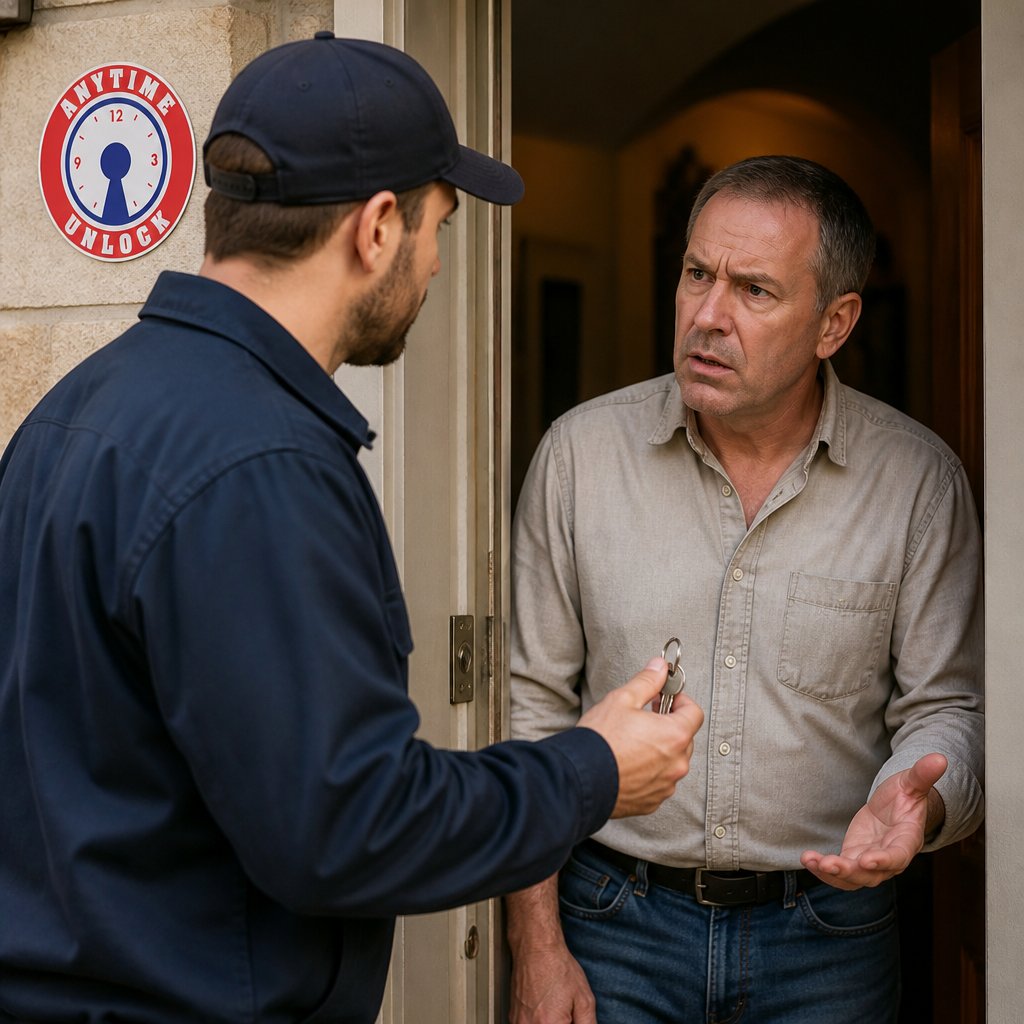
A locksmith bait and switch is a scam where a company quotes you a low price over the phone, then demands hundreds more once the work is done. The scam works because you're stranded, stressed, and out of options.
Red Flags of Locksmith Scams to Watch For
Spotting red flags of locksmith scams early can save you from a costly mistake. The warning signs start before the technician arrives and continue once they're on site.
Warning Signs Before They Arrive
- No physical storefront or business address
- An unmarked vehicle instead of a branded van
- No business license number provided when asked
- A phone quote that sounds too low to be real
- The dispatcher won't give a written estimate
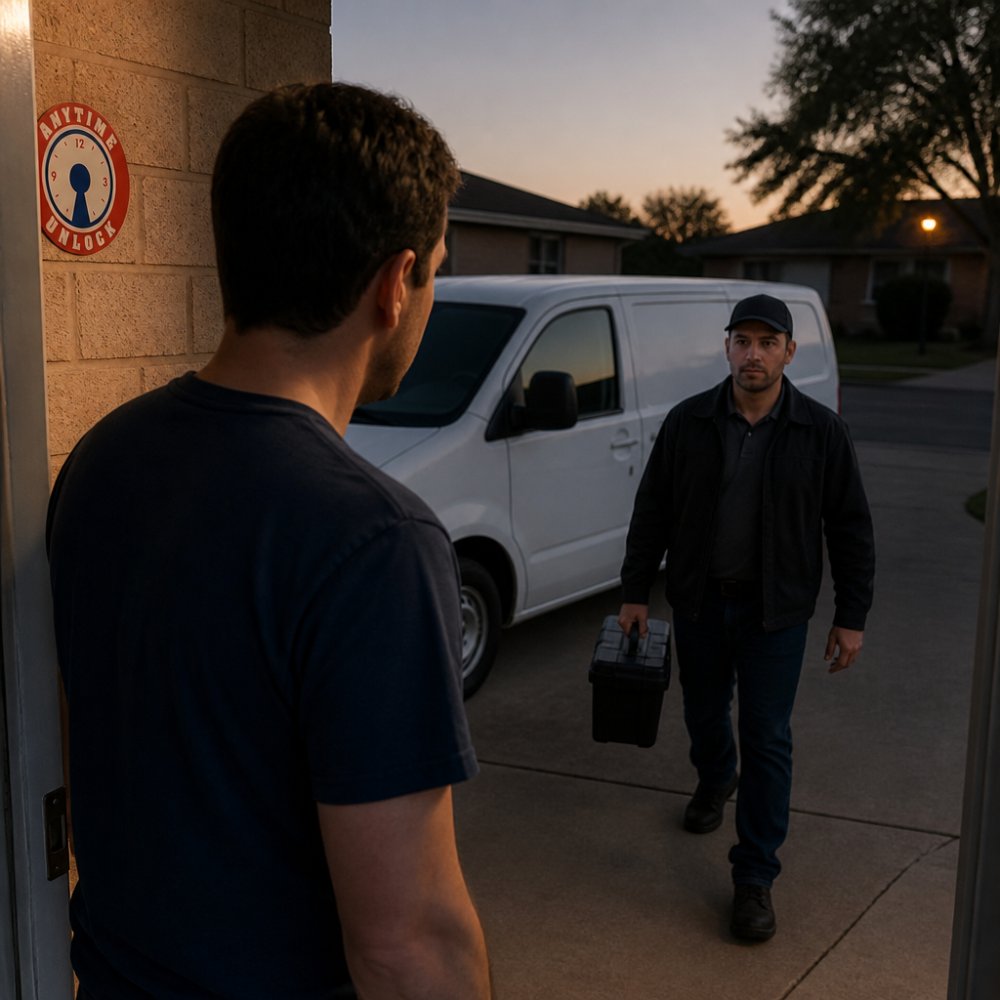
Warning Signs on Site
- The technician can't show technician identification
- They demand cash only, no card or check
- The price jumps the moment they see your lock
- They drill the lock right away without trying other methods
- They pressure you to sign a service agreement on the spot
A common mistake is assuming a uniform means legitimacy. Anyone can buy a shirt with a logo on it.
Questions to Ask a Locksmith Before Hiring
Asking the right questions to ask a locksmith before hiring takes two minutes and can save you hundreds. A legitimate company will answer every one without hesitation.
Here's what to ask:
- What's your business license number?
- Do you have a physical address I can look up?
- Can you give me a written estimate before you come out?
- Is there a service call fee, and how much is it?
- What payment methods do you accept?
- Will the technician have ID and arrive in a marked vehicle?
- Are you BBB accredited?
Phone Screening Script
Use this script when you call:
"Hi, I'm locked out of my [car/home/business] at [location]. Before I book, can you confirm: What's your total price, including the service call fee? Can you text or email me a written estimate? What's your license number? Will your technician have photo ID?"
Finding a Reliable 24 Hour Residential Locksmith Before You Need One
So do the research now.
Ask neighbors and local business owners who they use. Word of mouth beats online review manipulation every time.
How to Verify a Locksmith's Credentials and Tools
Verifying a locksmith means checking three things: their business license, the technician's identity, and the tools they bring through your door. The third is the one most homeowners never think to check, and it's the hardest thing for a scam operator to fake.
Credential Checks
- Business license. Ask for the number and verify it with your state's licensing board or Secretary of State business registry. In states that license locksmiths, an unlicensed operator is operating illegally.
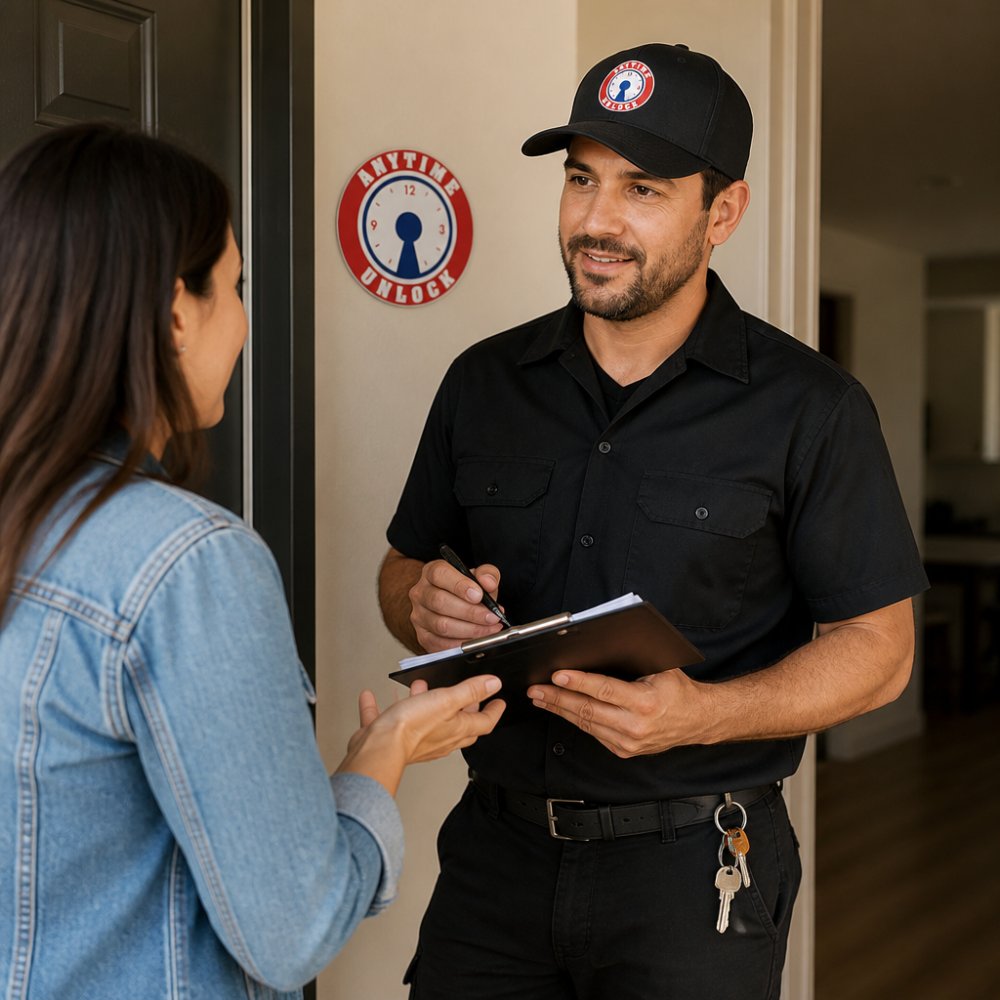
- Technician photo ID. A real employee has a company-issued ID. A subcontractor pulled from a gig app often doesn't.
- Marked vehicle. A branded van with a company name and phone number is a baseline signal. An unmarked sedan or rental van is not.
- Insurance. Ask whether they carry liability coverage. Legitimate companies do; fly-by-night operations usually don't.
What Professional Tools Actually Look Like
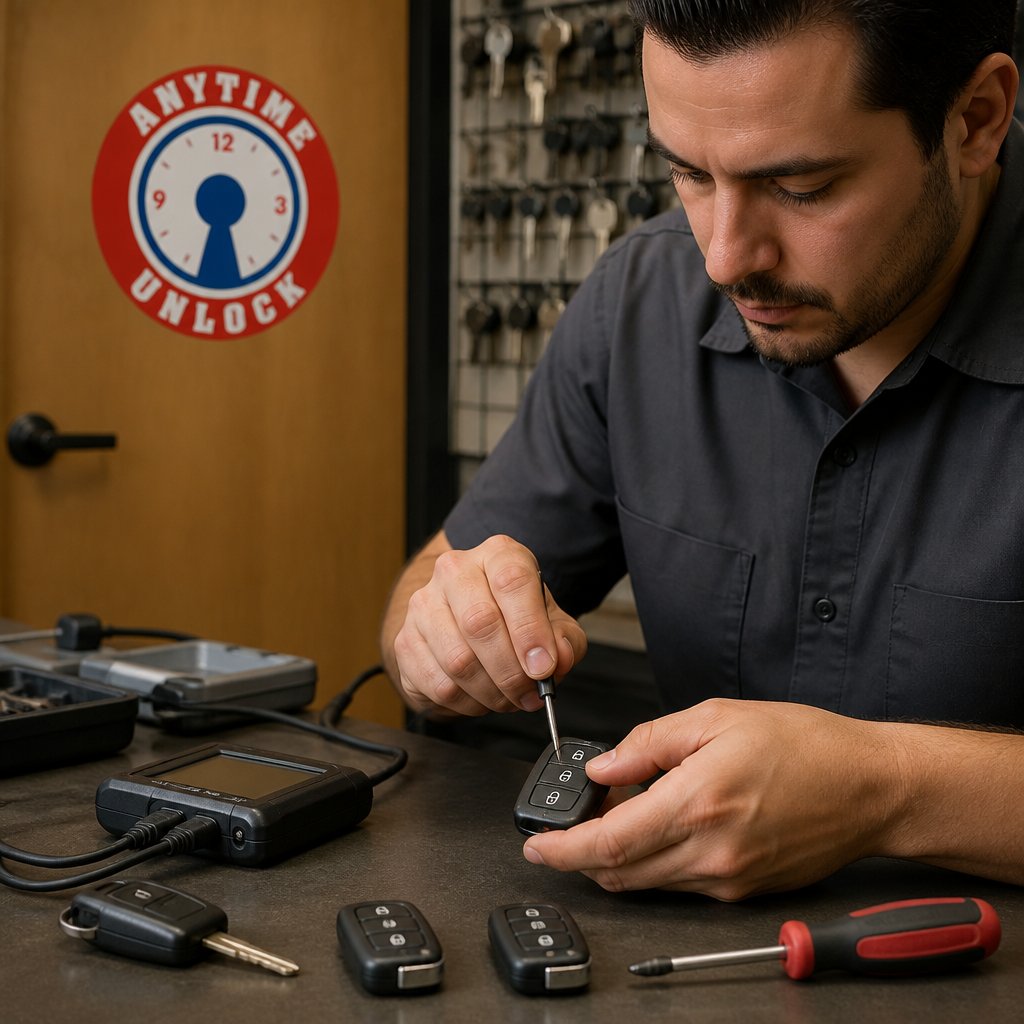
This is where you separate a trained locksmith from someone who bought a drill at a hardware store. A professional's kit typically includes:
- A pick set and tension wrenches. These are thin, precision-machined steel tools, not the bulky, chrome-plated picks sold in hobby kits. A working locksmith's picks show wear.
- A plug spinner. Used after picking to rotate the cylinder quickly without re-picking. Amateurs rarely own one.
- A lock impressioning kit or key blanks. For certain locks, a pro will cut a key by impression rather than picking.
- A pick gun or electric pick. Common for automotive and some residential work.
- A decoder or tryout keys for automotive locks, rather than a drill.
- A drill, but as a last resort, with a fresh bit and a plan for replacing the cylinder afterward.
The Drill Test
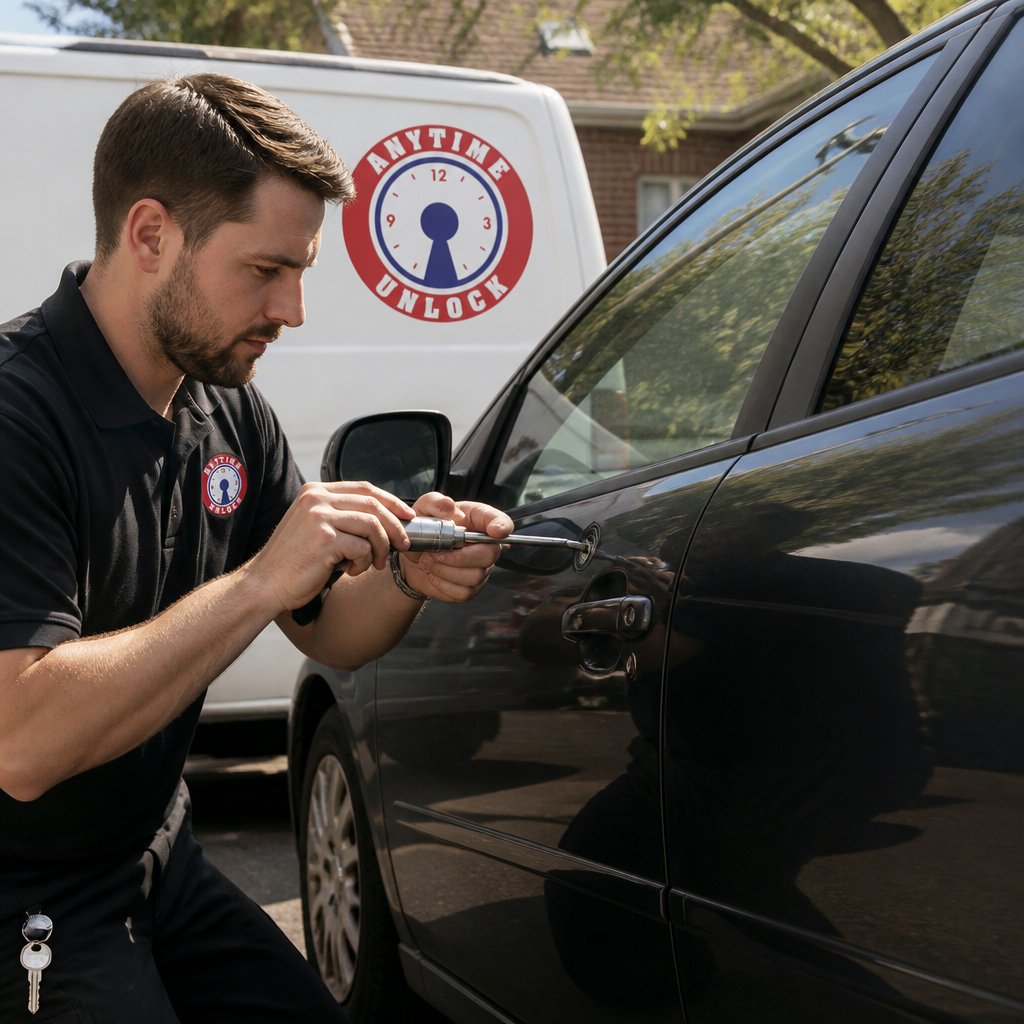
A trained locksmith tries non-destructive entry first: picking, raking, bumping, or impressioning. Drilling destroys the cylinder and requires replacement, which is why it's a last resort, and why it's the scammer's first move. Drilling is fast, requires little skill, and justifies a much higher invoice.
Verify Before You Pay
Before you hand over any payment:
- Confirm the final invoice matches the written estimate line by line
- Confirm the technician's name matches the ID they showed you
- Get a receipt with the company's legal name, address, and license number
- If the price changed, ask for an itemized explanation in writing
What to Do If You Suspect a Locksmith Bait and Switch
Most guides stop at prevention. But if the technician is already standing in your driveway demanding triple the quoted price, you need a recovery playbook, not a list of red flags you should have caught earlier.
On-Site: Protect Yourself First
- Do not hand over cash. Cash is untraceable and unrecoverable. If you haven't paid yet, you still have leverage.
- Ask for the invoice before you pay. A legitimate business will itemize the service call fee, labor, and parts. A scam operation will resist putting anything in writing.
- Photograph everything, the technician, the vehicle and its plate, the invoice, and the lock before and after. Timestamped photos are the backbone of any dispute.
- Pay by credit card if you can. Under the Fair Credit Billing Act, you generally have 60 days from the statement date to dispute a charge for services not rendered as agreed. Debit cards offer weaker protections and cash offers none.
- If you feel threatened, call 911. Intimidation and refusal to let you leave are criminal matters, not consumer disputes.
After the Fact: Where to Report
A complaint only has teeth if it reaches an agency that tracks patterns. File with more than one:
- Your state's consumer protection office (often housed in the Attorney General's office). This is the primary regulator for deceptive trade practices in most states.
- The Federal Trade Commission at ReportFraud.ftc.gov. The FTC doesn't resolve individual cases, but it builds pattern data that drives enforcement actions against repeat offenders.
- Your state's locksmith licensing board, if one exists. Not every state licenses locksmiths, but where licensing exists, an unlicensed operator is a straightforward violation to report.
- The Better Business Bureau. Less enforcement power, but complaints are public and influence the next person's search results.
- Your credit card issuer, if you paid by card and the price didn't match the written estimate.
Disputing the Charge
When you file a credit card dispute, the issuer will ask for documentation. Send them:
- The written estimate or text message showing the quoted price
- The final invoice showing the inflated charge
- Your timestamped photos
- A short written timeline of what happened
Leaving a Review That Actually Helps
Vague reviews ("total scam, avoid") get buried. Specific ones stick:
- Name the company and the dispatcher's first name if you have it
- State the quoted price and the final price
- Note the vehicle description and plate if you captured it
- Mention the date and time
Emergency Preparedness Checklist for Locksmith Scams
Build your emergency plan before you need it. This checklist takes ten minutes and could save you a lot of money and stress.
- Save a trusted locksmith's number in your phone
- Verify the company has a physical storefront
- Check their business license is current
- Confirm they offer 24/7 service with local dispatch
- Read recent online reviews, especially negative ones
- Ask about their service call fee upfront
- Keep a spare key with a trusted neighbor or family member
- Store your car's key code in a safe place
Frequently Asked Questions
What are the warning signs of a locksmith bait and switch?
The most common signs include a phone quote that seems too low, refusal to provide a written estimate, an unmarked vehicle, no visible technician identification, and a final price that is dramatically higher than what was quoted. Legitimate locksmiths provide a written estimate, arrive in marked vehicles, carry proper business licenses, and explain the cost breakdown before starting work.
How can I verify if a locksmith is legitimate before they arrive?
Ask for their business license number and verify it with your state or local licensing authority. Check for a physical storefront address, look for BBB accreditation, and read recent online reviews across multiple platforms. A legitimate locksmith will have a local phone number, a verifiable address, and a service area that matches your location. Avoid any company that only provides a generic dispatch number.
What should I do if a locksmith tries to charge more than the quoted price?
Do not pay the inflated amount. Ask for a written invoice with an itemized breakdown of labor costs, service call fee, and parts. If they refuse, document everything including the technician's name, vehicle description, and license plate. Report the incident to your state consumer protection agency and the BBB. If you feel unsafe, call local law enforcement. Never hand over a credit card or cash under pressure.
Are online locksmith directories reliable for finding local help?
Not always. Some directories sell leads to out-of-area dispatch centers that subcontract work to whoever is available, which is a common source of bait and switch. Instead, search for locksmiths with a verified physical address in your area, check Google Business profiles with real photos and reviews, and ask neighbors or local hardware stores for recommendations. A company with a long-standing local presence is your safest bet.
A lockout is stressful enough without worrying about getting ripped off. The best defense is preparation. Know who to call before you're stranded.
At Anytime Unlock and George's Key Shop, we've been serving this community since 1971. We offer 24/7 mobile service for auto, residential, and commercial lockouts. Every job comes with a clear quote upfront and constant communication until it's done. Get a free quote and skip the bait and switch entirely.