 how-to
Locksmith Bait and Switch: Red Flags to Spot
Table of Contents
- How to Spot Locksmith Bait and Switch Pricing Before You Call
- Questions to Ask a Locksmith Before Hiring
- Locksmith Service Call Fee: What to Expect
- Locksmith Pricing Estimate Checklist
- What to Do If a Locksmith Overcharges
- Red Flags That Signal a Scam Locksmith
- How to Verify a Locksmith's Legitimacy
- Frequently Asked Questions
Last Updated: October 11, 2026
How to Spot Locksmith Bait and Switch Pricing Before You Call
A locksmith bait and switch happens when a company quotes you one price over the phone, then charges significantly more when they arrive at your location. You call expecting a $50 service fee. The technician shows up and suddenly it's $300. This is one of the most common complaints about locksmiths in Lubbock, and it catches people off guard because they've already committed to the appointment and are in a vulnerable position.
The pattern is predictable: an unrealistically low advertised price designed to get you to call, then a dramatic price jump once you're locked out and vulnerable.
You can protect yourself by asking the right questions before the technician arrives.
The anatomy of a bait and switch scam
The scam works in stages. First comes the hook: an ad promising "$29 lockout service" or "$40 emergency calls." These prices are intentionally impossible. No legitimate locksmith can do a vehicle lockout for $29 and stay in business. But the price gets you to dial.
The dispatcher mentions the advertised price but doesn't commit to it, saying "Our service calls start at $29, but there may be additional fees depending on the situation."
The technician arrives and claims the lock is "damaged," needs "drilling," or requires "special tools," adding $50-$150 to the bill. You're locked out, frustrated, and the technician is standing there. Most people pay.
Experienced scammers design the pricing structure so the advertised price never applies to your situation.
Questions to Ask a Locksmith Before Hiring
Ask these questions during the phone call, it's your only chance to lock in a price.
The phone script that protects you
"I'm locked out of my [car/house/business]. Before you come out, I need to know the total price. What is your service call fee, and what is the total I should expect to pay?"
A legitimate locksmith gives a specific number or a clear range with conditions that would change the price.
If they say "It depends," ask: "What's the lowest and highest I should expect to pay, and what would cause the price to go higher?" A real locksmith names specific triggers: "Drilling adds $50. After-hours adds $30. Standard lockout is $85-$120."
Ask: "If the price changes after you arrive, will you call me for permission before starting work?" Legitimate locksmiths agree immediately. Scammers hesitate or deflect.
What legitimate locksmiths answer clearly
Legitimate locksmiths give you numbers. They explain their pricing structure. They're transparent about what triggers additional fees. They don't hide behind vague language.
When you ask "What's the total I should expect?" a real locksmith says one of these things:
- "Our standard lockout is $95. If there's damage to the lock, add $50. After-hours calls add $30. So worst case, you're at $175."
- "I can't quote exactly without seeing the lock, but 95% of lockouts in your situation run between $80 and $130."
- "We charge a $60 service call plus $40 per lock. For a car, that's $100 total. If drilling is required, it's an additional $50."
They give you a range. They explain what moves the price up. They're specific about fees.
Scammers say things like:
- "It depends on the situation."
- "We'll know when I get there."
- "The advertised price is just a starting point."
- "Most jobs end up being more than the ad says."
These are red flags. They're designed to keep you uncertain so you can't comparison shop or push back later.
Locksmith Service Call Fee: What to Expect
A service call fee ($40-$75) covers the technician's arrival and assessment. The lockout service fee ($50-$150) covers the actual unlock. Together, expect $90-$225 for a straightforward lockout.
Ask: "Is the advertised price the service call fee or the total?" Scammers are vague; legitimate locksmiths clarify the breakdown.
Locksmith Pricing Estimate Checklist
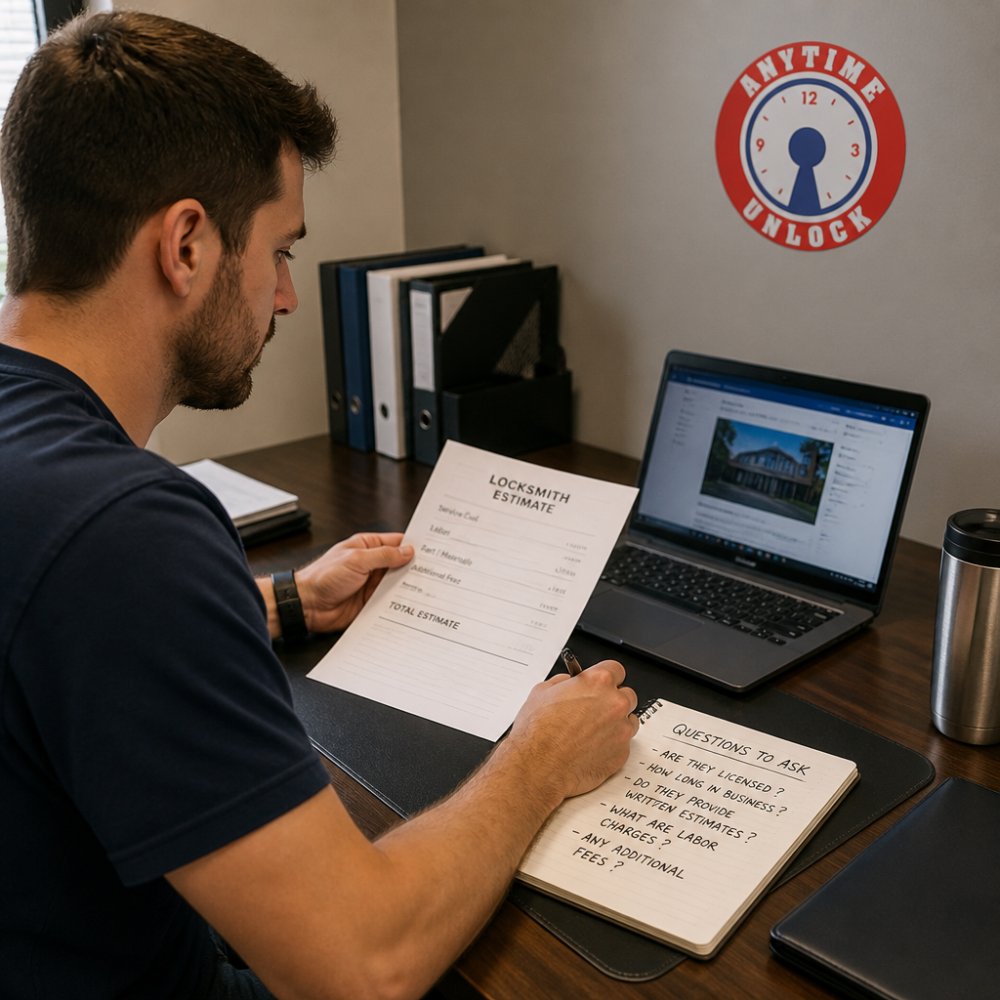
Before a locksmith does any work, you should have a written estimate or a clear verbal agreement on the final price.
What a written estimate must include
If the locksmith offers to put an estimate in writing, it should contain these elements:
- Service call fee (specific dollar amount)
- Unlock/labor fee (specific dollar amount or range)
- Any additional fees (drilling, after-hours, damage assessment)
- Total estimated cost
- Conditions that would change the price
- Date and time the estimate is valid
A written estimate protects both of you. It prevents the technician from inflating the price later, and it gives you proof of what was agreed to if there's a dispute.
Many locksmiths won't put estimates in writing for emergency calls. That's sometimes legitimate. But they should give you a clear verbal quote and confirm it before they start work.
Evaluating a revised quote at the door
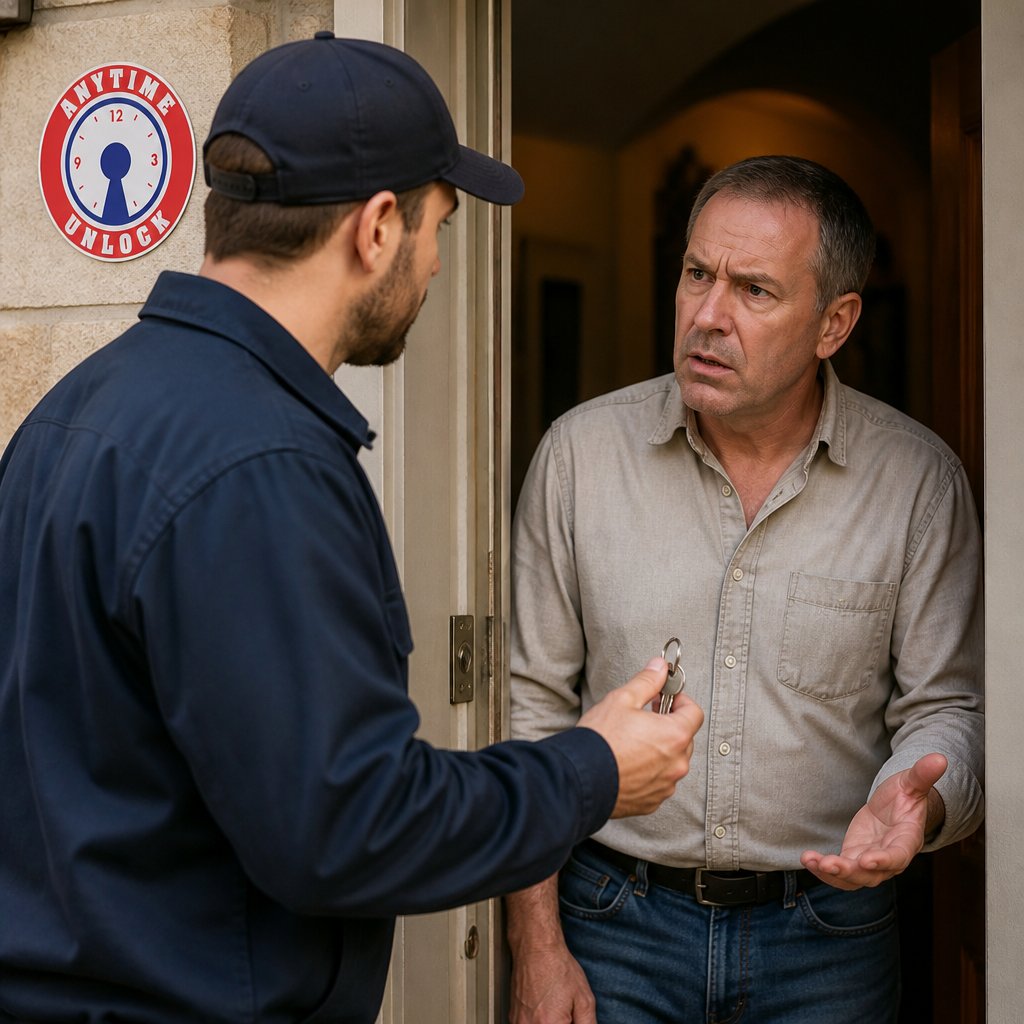
Sometimes the locksmith arrives and discovers the lock is more complicated than they thought. The lock is damaged. The vehicle is newer and requires specialized tools. These situations do happen legitimately.
If the technician says "The price is going to be higher than we quoted," here's what to do:
Stop them before they start work. Say: "Before you do anything, tell me the new price and why it changed."
Listen to the explanation. Is it specific and reasonable? "Your lock cylinder is cracked. That means we can't pick it, we have to drill it out. That's an additional $75" is legitimate. "The price is just higher" is not.
Ask: "Can you do this work without drilling, or is drilling the only option?" Sometimes there are alternatives.
Get it in writing if possible. Even a text message or photo of a handwritten note works. "Revised quote: $185 due to lock damage requiring drilling. Approved by [your name]."
You have the right to say no. If the new price is too high, you can refuse the work and call another locksmith.
What to Do If a Locksmith Overcharges
If you've already paid and feel you were overcharged, you have options.
Handling a price increase in the moment
If the technician tells you the price has jumped and you haven't authorized the work yet, you can negotiate.
Stay calm. Don't get angry at the technician. They may be following their company's pricing structure, not running a personal scam. Ask: "Can you explain exactly what triggered the additional charge?"
Listen to the answer. If it's legitimate, you can decide whether to pay or refuse. If it's vague or seems like an excuse, ask to speak to the manager or dispatcher by phone. Say: "I was quoted $X. You're now saying it's $Y. Before you do any work, I need to understand why."
Many dispatchers will override a technician's price increase if you push back. They'd rather keep a customer than lose them over a disputed charge.
If you refuse the work, ask: "Will I be charged the service call fee?" Some companies will waive it if you decline the service. Others won't. Get this in writing.
Documentation and dispute options
If you've already paid and believe you were scammed:
Get a receipt. Ask the technician for an itemized receipt showing what you paid for. "Service call: $60. Unlock labor: $100. After-hours fee: $50. Total: $210." This matters for a dispute.
Document everything. Write down the date, time, technician's name, company name, phone number you called, what you were quoted, what you paid, and what work was done. Take photos of the lock if possible.
Contact the company. Call the dispatcher or manager and explain what happened. Reference the receipt. Ask for a refund or credit. Many legitimate locksmiths will make it right if you can show they overcharged.
File a complaint. If the company won't respond, file a complaint with the Better Business Bureau or the Texas Attorney General's Consumer Protection Division. Document everything you have.
Dispute the charge. If you paid by credit card, you can dispute the charge with your card issuer. Provide your documentation and explain why you believe the charge was fraudulent or unauthorized.
Small claims court. For larger disputes, you can sue in small claims court. Bring your receipt, your documentation, and evidence of what you were quoted.
Most scammers count on customers not following through with these steps. If you do, you often recover your money or at least prevent them from doing it to the next person.
Red Flags That Signal a Scam Locksmith
Learn to recognize these warning signs before you hire anyone.
Unrealistically low prices ("$29 lockout") are designed to get you to call, not reflect actual costs. No business address suggests they're not established. Refusal to quote over the phone sets up a locksmith bait and switch. Pressure to use their service immediately prevents comparison shopping. No reviews or only fake five-star reviews are suspicious. Cash-only payment prevents disputes. No license or proof of identity is a major red flag.
How to Verify a Locksmith's Legitimacy
Before you call, do basic research. It takes 10 minutes and protects you from the worst offenders.
Check their business address. Go to Google Maps and search the address. Does the business exist? Can you see photos of the storefront?
Look up their phone number. Search the phone number on Google. Does it match the business name? Are there complaints about that number?
Read recent reviews carefully. Don't just look at the star rating. Read the actual reviews. Look for patterns. Are people complaining about price increases?
Check the Better Business Bureau. Go to bbb.org and search the company. Look at their rating and complaint history.
Ask for references. Call the locksmith and ask: "Can you give me the names of three recent customers I can call?" Legitimate locksmiths will have references.
Verify they're actually local. Some national call centers advertise as local locksmiths but dispatch whoever is closest, which may be hours away.
Ask about their experience. How long have they been in business? Do they specialize in residential, commercial, or automotive work?
When you call Anytime Unlock and George's Key Shop, you're calling a business established in 1971.
Frequently Asked Questions
How can I tell if a locksmith is giving me a bait-and-switch quote?
A bait and switch locksmith quotes a low service call fee over the phone, then arrives and claims the job is more complex than described, requiring additional charges. Red flags include refusing to provide a written estimate before work, quoting only labor without parts, and being vague about what the total will be. Always ask for an itemized estimate that breaks down service call fee, labor, parts, and any additional charges before the locksmith touches your lock.
What questions should I ask a locksmith before hiring them?
Ask: What is your total upfront cost, including service call fee, labor, and parts? What is your cancellation policy? How long have you been in business? What happens if the job takes longer than estimated? Legitimate locksmiths answer these directly and in writing. Evasive answers or refusal to quote upfront are warning signs.
What should I do if a locksmith changes the price after arriving?
Stop work immediately and ask for the revised estimate in writing with itemized charges. Compare it to your phone quote and ask specifically what changed and why. If the increase is substantial and unjustified, you have the right to refuse service and pay only the original agreed-upon amount or service call fee. Take photos of the written estimate, get a receipt, and document the locksmith's business name and license number. If you dispute the charge, contact your credit card company or file a complaint with the Better Business Bureau.
Why can a locksmith's final price be higher than the estimate?
Legitimate reasons include discovering the lock is damaged and needs replacement instead of rekeying, or finding multiple locks need service when only one was initially described. However, a reputable locksmith will contact you before proceeding with additional work and provide a revised quote. Scam locksmiths use vague initial quotes and surprise charges. The key difference is communication: legitimate locksmiths ask permission and explain the change in writing before the final bill.
The difference between a locksmith you can trust and a scammer often comes down to one thing: transparency. Legitimate locksmiths are willing to answer your questions and commit to a price. Scammers avoid both. Use the questions and verification steps in this guide, and you'll avoid the worst of them. Get a quote from Anytime Unlock and George's Key Shop and experience the reliability that comes from working with Lubbock's oldest locksmith company.