 how-to
Are Mobile Locksmiths Trustworthy? A 2026 Guide
Table of Contents
- Are Mobile Locksmiths Trustworthy? What the Evidence Shows
- How to Verify a Locksmith Before You Book
- How to Avoid Locksmith Scams: Warning Signs and Red Flags
- Mobile Locksmith Pricing: Estimates, Call-Out Fees, and Final Costs
- Questions to Ask a Locksmith Before Dispatch
- What a Legitimate Technician Does Before Opening Your Lock
- Conclusion: Booking a Mobile Locksmith With Confidence
- Frequently Asked Questions
Last Updated: October 7, 2026
Are Mobile Locksmiths Trustworthy? What the Evidence Shows
Most mobile locksmiths are trustworthy, but the industry has a scam problem that makes blanket trust unwise.
At Anytime Unlock and George's Key Shop, we've watched this question come up again and again.
Here's what most guides get wrong. The real test is whether a locksmith will give you a written estimate before dispatch and stick to it when they arrive.
Below, we'll show you exactly how to separate a legitimate locksmith from a fake one, step by step.
How to Verify a Locksmith Before You Book
Verification takes about five minutes and saves you from the worst-case scenario. The Federal Trade Commission tracks locksmith fraud as a recurring consumer complaint, and its guidance on avoiding locksmith scams recommends getting a quote before you commit.
Start with these checks:
- Search the business name plus "scam" and see what surfaces
- Confirm a real street address, not just a phone number
- Ask for a license number and verify it with your state
Checking License and Credentials
Locksmith licensing is a state-by-state patchwork, and that's the core problem. Some states require a license, bonding, and background checks. Others have no statewide requirement at all.
That means "licensed and insured" can mean very different things depending on where you are. Ask directly: what license do you hold, and who issues it? A legitimate technician will answer without hesitation.
Verifying Business Identity and Contact Details
A real company has a paper trail. Look for a consistent business name across Google, the Better Business Bureau, and your state's registration database. Scammers often operate under dozens of fake names from a single call center.
Watch for these tells:
- The name on the van doesn't match the name on the phone
- The address is a mailbox store or an empty lot
- The website was registered recently
How to Avoid Locksmith Scams: Warning Signs and Red Flags
The classic scam follows a predictable script. A dispatcher quotes a low price, a technician arrives, opens the lock, then demands several times the quoted amount. You're stranded, so you pay.
Here's how to avoid locksmith scams before they start:
- No upfront price over the phone
- Pressure to pay in cash only
- No company name on the vehicle or uniform
The Better Business Bureau's guidance on locksmith scams flags the same pattern: lowball quote, surprise fee, intimidation at the curb.
Bait-and-Switch Pricing and Hidden Fees
Bait-and-switch is the most common tactic. The quote is the bait. The final bill includes "service call fees," "after-hours surcharges," and "specialty tool charges" that were never mentioned.
Ask for the total cost in writing, including every fee. If a locksmith won't put a number in writing before dispatch, that's your answer. A trustworthy company will give you a firm estimate and explain what could change it.
What to Do After a Suspected Locksmith Scam
If you've already been overcharged, act fast. Document everything: the quote, the final charge, the technician's name, and the vehicle description. Take photos if you can.
Then:
- Dispute the charge with your card issuer or bank
- File a complaint with your state attorney general
- Report it to the FTC
You may not recover the money, but the paper trail protects the next person.
Mobile Locksmith Pricing: Estimates, Call-Out Fees, and Final Costs
Honest pricing has three parts, and a legitimate company will name all three before you agree to anything: a service call (call-out) fee, the labor to open or replace the lock, and the cost of any parts or key blanks. If a dispatcher can only give you one lump number with no breakdown, you have no way to tell later whether the on-site quote changed for a real reason or a fake one.
What you should hear on the phone:
- A clear service call or call-out fee, stated as a dollar figure
- A range for the actual work, tied to the lock type (standard pin-tumbler, deadbolt, transponder key, smart lock)
- Confirmation of whether the price changes at night, on weekends, or on holidays, and by how much
How to Request an Itemized Estimate
Ask for the quote in writing, text or email is fine, and ask for it broken into line items, not a single total. A useful estimate looks like this:
- Service call fee: $X
- Labor to open one lock: $X
- After-hours surcharge (if applicable): $X
That last line matters. A trustworthy locksmith will commit to a ceiling, 'the total will not exceed $X unless you approve additional work', because they know the job. A scam operation will not, because the whole business model depends on the number being open-ended.
What to Do When the On-Site Quote Changes
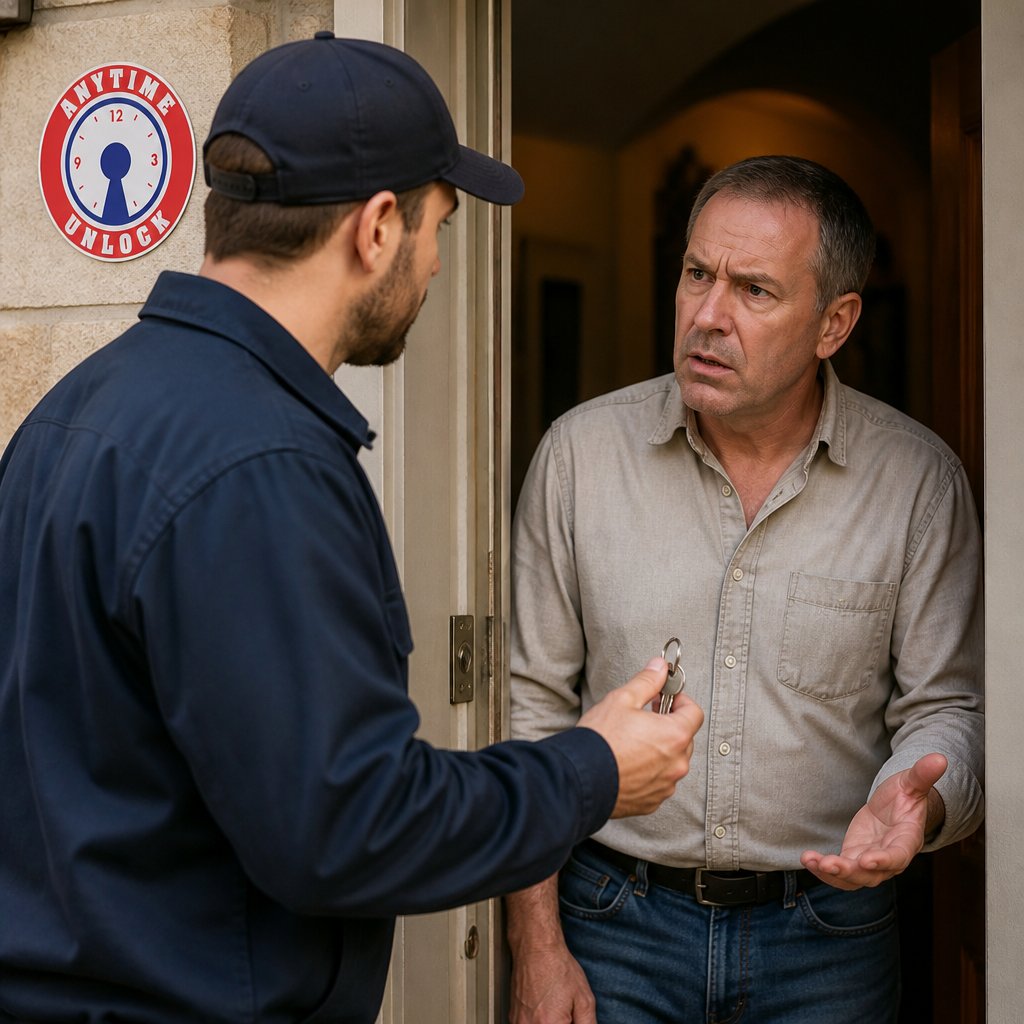
This is the moment the scam either happens or doesn't. The technician arrives, looks at the lock, and says the price is now two or three times the quote. Here is how to handle it in the moment:
- Stay calm and do not hand over a card or cash yet. You are not obligated to proceed.
- Ask them to itemize the new number out loud: what specifically changed, and why wasn't it in the original quote?
- Reference the written estimate. Say plainly: 'I was quoted $X in writing. I'm not authorizing anything above that.'
A common pattern reported to consumer protection agencies is the 'specialty tool' or 'high-security lock' upcharge, the technician claims your lock required a tool or technique that wasn't anticipated. On most standard residential and automotive locks, that claim is not credible. Drilling, for example, is a last resort, not a routine step, and it should never appear as a surprise line item on a job that was quoted as a simple lockout.
Why We Don't Post Flat Rates
Pricing varies by job, time of day, lock type, and vehicle make and model, so a single flat rate in a blog post would be misleading. What we will do is give you a firm, itemized estimate before dispatch and honor it. For current pricing on auto, residential, and commercial work, check our services and request a quote.
| What to Ask | Red Flag Answer | Good Answer |
|---|---|---|
| Total price | "We'll see when we get there" | Firm written estimate with a ceiling |
| Itemized breakdown | Refuses to break it down | Names call-out, labor, parts separately |
| After-hours fee | "It depends" | Stated upfront as a dollar amount |
| Payment methods | "Cash only" | Card or cash accepted |
| License | Vague or dodged | Names the issuing authority |
| Price change on arrival | New number with no explanation | Explains the change and gets your approval |
Questions to Ask a Locksmith Before Dispatch
The right questions do two things: they get you a firm price, and they reveal whether you're talking to a real local business. Ask these before you agree to anything.
- What's the total cost, including the call-out fee?
- Are you licensed, and by whom?
- How long until you arrive?
A legitimate technician answers all six without irritation. A scam operation gets defensive around question two and question four.
What a Legitimate Technician Does Before Opening Your Lock
A real technician verifies you before touching the lock. This protects you as much as them, it's the difference between a professional service and a stranger gaining access to your property on nothing but your word. Expect the verification to happen before any tool comes out of the van.
The Identity and Authorization Checks to Expect
On arrival, a legitimate technician should:
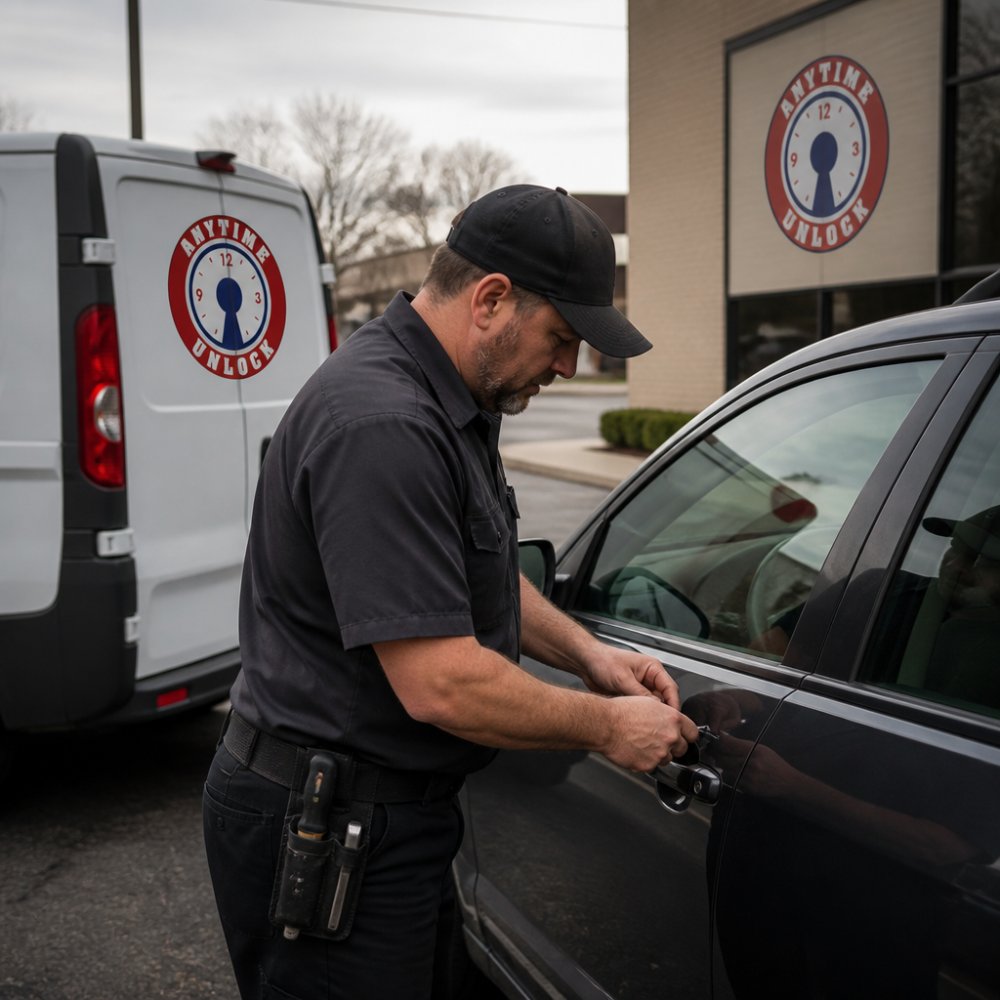
- Show photo ID and state the company name, matching the name on the van and the phone number you called
- Confirm the quoted price in writing before starting
- Ask for proof you own the vehicle, live at the address, or are authorized to access the property
What counts as acceptable proof depends on the job. For a vehicle, a registration, insurance card, or title in your name, or a photo ID that matches the name on the registration, is standard. For a home, a piece of mail, a lease, a utility bill, or a government-issued ID with the address is typical. For a business, a business license, a lease, or a letter of authorization from the property owner works.
When Drilling or Replacement Is Actually Necessary
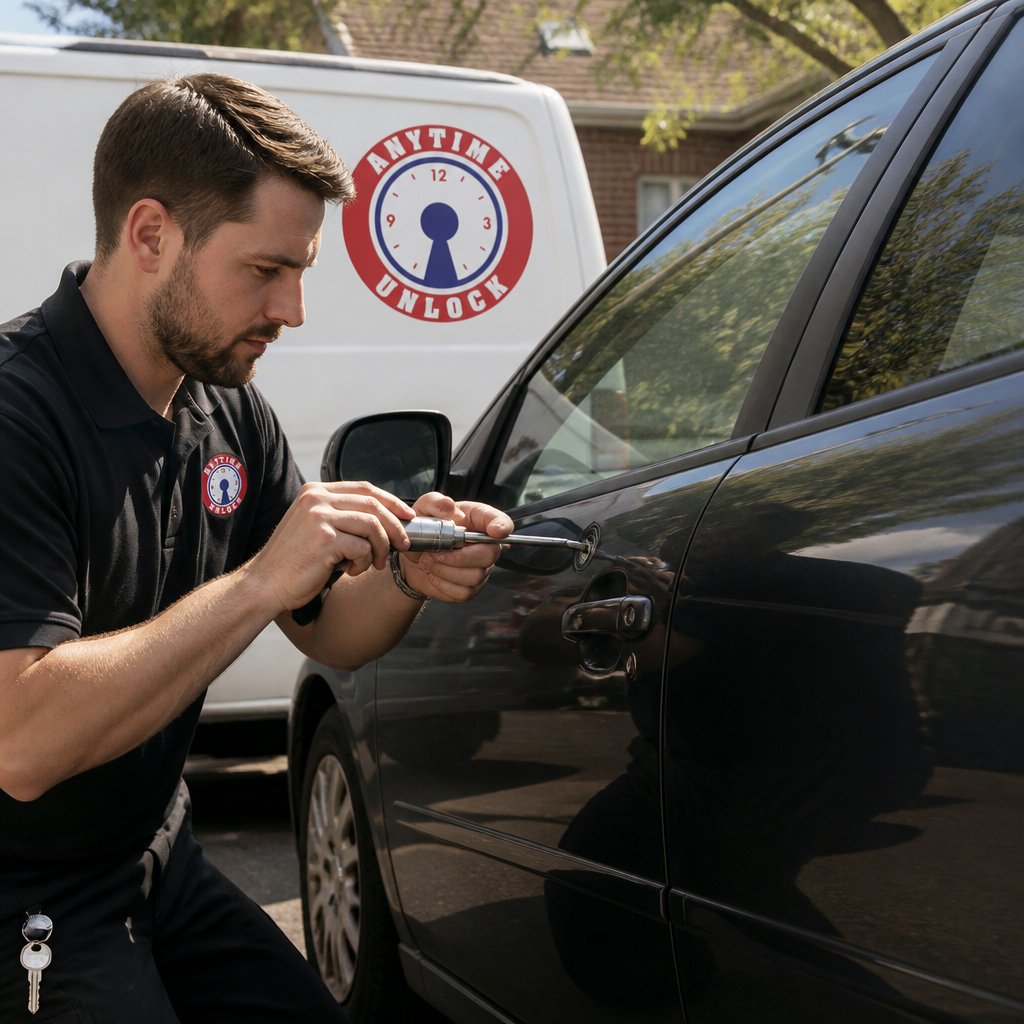
Damage-free entry is the goal, and a trained technician can open most standard pin-tumbler locks, deadbolts, and vehicle doors without drilling. Drilling is a last resort, not a first move. It becomes reasonable when:
- The lock is damaged, seized, or has a broken key stuck inside it
- The lock is a high-security or restricted-keyway cylinder that resists picking
- The lock has been tampered with or the cylinder is failing
When drilling is genuinely required, a professional explains why before doing it, tells you what the replacement will cost, and gets your approval. What you should not accept is a technician who reaches for a drill within seconds of arriving on a routine lockout. On many locks, that's unnecessary, and it turns a simple lockout into a full lock replacement you didn't agree to pay for.
Conclusion: Booking a Mobile Locksmith With Confidence
The honest truth is that trustworthy mobile locksmiths exist, and so do outright scams. The difference comes down to verification.
At Anytime Unlock and George's Key Shop, we've built our reputation on exactly that. We've served drivers, homeowners, and businesses since 1971, and we run 24/7 mobile service with constant communication until the job is done.
Get a free quote from Anytime Unlock and George's Key Shop and lock in your price before you're stranded.
Frequently Asked Questions
Are mobile locksmiths trustworthy?
Many mobile locksmiths are legitimate, licensed professionals who arrive in marked vehicles, quote a price before dispatch, and confirm the final cost before starting work. Others operate as lead-generation fronts that subcontract to unknown technicians and inflate prices on site. The difference comes down to verification: check the business address, ask for a license number where your state requires one, and get the price in writing before you agree to a service call.
How can I tell if a mobile locksmith is legitimate?
Start with a real local address and a phone number that a person answers. Ask for the technician's name and the company's license or registration number, then confirm it with your state or local licensing body. A legitimate mobile locksmith will give you an upfront price estimate, explain any call-out fee, and tell you what identification or proof of authorization you need to show before they open a lock. Refusal to answer any of these is a warning sign.
Can a locksmith charge more than the original estimate?
Some states allow a locksmith to charge more only if you approve the new amount before work continues. If a technician demands a higher final price after starting, stop the job and ask for an itemized breakdown in writing. Pay by card rather than cash so you have a record, photograph the vehicle or receipt, and dispute the charge with your card issuer if the increase was not authorized. Then report the company to your state consumer protection office.
What should I ask a locksmith before they come out?
Ask four things: the total price estimate including any call-out fee, how long until the technician arrives, whether the technician carries identification, and what proof of ownership or authorization you need to provide. Also confirm whether the person answering the phone is dispatching their own employee or subcontracting to another company. A dependable mobile locksmith answers all of this without hesitation.