 how-to
How to Verify Locksmith Pricing Quotes Before You Pay
Table of Contents
- Why Locksmith Pricing Quotes Are So Easy to Fake
- What the Average Locksmith Service Call Fee Actually Covers
- How to Request a Phone Estimate That Holds Up
- How to Spot a Locksmith Scam Before the Van Arrives
- Questions to Ask a Locksmith Before Booking
- Verifying Credentials, Licenses, and Insurance On the Spot
- Hidden Fees, Itemized Invoices, and Your Legal Recourse
- Frequently Asked Questions
Last Updated: September 25, 2026
Why Locksmith Pricing Quotes Are So Easy to Fake
A locksmith pricing quote is only as good as the person behind it. In an emergency, most people accept the first number without asking a question.
What the Average Locksmith Service Call Fee Actually Covers
The average locksmith service call fee covers travel, the technician's time to reach you, and basic labor to open a standard lock, not new hardware, key cutting, or after-hours premiums.
Here's what typically sits inside that fee:
- Travel time to your location
- Diagnosis of the lock or ignition problem
- Basic labor for a standard lockout
- A minimum service window, often the first 20-30 minutes
Service Call Fee vs. Labor Rate: Two Different Numbers
These are two separate charges, and scammers blur them on purpose.
- Service call fee: a flat charge just to show up, whether the job takes five minutes or fifty.
- Labor rate: what you pay per unit of time or per task once work begins, hourly or flat rate per job.
Why Emergency and After-Hours Jobs Cost More
Emergency lockouts at 2 a.m. cost more because the shop is paying a technician to leave their bed. That's fair. What isn't is a shop that quotes a daytime rate and springs the after-hours fee on you when the tech arrives. Get the after-hours rate quoted up front, in writing.
How to Request a Phone Estimate That Holds Up
A phone estimate holds up when it's specific, itemized, and confirmed in writing before the technician arrives. Vague verbal quotes are worthless, so ask for a written estimate by text or email.
Total time: about 5 minutes on the phone.
What you'll need:
- Your exact address
- The make, model, and year of your car, or the type of lock
- A description of the problem
The Five Details Every Written Estimate Needs
Any written estimate worth trusting includes all five of these:
- Company name and license number
- Itemized charges (service call, labor, parts)
- Total price, marked as a flat quote or an estimate
- Service window for arrival
- Cancellation and dispute policy
If even one is missing, call someone else.
How to Spot a Locksmith Scam Before the Van Arrives
You can spot a locksmith scam before the van arrives by watching for pressure tactics, missing credentials, and prices too low to be real. Red flags start on the phone, not at your door.
Red Flags in the Quote Itself
- A price far below every other quote you got
- Refusal to give a written estimate
- No company name, just a generic "dispatch center"
- Pressure to book immediately
- Cash-only payment demanded up front
- No physical address for the business
Questions to Ask a Locksmith Before Booking
Ask these questions before you book, and you'll filter out most bad actors in under two minutes:
- What's your license number?
- Can you send a written estimate by text right now?
- What's the total price, and can it change on-site?
- Are you the technician coming, or a subcontractor?
- How long until you arrive?
- What payment methods do you accept?
Verifying Credentials, Licenses, and Insurance On the Spot
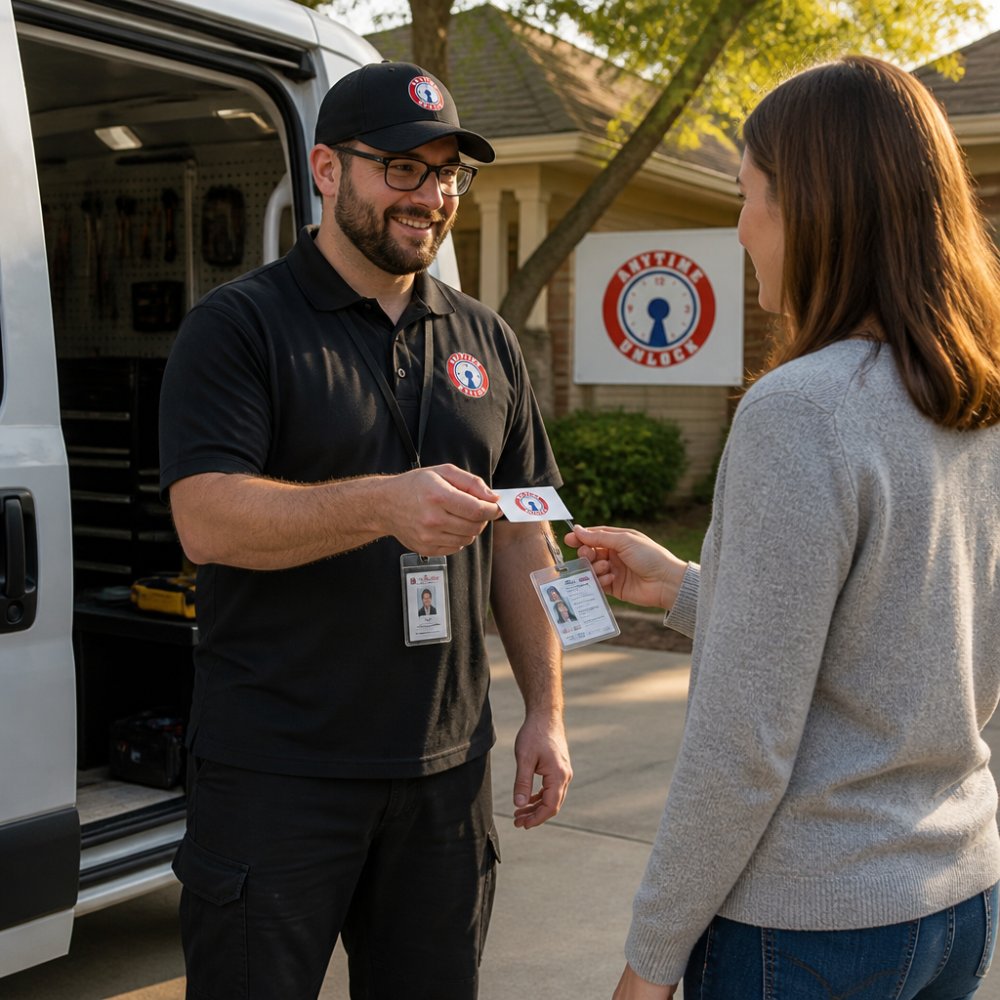
You can verify a locksmith's credentials on the spot by asking to see a physical license, a photo ID, and proof of insurance before any work starts. But "asking to see" is only half the job, a laminated card with a logo proves nothing on its own. Here's how to actually check.
What a Legitimate Credential Actually Looks Like
A genuine state or local locksmith license typically includes:
- The license holder's legal name, not just a company name
- A unique license or registration number
- An expiration date
- The issuing agency's name (state board, department of consumer affairs, or similar)
- A photo in states that issue photo-bearing cards
If the card has no number, no expiration, or no issuing agency, it isn't a credential, it's a business card with extra steps.
How to Verify the License in Real Time
Don't just look at the card. Cross-check it before work begins:
- Write down the license number exactly as printed.
- Search it on your state's licensing board or consumer protection website.
- Match the name on the license to the technician's photo ID.
- Match the company name on the license to your written estimate.
What a Legitimate Work Order Should Contain
Before the technician touches your lock, ask to see the work order or service ticket. A real one lists:
- The company's legal name and license number
- Your name and service address
- The quoted price, itemized (service call, labor, parts)
- A signature line authorizing the work
- A stated total you're agreeing to pay
Insurance: What to Ask For
General liability insurance protects you if the technician damages your door, lock, or vehicle. Ask for:
- A certificate of insurance (COI) naming the company
- The policy's effective dates, an expired COI is worthless
- The insurer's name, so you can call to confirm if something feels off
Company Branding Is a Signal, Not Proof
Some states require locksmith licensing, and rules vary widely. Check your state's consumer protection or licensing board website to confirm what's required where you live. The USA.gov state consumer protection directory can point you to the right office.
Hidden Fees, Itemized Invoices, and Your Legal Recourse
Hidden fees are the number one complaint in locksmith billing disputes. The fix is an itemized invoice; the backup is knowing your legal options. Here's how to audit one, and what to do when the bill doesn't match the quote.
What a Legitimate Itemized Invoice Looks Like
A real invoice lists each charge as its own line, described specifically enough to dispute individually. Sample structure:
| Line Item | What It Covers | What to Watch For |
|---|---|---|
| Service call fee | Travel and on-site arrival | Should match the quoted flat fee exactly |
| Labor | Time or flat rate for the lockout | If hourly, ask for start and end times |
| Parts | Any hardware, keys, or cylinders replaced | Ask to see the old part, or the packaging for the new one |
| After-hours fee | Only if the job falls outside normal hours | Should have been quoted up front, not added after |
| Tax | Applied to taxable items only | Tax should not be applied to the service call fee in most states |
| Total | Sum of the above | Compare to your written quote line by line |
How to Audit the Invoice Line by Line
Before you pay, do this:
- Pull up your written quote. Text, email, screenshot, whatever you saved.
- Compare each line. Service call fee and labor should match. Parts should be listed on both, or explained if new.
- Flag any line that wasn't quoted. "Shop supplies," "disposal fee," "emergency surcharge," and "difficulty fee" are the most common add-ons.
- Ask for the old parts. If you were charged for a replaced cylinder or lock, you're entitled to see the old one.
- Check the math. Add the lines yourself, padding sometimes hides in the total.
If the Final Bill Exceeds the Quote: Your Escalation Path
If you were quoted one price and charged another, work through these steps in order, each creates a record that helps the next.
Document Everything From the First Phone Call
The single most useful thing you can do is build a paper trail before the dispute starts:
- Save the written quote (text, email, or screenshot)
- Screenshot the company's website and any ads you responded to
- Note the dispatcher's name and the time of the call
- Photograph the technician's license and ID before work begins
- Keep the final invoice, even if you dispute it
- Photograph the work before and after
Frequently Asked Questions
How do I know if a locksmith quote is legit?
A legitimate locksmith pricing quote is itemized, given in writing before work starts, and includes the service call fee, labor rate, and parts cost separately. Ask for the technician's name and license or certification number, then confirm the business has a real local address and phone number. Be wary of any quote that only exists over the phone with no written follow-up, or one that changes once the technician is standing at your door. Reputable companies will email or text the estimate so you have a record.
What are common hidden fees in locksmith quotes?
Watch for after-hours surcharges that appear only on the final bill, mileage or trip charges outside a stated service area, and hardware markups on deadbolt installation or rekeying that were never itemized upfront. Some quotes also exclude the cost of key duplication or transponder key programming, then add it later. Ask directly whether the quoted number is the total cost breakdown or just the starting point, and request that every add-on be listed in writing before you approve the job.
What questions should I ask a locksmith before they arrive?
Ask for the total price in writing, the technician's name and credentials, whether the company carries professional liability insurance, and how long the job should take. Confirm whether the quote covers parts, labor, and the service call fee, and whether any after-hours fees apply. Also ask if the technician will show a physical ID and business license on arrival. A locksmith who hesitates to answer these questions before dispatch is a warning sign worth taking seriously.
How can I tell if a locksmith is trying to bait and switch me?
Bait and switch usually looks like a very low phone quote that jumps sharply once the technician sees the lock. The technician may claim the original price only covered a basic lock picking, then insist on drilling and replacing the whole cylinder at a much higher rate. Protect yourself by getting the quote in writing, confirming the scope of work, and refusing any on-site price change you did not approve. If it happens anyway, keep the invoice and consider filing a consumer protection complaint.