 how-to
Locksmith Pricing Transparency Explained 2026
Table of Contents
- What Locksmith Pricing Transparency Actually Means
- Understanding the Average Locksmith Service Call Fee
- Factors That Drive Emergency Locksmith Pricing
- How to Spot Locksmith Scams and Bait-and-Switch Tactics
- Residential vs. Commercial Locksmith Rates
- Automotive Locksmith Costs and Transponder Key Programming
- Getting a Fair Quote: What to Ask and Expect
- Frequently Asked Questions
Last Updated: September 20, 2026
What Locksmith Pricing Transparency Actually Means
Locksmith pricing transparency is straightforward: you get a clear breakdown of what you're paying for before work begins. No surprises at the door. No hidden fees added after the job is done.
This means a written estimate before work starts, itemized charges for labor and parts, and no fees appearing after the job is complete.
Understanding the Average Locksmith Service Call Fee
A service call fee is what you pay to have a locksmith arrive and assess your lock situation. It covers dispatch and travel time and is charged regardless of whether you hire them for the work.
National Averages and Regional Variation
Service call fees vary by region. Service call fees vary by region.
To estimate your local rate: call three locksmiths and compare their service call fees.
Service Call Fees vs. Labor Costs
Service call fees and labor costs are separate. The service call fee gets the locksmith to your door; labor covers the time spent working on your lock.
When the Service Call Fee Is Waived
Some locksmiths waive the service call fee if you hire them, or credit it toward labor costs. Ask: "Will the service call fee be waived or credited if I hire you?"
Factors That Drive Emergency Locksmith Pricing
Emergency locksmith calls cost more due to after-hours availability, faster response times, and higher demand. Nights, weekends, holidays, and peak lockout times carry surcharges. Understanding these factors helps you decide if emergency service is worth the cost.
After-Hours and Holiday Surcharges
Most locksmiths charge extra for calls between 10 PM and 6 AM, weekends, and holidays. Ask about these surcharges upfront, some charge 50% more, others double. Knowing this prevents sticker shock.
Travel Fees and Response Time
Travel fees cover the distance a locksmith drives to reach you. Response time is how quickly they arrive.
| Factor | Impact on Cost | What to Ask |
|---|---|---|
| Distance from locksmith base | Higher distance = higher fee | "How much is the travel fee?" |
| Response time needed | Faster response = higher cost | "What's the charge for 30-minute response?" |
| Time of day | After-hours = surcharge | "What's your after-hours rate?" |
| Holiday service | Holiday = surcharge | "Do you charge extra on holidays?" |
How to Spot Locksmith Scams and Bait-and-Switch Tactics
Locksmith scams happen when a company quotes you one price over the phone, then charges you much more when they arrive. This is called bait-and-switch pricing.
Red Flags in Quotes and Phone Estimates
Watch for these warning signs when getting a quote:
- Vague pricing: "It'll be around $50 to $500" is too wide a range
- Refusal to quote over the phone: Legitimate locksmiths give ballpark estimates
- Pressure to authorize work: Real locksmiths wait for your approval
- No written estimate: Get it in writing before they start
- Unwillingness to break down costs: Parts, labor, and fees should be separate
- Extremely low initial quote: If the phone quote seems too cheap, it probably is
A common scam works like this: you call, they quote one price. They arrive, assess the lock, then claim it's more complex and charge much more. You're stuck because you need your lock opened now.
Ask these questions on the phone:
- "What's your service call fee?"
- "What's your hourly labor rate?"
- "What do you charge for a standard lock rekey?"
- "Will you provide a written estimate before starting work?"
If they won't answer these directly, call someone else.
Verifying Credentials and Getting Itemized Invoices
Before hiring a locksmith, verify they're legitimate.
Check for:
- License: Many states require locksmith licenses. Ask for the license number. Verify it with your state's licensing board.
- Insurance: Legitimate locksmiths carry liability insurance. Ask for proof.
- References: Ask for customer references and actually call them.
- Reviews: Check Google, Yelp, and the Better Business Bureau for patterns.
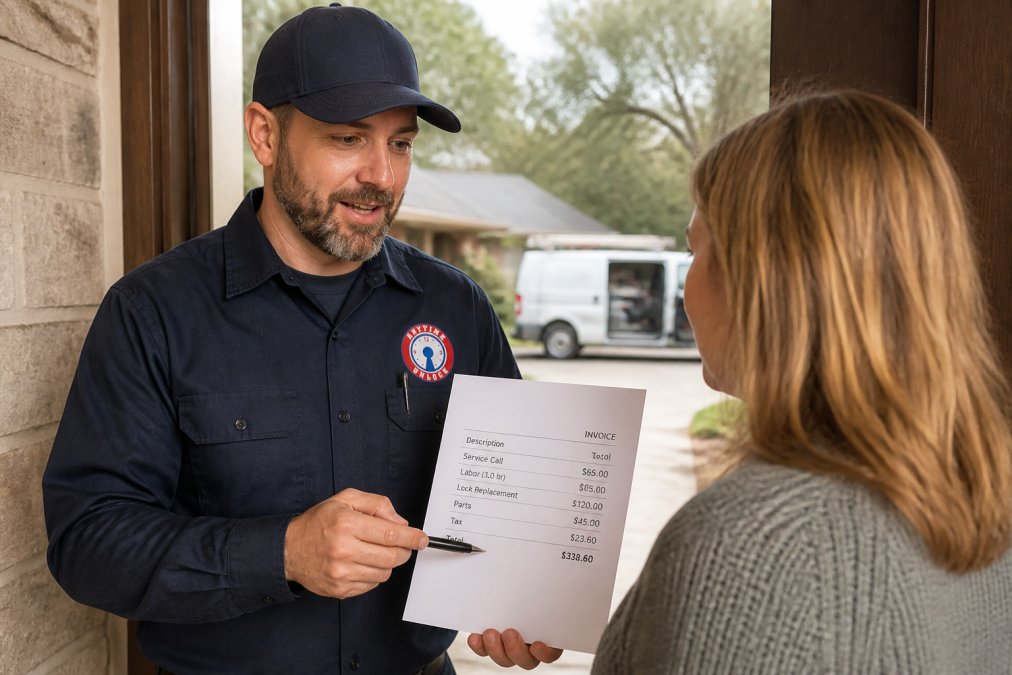
After the job is done, demand an itemized invoice. This should show:
- Service call fee
- Labor hours and hourly rate
- Each part used with its cost
- Any surcharges (emergency, after-hours, travel)
- Total amount due
An itemized invoice protects you. It shows exactly what you paid for. If there's a dispute later, you have documentation.
Residential vs. Commercial Locksmith Rates
Residential and commercial locksmith work operate under different pricing models because the scope, complexity, and liability differ significantly.
Why Commercial Locksmith Work Costs More
Residential locks are typically pin-tumbler deadbolts or keyed entry knobs. A residential rekey (changing the pins so old keys no longer work) usually takes 15-30 minutes per lock, depending on lock type and region.
Commercial locks are more sophisticated. They often involve:
- Master key systems (where one key opens multiple locks, but each lock also has its own key)
- Access control integration (electronic locks tied to card readers or keypads)
- High-security cylinders designed to resist picking and drilling
- Multiple doors requiring coordinated rekeying
- Security assessments and recommendations
Scope and Consultation Differences
Residential locksmith work is transactional: you call, they rekey your lock or open a locked door, they leave.
Commercial jobs also involve:
- Liability: If a locksmith's work on a commercial property fails and causes a security breach, the liability exposure is higher. This is reflected in higher rates and insurance costs that get passed to the customer.
- Scheduling: Commercial work often happens after hours to avoid disrupting business. After-hours commercial rates are typically higher than daytime rates.
- Hardware costs: Commercial-grade locks cost more at wholesale. A commercial high-security cylinder might cost the locksmith more than a residential lock. These wholesale costs are marked up and passed to the customer.
Residential Examples
- Residential rekey (single lock): Pricing depends on quantity, dates, and delivery
- Residential lock replacement: Pricing depends on quantity, dates, and delivery
- Residential emergency lockout: Pricing depends on quantity, dates, and delivery
- Residential key duplication: Pricing depends on quantity, dates, and delivery
Commercial Examples
- Commercial master key system setup: Pricing depends on quantity, dates, and delivery
- Commercial lock replacement (single lock): Pricing depends on quantity, dates, and delivery
- Commercial emergency lockout: Pricing depends on quantity, dates, and delivery
- Commercial access control integration: Pricing depends on quantity, dates, and delivery
- Security assessment and consultation: Pricing depends on quantity, dates, and delivery
When to Budget for Commercial Locksmith Work
If you own or manage a business, budget locksmith services as a recurring expense. Many commercial properties need annual rekeying, lock maintenance, or system updates. Plan for locksmith services as a recurring expense.
Automotive Locksmith Costs and Transponder Key Programming
Car lockouts are different from home lockouts. Automotive locksmiths need specialized training and equipment.
Ask an automotive locksmith:
- "Can you program a transponder key for my vehicle?"
- "What's the cost compared to the dealership?"
- "How long does programming take?"
Getting a Fair Quote: What to Ask and Expect
When you call a locksmith, you're gathering information. Ask specific questions. Listen carefully to the answers.
Here's what to ask:
On the phone:
- Service call fee
- Hourly labor rate
- Estimated total for your specific job
- After-hours surcharge (if calling outside business hours)
- Travel fee
- Whether they provide a written estimate on-site
Before work starts:
- Request a written estimate
- Ask them to explain any costs you don't understand
- Confirm they'll honor the estimate
- Ask what happens if the job takes longer than estimated
After the job:
- Request an itemized invoice
- Verify each charge matches the estimate
- Ask about any warranty on their work
Frequently Asked Questions
What's included in a typical locksmith service call fee?
A service call fee covers the locksmith's arrival, diagnosis, and initial assessment of your lock or security issue. This is separate from labor costs and parts. A transparent locksmith will itemize this on your invoice so you see exactly what you're paying for. The fee typically ranges based on whether it's a standard appointment or an emergency dispatch, and whether the technician needs to travel during off-hours. Always ask for a breakdown before work begins.
How do I know if a locksmith quote is legitimate or a bait-and-switch?
Legitimate locksmiths provide detailed phone estimates based on your specific situation and confirm pricing before arriving. Red flags include vague quotes over the phone, pressure to pay cash upfront, or dramatic price increases once they arrive. Request an on-site estimate in writing, verify the technician is licensed, and ask for an itemized invoice. Reputable locksmiths communicate clearly about all costs, including service fees, labor, hardware, and any surcharges for emergency dispatch or after-hours work.
Why does emergency locksmith pricing cost more than scheduled service?
Emergency locksmith pricing reflects the cost of maintaining 24/7 availability and rapid response. After-hours surcharges, weekend rates, and holiday premiums compensate for technicians working outside standard business hours. Emergency dispatch also means the locksmith may turn down other jobs to reach you quickly. Transparent pricing discloses these surcharges upfront. Standard appointments during business hours typically cost less because they fit into the technician's regular schedule without operational overhead.
Should I use a dealership or a mobile locksmith for transponder key programming?
Mobile locksmiths can offer a convenient alternative to dealerships for transponder key programming with on-site service. Dealerships may have access to specific vehicle databases. A licensed locksmith can program most transponder keys and provide transparent pricing that you can verify before the job starts. Compare quotes from both sources, but ensure any locksmith you choose is certified and provides an itemized invoice detailing labor and hardware costs.