 how-to
Program Key Fob: DIY Steps & When to Call a Pro
Table of Contents
- Can You Program a Key Fob Yourself?
- Identify Your Key Type and Vehicle Compatibility
- Prepare Your Vehicle Before Programming
- Step-by-Step Key Fob Programming Instructions
- Key Fob Programming Tool Options
- Troubleshooting When Your Key Fob Is Not Programming
- Key Fob Programming Cost: DIY, Locksmith, and Dealer
- Erasing Lost or Stolen Fobs from Vehicle Memory
- Frequently Asked Questions
Last Updated: October 10, 2026
Can You Program a Key Fob Yourself?
Yes, you can program key fob yourself for many vehicles. The process varies by make, model, and year, but most cars built in the last 20 years allow DIY key fob programming without special tools. However, some newer vehicles with advanced security systems require professional equipment or dealer intervention.
The real question isn't whether it's possible, it's whether it makes sense for your specific vehicle. Some fobs take 10 minutes to program key fob, while others need professional help. Others need a locksmith or dealership visit. Understanding your key type and vehicle compatibility upfront saves time and frustration.
At Anytime Unlock and George's Key Shop, we help vehicle owners decide when DIY programming works and when professional help is worth the investment. Let's walk through what you need to know before you start.
Identify Your Key Type and Vehicle Compatibility
Not all key fobs are created equal. Your vehicle uses one of three main remote technologies, and each has different programming requirements.
Remote Entry vs. Transponder Keys vs. Smart Keys
Remote entry fobs are the simplest option. They send a signal to unlock and lock your doors. No special programming is needed beyond pairing the remote to your vehicle. If you have an older car or a basic keyless entry system, this is likely what you own.
Transponder keys contain a computer chip that communicates with your vehicle's immobilizer. When you insert the key, the chip sends a security code. Without the correct code, the engine won't start. Programming a transponder key is more complex than a simple remote, but many vehicles still allow DIY pairing.
Smart keys are the newest technology. They use proximity detection, your car unlocks when the key is near the door, and the engine starts with a push button. Smart keys have advanced encryption and usually require dealer or locksmith programming.
The difference matters because it determines whether you can program at home or need professional help. Remote entry fobs are almost always DIY-friendly. Transponder keys are sometimes DIY-friendly, depending on your vehicle. Smart keys almost never are.
Check Your Make, Model, and Year
Vehicle compatibility is the critical step most people skip. Your car's year, make, and model determine whether programming is possible at home.
Vehicles from the mid-2000s through early 2020s often support DIY programming. Older vehicles (pre-2005) may not have the programming mode feature at all. Newer vehicles (2020+) with advanced security systems usually require dealer or locksmith intervention.
To check your specific vehicle:
- Look up your exact year, make, and model online
- Search "[Your Year] [Make] [Model] key fob programming instructions"
- Check your owner's manual in the automotive section
- Call a locksmith to confirm before you buy a replacement fob
Don't assume your vehicle supports DIY programming just because the fob is available for purchase. Sellers often market universal or aftermarket remotes that won't pair with your specific car.
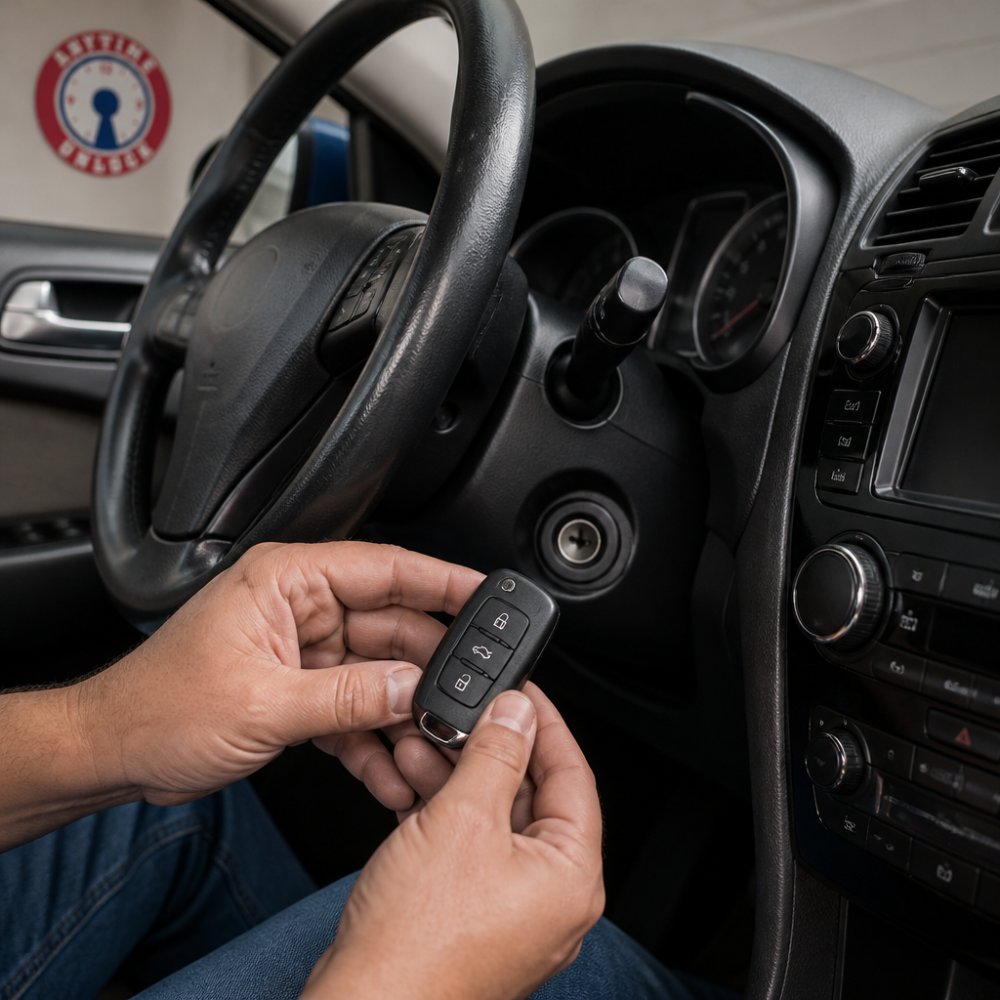
Prepare Your Vehicle Before Programming
Before you attempt to program your key fob, prepare your car properly. Skipping this step is the most common reason programming fails.
Start with these essentials:
- Park your vehicle in a safe location where you can work for 10-15 minutes without interruption
- Make sure you have all doors and windows closed
- Locate your vehicle's ignition (not the push-button start, the actual ignition switch)
- Have your key fob and any existing working remote nearby
- Ensure your vehicle battery has a good charge
Some vehicles require you to turn the ignition on and off in a specific sequence. Others need you to press and hold certain buttons while the doors are locked. The exact steps depend on your car, but preparation is the same for all: a quiet space, a charged battery, and your attention focused on the task.
Many DIY attempts fail because people rush or get interrupted mid-sequence. Programming mode is time-sensitive. If you step away or lose focus, the vehicle exits programming mode and you have to start over.
Step-by-Step Key Fob Programming Instructions
The programming process follows a general pattern, though the exact steps vary by vehicle. Here's the standard approach used by most vehicles from 2005 onward.
Entering Programming Mode
Programming mode is the state your vehicle enters when it's ready to accept new remote codes. Different vehicles trigger this mode differently.
The most common method is the ignition sequence:
- Sit in the driver's seat with all doors closed
- Insert your key into the ignition
- Turn the ignition to the "On" position (do not start the engine)
- Turn the ignition back to the "Off" position
- Repeat this cycle three to five times in quick succession
- Listen for a chime or watch for the lights to flash, this signals programming mode is active
Some vehicles use the door-lock method instead:
- Lock and unlock the driver-side door using the manual lock button (not the remote)
- Turn the ignition on, then off, then on again
- Press and hold the unlock button on your existing remote for several seconds
- Release when you hear a chime or see the lights flash
The specific sequence for your vehicle is in your owner's manual. If you don't have the manual, search online for "[Year] [Make] [Model] programming mode instructions" to find the exact steps.
Pairing and Testing Your Remote
Once you've entered programming mode, your vehicle is ready to accept the new remote code.
Hold your new key fob and press any button (usually the lock button) for three to five seconds. You should hear a chime or see the lights flash again, this confirms the remote is paired. Some vehicles require you to press and hold until the lights cycle or the doors lock and unlock automatically.
Test the remote immediately:
- Press the lock button, doors should lock
- Press the unlock button, doors should unlock
- If you have trunk release, test that too
If the remote works, programming is complete. If nothing happens, you've likely exited programming mode. Go back to step one and try again, moving through the ignition or door-lock sequence more slowly or more quickly depending on your vehicle's timing.
Key Fob Programming Tool Options
Most DIY key fob programming requires no tools at all, just your ignition and your hands. However, some vehicles benefit from or require specialized equipment.
No tools needed, This is the case for most vehicles. You use the ignition sequence or door-lock method to enter programming mode, then pair your remote by pressing buttons. No special equipment required.
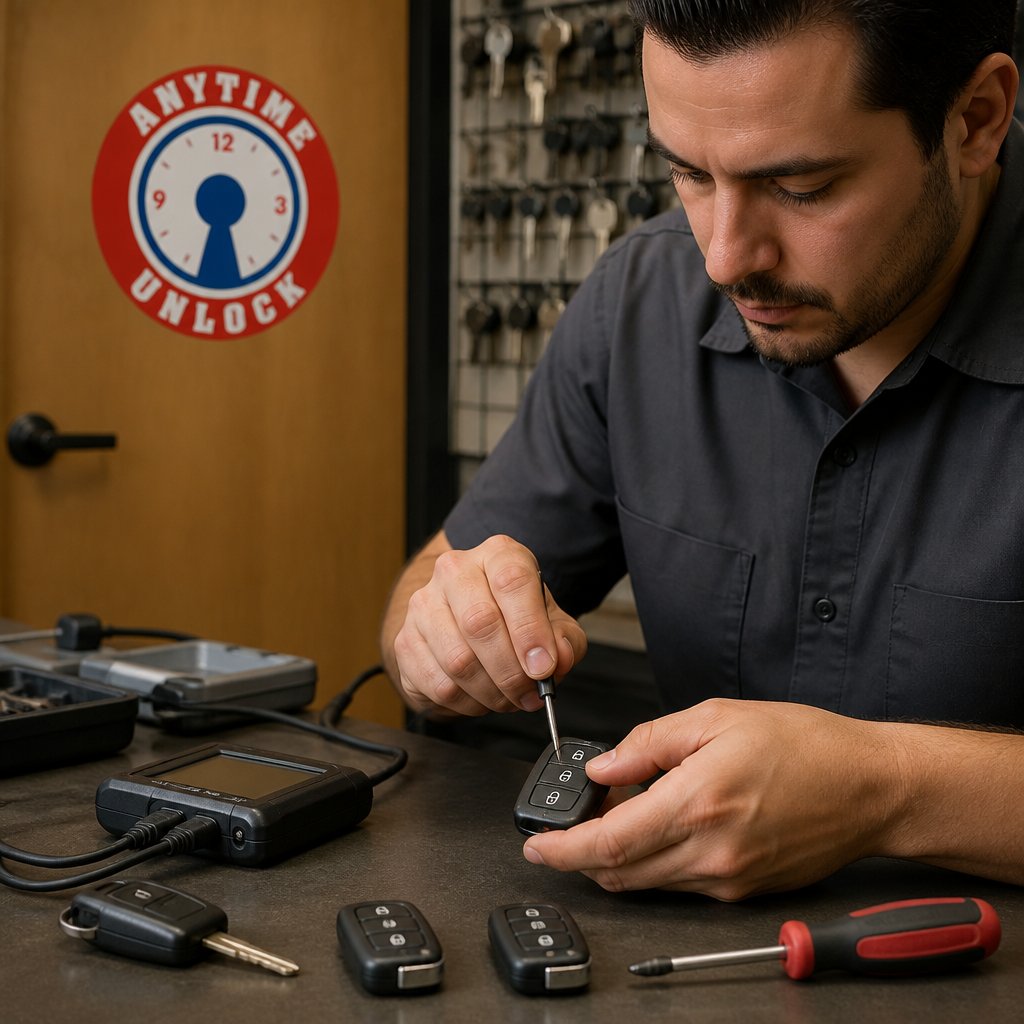
Diagnostic scanner, Some newer vehicles (2010+) may require a diagnostic tool to reprogram the key fob or clear old codes from the vehicle's memory. These tools are expensive and typically used by locksmiths or dealers.
Replacement remote from the dealer, Dealer remotes are pre-programmed to your vehicle's security system. You may still need to pair them using the ignition sequence, but they're more likely to work on the first try.
Aftermarket or universal remotes, These are cheaper but less reliable. Many aftermarket remotes don't pair with certain vehicles, even if the model number matches.
The reality is simple: if your vehicle supports DIY programming, you don't need tools. If it doesn't, no tool you buy will make it work.
Troubleshooting When Your Key Fob Is Not Programming
Programming fails for a few predictable reasons. Here's how to fix the most common issues.
The vehicle won't enter programming mode, You're either using the wrong sequence or the timing is off. Slow down. Some vehicles need you to pause between ignition turns. Others need rapid succession.
The remote pairs but doesn't work, The remote is paired, but the buttons don't trigger locks or unlocks. This usually means the remote's battery is dead or the remote itself is defective.
The vehicle exits programming mode too quickly, Programming mode is time-sensitive. You have a window (usually 30 seconds to a few minutes) to pair your remote. If you're slow, the vehicle exits the mode and you start over. Work faster.
You've tried multiple times and nothing works, Stop. You've likely triggered a safety lockout. Some vehicles disable programming mode after three to five failed attempts. Wait 30 minutes to an hour, then try again.
This is where a professional locksmith saves you time. A professional locksmith can diagnose whether your vehicle supports DIY programming and program the remote correctly on the first attempt if it doesn't.
Key Fob Programming Cost: DIY, Locksmith, and Dealer
Understanding your options helps you make the right choice for your situation.
DIY programming, If it works, the cost is just the replacement remote itself. Aftermarket remotes range from affordable to mid-range, depending on the model. Dealer remotes cost more upfront but are more likely to work. Your only investment is the remote, no labor costs.
Locksmith programming, A professional locksmith diagnoses your vehicle, confirms the remote is compatible, and programs it correctly. You pay for the remote plus the locksmith's service fee. This is faster than dealer service and typically costs less than a dealership visit.
Dealer programming, The dealership programs your key fob using their original equipment and security systems. This is the most expensive option but guarantees compatibility. Dealers also handle advanced cases like erasing lost or stolen fobs from your vehicle's memory, something DIY and many locksmiths cannot do.
Choose DIY if you're confident your vehicle supports it and you have time for troubleshooting. Choose a locksmith if you want professional reliability without dealer prices. Choose the dealer if your vehicle requires advanced security work or you need multiple fobs programmed at once.
Erasing Lost or Stolen Fobs from Vehicle Memory
If you've lost a key fob or had one stolen, you face a security risk. Anyone with that remote can unlock your car.
How vehicle memory works, Your vehicle stores the security codes of all paired remotes in its immobilizer system. When you press a button, the remote sends that code. If the code matches one in the vehicle's memory, the door unlocks.
DIY erasing, Some vehicles allow you to erase fobs using the same ignition sequence or door-lock method you use for programming.
Professional erasing, Many newer vehicles require a diagnostic tool to erase fobs from memory. Locksmiths and dealers have this equipment. If your vehicle doesn't support DIY erasing, this is the only safe option.
This is an important security step. A lost fob in someone else's hands is a risk to your vehicle. Don't skip it.
Losing or replacing a key fob doesn't have to mean a trip to the dealership or weeks without a working remote. Anytime Unlock and George's Key Shop provides expert locksmith services for automotive needs.
Frequently Asked Questions
Can you program a key fob yourself without special tools?
Yes, many vehicles allow DIY key fob programming using only the ignition and door locks, no special tools required. The process varies by make and model. Some vehicles require a key programmer or diagnostic tool, which adds cost. Check your vehicle's manual or contact a locksmith to confirm whether your specific model supports tool-free programming before attempting it yourself.
What's the difference between a remote entry fob, transponder key, and smart key?
A remote entry fob unlocks doors and opens trunks wirelessly but has no ignition function. A transponder key contains a chip that communicates with the vehicle's immobilizer to allow engine start, it requires programming and cutting. A smart key uses push-button start and proximity detection; it's the most advanced and typically the most expensive to replace or program through a dealer.
How much does key fob programming cost compared to doing it yourself?
DIY programming costs nothing if your vehicle supports it. A locksmith can provide programming services. Dealership pricing depends on your vehicle make and model. For a cost estimate tailored to your specific situation, contact a professional locksmith for a free quote, pricing varies based on key type, vehicle compatibility, and whether you need the key blade cut as well.
What should I do if my key fob is not programming after following the steps?
First, verify you're following the correct sequence for your exact make, model, and year, instructions vary significantly. Check that the key fob battery is fresh and the ignition is turning on (not just to accessory mode). If the vehicle's immobilizer light stays on or blinks continuously, the programming mode may not have engaged. If DIY steps fail, a locksmith or dealer can diagnose whether the issue is a dead immobilizer, a defective fob, or an incompatibility with your vehicle.