 how-to
Emergency Locksmith Response Time: What to Expect
Table of Contents
- What Emergency Locksmith Response Time Actually Means
- How Long Does a Locksmith Take to Unlock a Door?
- What Affects Your Emergency Locksmith Response Time
- Locksmith ETA Questions to Ask Before You Hang Up
- Emergency Locksmith Cost: What Drives the Final Bill
- What to Do While Waiting for a Locksmith
- How to Compare Locksmith Response Promises
- Conclusion
- Frequently Asked Questions
Last Updated: October 5, 2026
What Emergency Locksmith Response Time Actually Means
Emergency locksmith response time expectations come down to one number: how long until a technician reaches your door and gets you back inside.
At Anytime Unlock and George's Key Shop, we've handled lockouts since 1971, and the honest answer is that any arrival estimate is a range.
Emergency locksmith response time is the total gap between your call and restored access. That gap breaks into dispatch time, arrival time, and time on site.
Dispatch Time vs. Arrival Time vs. Time on Site
Dispatch time is how long it takes to answer your call and send a technician. Arrival time is how long that technician takes to reach you. Time on site is how long the actual unlock or repair takes once they pull up.
Only the middle one is the "ETA" most dispatchers quote. A shop might dispatch in two minutes, quote a 25-minute arrival, then spend 10 minutes on the lock. Your real wait: 37 minutes.
Ask which clock a company means. Vague promises usually hide the longest one.
Why the Arrival Window Is a Range, Not a Promise
Traffic, distance, and demand all shift by the hour. A route that takes 15 minutes at 6 a.m. can take 40 at 5 p.m.
A reliable shop gives you a window, like "20 to 35 minutes," then updates you if it slips. A shop that promises an exact minute is guessing, or telling you what you want to hear.
How Long Does a Locksmith Take to Unlock a Door?
Most standard car and home lockouts take 5 to 20 minutes on site once a technician arrives. The arrival drive is usually the longer part of the wait.
Job type changes everything. Here's how the two most common calls compare:
| Job Type | Typical On-Site Time | Main Factor |
|---|---|---|
| Car lockout | 5-15 minutes | Door type, tools |
| Home lockout | 5-20 minutes | Lock style, deadbolt |
| Rekeying | 10-20 min per lock | Number of locks |
| Broken key removal | 15-30 minutes | Key position |
Those are on-site times only. Add your arrival window on top.
Residential and Automotive Lockouts
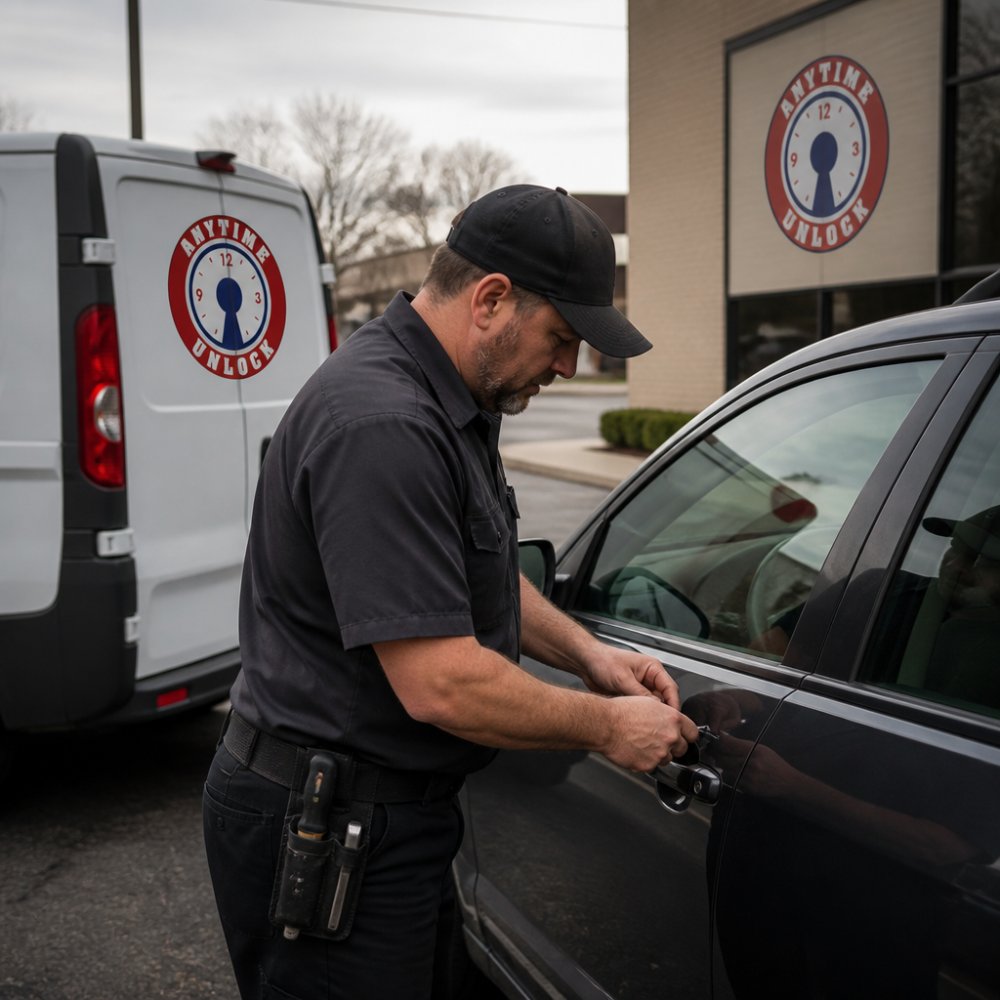
A simple home lockout with a standard knob is fast. A car with a newer electronic lock can take longer because the tools and approach differ.
If you drive a newer vehicle, mention the make and model when you call. It helps the dispatcher send the right technician and tools.
Job Complexity and Entry Method
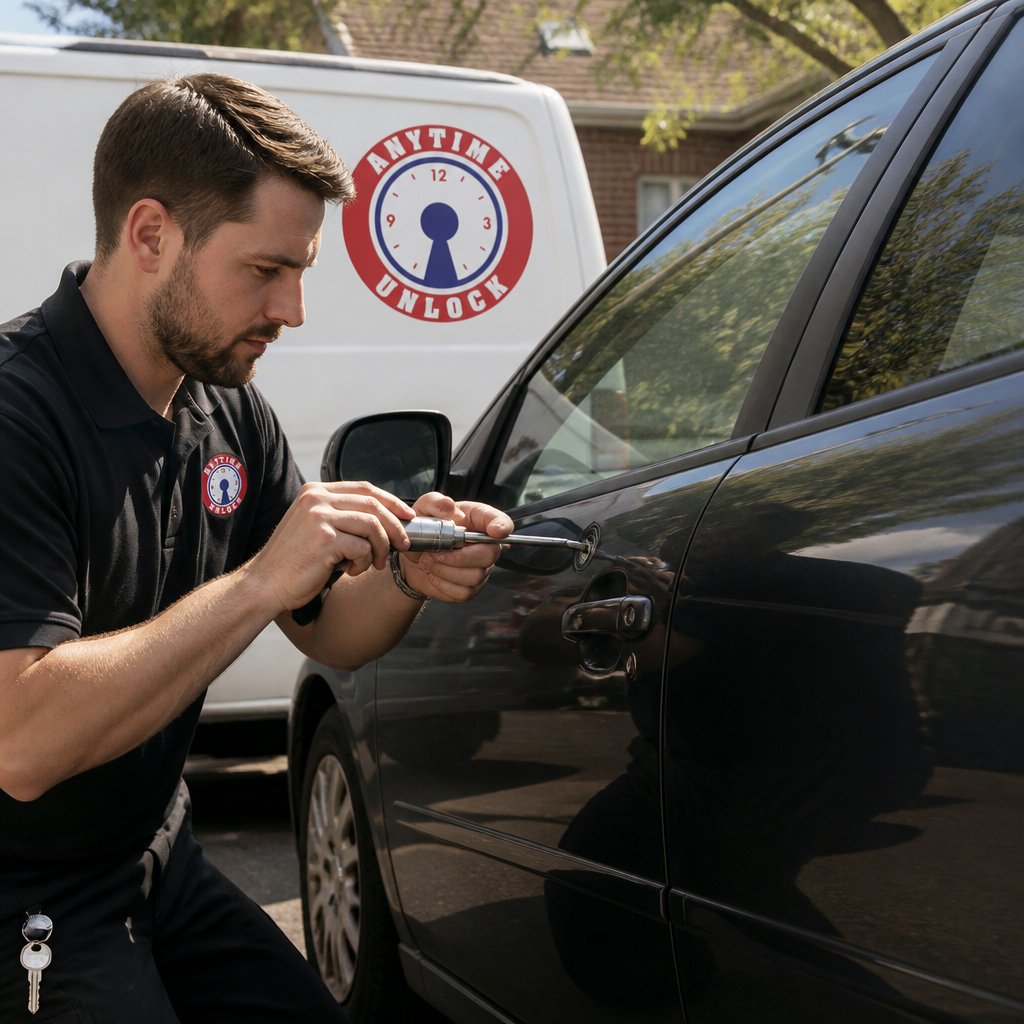
Entry method drives the clock. A technician might use a reach tool, an air wedge, or lock picking depending on the lock.
- Air wedge: slides the door open slightly to reach the lock
- Reach tool: hooks the interior handle or lock button
- Lock picking: works the pins without damage
- Bumping: a fast method for certain pin-tumbler locks
The right method restores access quickly. The wrong one damages the lock and adds a replacement to your bill.
What Affects Your Emergency Locksmith Response Time
Four things move your arrival window: distance, traffic, time of day, and how busy the shop is. Urgency and job type matter too. But the useful version of this answer is not a list, it is a range you can sanity-check against your own situation.
A transparent shop can usually place your call into one of three bands:
| Situation | Typical Arrival Window | Why |
|---|---|---|
| Urban, daytime, technician already nearby | 15-30 minutes | Short drive, clear roads, staffed shift |
| Suburban or mixed traffic, standard hours | 25-45 minutes | Longer drive, variable traffic, moderate demand |
| Rural, overnight, or peak demand | 45-90+ minutes | Fewer on-shift technicians, longer distances |
Those bands are not guarantees. They are the honest shape of the answer, and any shop that refuses to give you even a band is telling you something.
Distance, Traffic, Time of Day, and Demand
A shop across town faces a longer drive than one a mile away. Rush hour and bad weather stretch it further. That part is obvious.
Ask the dispatcher two questions: how many technicians are on shift right now, and which one is closest to you.
Late nights and weekends cut both ways. Roads are clearer, but fewer technicians are on shift. A 2 a.m. call may take longer to dispatch even with empty streets.
Urgency Level and Job Type
A stranded driver on a highway shoulder is more urgent than a homeowner locked out on a mild afternoon. Good shops triage, and triage changes your place in the queue.
Job type matters too. A quick car unlock is faster to complete than a full residential rekey, but the arrival window is often the same, the drive does not shorten because the job is simple. Tell the dispatcher exactly what happened so they can set a realistic window rather than an optimistic one.
Locksmith ETA Questions to Ask Before You Hang Up
The right locksmith ETA questions protect your time and your wallet. Ask them before you end the call.
- What's the arrival window, in minutes?
- Is that dispatch time or arrival time?
- What's the total cost, including any call-out fee?
- Are there after-hours or emergency rates?
- What's the technician's name?
- Will you call or text if you're running late?
Write down the answers. A clear quote on the phone is your best protection against a surprise bill.
How to Verify an Arrival Estimate and Handle Delays
Get the window in writing, by text if possible. Then set a check-in time.
If the technician hasn't arrived by the end of the window, call back. Ask for a new estimate. A shop that communicates proactively earns your trust. One that goes silent after quoting a number does not.
Emergency Locksmith Cost: What Drives the Final Bill
Emergency locksmith cost depends on the job, not a flat rate. Several factors decide the final number.
- Time of day: nights, weekends, and holidays often cost more
- Service call fee: a base charge just to come out
- Job complexity: a simple unlock costs less than a rekey or replacement
- Parts: new keys, cylinders, or locks add to the total
- Distance: some shops charge more for longer drives
Ask for the full breakdown up front. The Federal Trade Commission's consumer guidance on service pricing advises getting a quote before work starts so there are no surprises.
We won't quote a number here, because honest pricing depends on your exact situation. Call and we'll give you a real figure before we roll.
What to Do While Waiting for a Locksmith
Stay safe and stay visible while you wait. Most lockout calls are calm, but a few simple steps prevent problems.
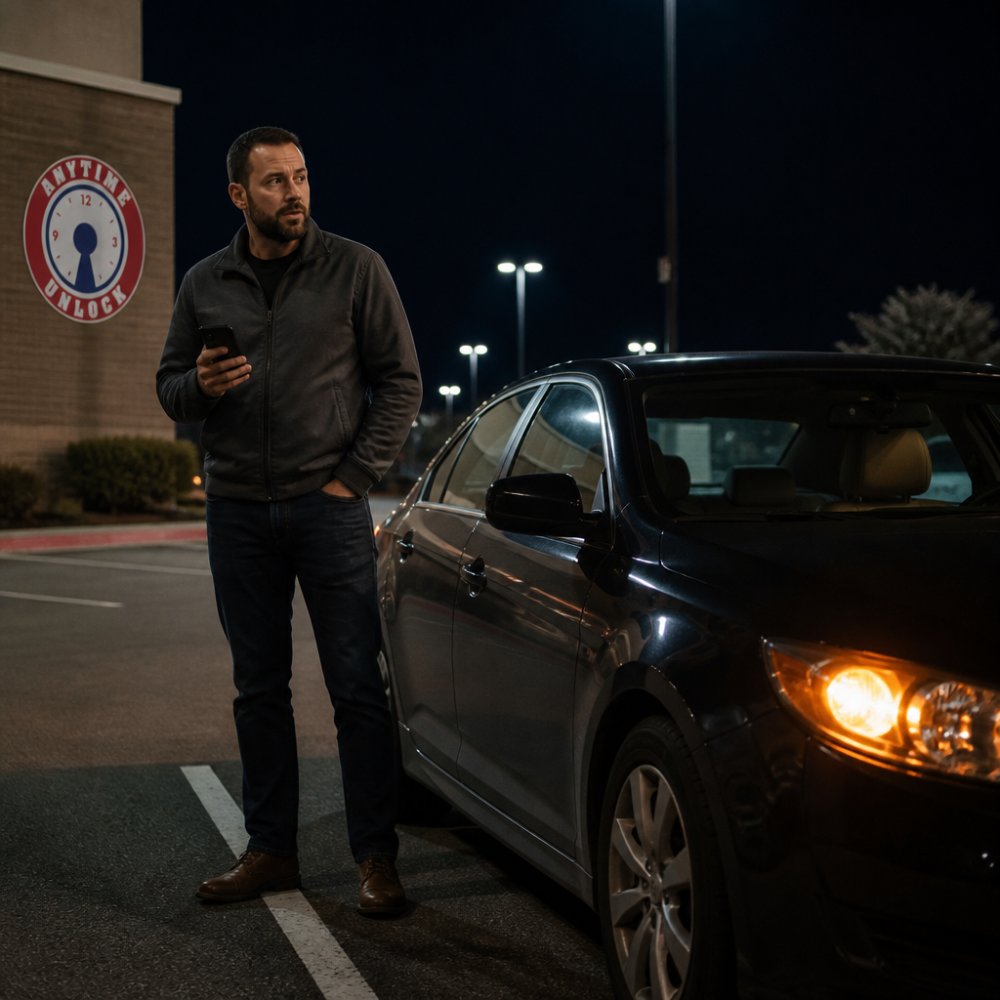
- Stay in a well-lit, public spot if you can
- Keep your phone charged and stay reachable
- Turn on hazard lights if you're in a car
- Don't try to force the lock yourself
- After a break-in, don't enter until the lock is secured
If you're stranded, stay near your vehicle rather than walking for help. If you're locked out after a break-in, wait for the technician before going inside. Restoring the lock first prevents additional risks.
How to Compare Locksmith Response Promises
Compare shops on communication, not just speed claims. Anyone can advertise a fast arrival. The harder question is whether the promise survives contact with reality, and whether you can verify it before you commit.
How to Tell a Real ETA From a Marketing Number
A real ETA has three properties: it is a range, it is tied to a specific technician, and it comes with a callback commitment. A marketing number is a single figure with no owner and no follow-up.
Watch for these warning signs on a call:
- A flat "we'll be there in 15 minutes" with no range and no caveat
- No named technician or dispatcher ID
- A price that only gets confirmed "when we get there"
- An answering service that cannot say how many technicians are on shift
- A refusal to text the window in writing
A shop that passes all five is behaving like a business that expects to be held to its word.
Verifying the Technician Before You Open the Door
When the technician arrives, confirm three things before any work starts:
- Identity, a company name on the vehicle, a uniform or ID, and a name that matches what dispatch told you.
- The quoted price, restate the total you were given on the phone and confirm it has not changed.
- The scope of work, what they plan to do, and whether it involves drilling, replacement, or a rekey.
If any of those do not match, you are allowed to stop and call the company back. A legitimate shop will not pressure you past that step.
What to Do If the Technician Is Late
Delays happen. What separates a good shop from a bad one is what happens next.
- Call the shop at the end of the quoted window, not before.
- Ask for a new estimate and a reason for the slip.
- If the new estimate keeps moving, you can cancel and call another shop.
- If you already paid a deposit, ask for the refund policy in writing before you hang up.
The Better Business Bureau's tips on hiring a locksmith recommends checking a company's history and getting the price in writing before you commit.
Anytime Unlock and George's Key Shop has served the area since 1971, and we keep customers updated until the job is done. That is the standard worth holding any shop to.
Conclusion
A lockout is stressful enough without a vague arrival promise making it worse. Ask the right questions, get a real window, and confirm the price before anyone heads your way.
Anytime Unlock and George's Key Shop offers 24/7 mobile service for auto, residential, and commercial lockouts. You get reliable dispatch, clear communication until the job is done, and a team that's been doing this since 1971.
Get a Free Quote and know exactly what to expect before we arrive.
Frequently Asked Questions
How long do emergency locksmiths take to arrive?
Arrival time depends on your distance from the dispatcher, traffic, time of day, and how many other calls are ahead of you. A realistic arrival window in most service areas runs from about 15 to 60 minutes, with rural locations and peak hours pushing toward the higher end. Ask for a specific arrival window in minutes, not a vague 'soon,' and confirm whether that estimate includes dispatch time or just driving time.
Does a 24-hour locksmith guarantee a specific response time?
No. A 24/7 label means the phone is answered and a technician is dispatched around the clock, not that a fixed number of minutes is guaranteed. Some companies advertise a 30-minute promise that applies only to certain zones or off-peak hours. Before you commit, ask what happens if the technician runs late, whether there is a backup dispatcher, and whether the quoted window is a target or a contractual guarantee.
What should I ask a locksmith when requesting an emergency callout?
Ask four things: the total price including service call fee, the specific arrival window in minutes, whether the technician is licensed and insured, and what entry methods they plan to use on your lock type. Also ask whether the price can change after arrival and under what conditions. Getting these answers by phone before dispatch protects you from surprise charges and gives you a realistic expectation for how long the job will take.
What can make an emergency locksmith take longer to arrive?
Common delays include heavy traffic during commute hours, long distances between the technician and your location, high call volume during storms or cold snaps, and complex jobs like high-security lock cylinders or transponder key programming that require specific equipment. If you are locked out after a break-in or your lock is damaged, tell the dispatcher upfront so they send a technician prepared for repair or replacement, not just a standard unlock.