 listicle
Reliable 24 Hour Residential Locksmith: What to Expect
Table of Contents
- What a Reliable 24 Hour Residential Locksmith Actually Does
- Emergency Home Lockout Service: What Happens When You Call
- How to Verify a Licensed Locksmith Before You Let Them In
- Locksmith Pricing Guide: What Drives the Cost of a Service Call
- Residential Lock Repair, Rekeying, and Smart Lock Upgrades
- DIY Temporary Fixes and a Home Security Audit Checklist
- Frequently Asked Questions
Last Updated: September 10, 2026
What a Reliable 24 Hour Residential Locksmith Actually Does
A reliable 24 hour residential locksmith is a licensed, insured mobile technician who arrives at your home day or night to restore access, secure a damaged entry point, or replace failing hardware. This guide from Anytime Unlock and George’s Key Shop, the oldest locksmith company in Lubbock since 1971, explains what to expect before you call.
The core services break down into five categories:
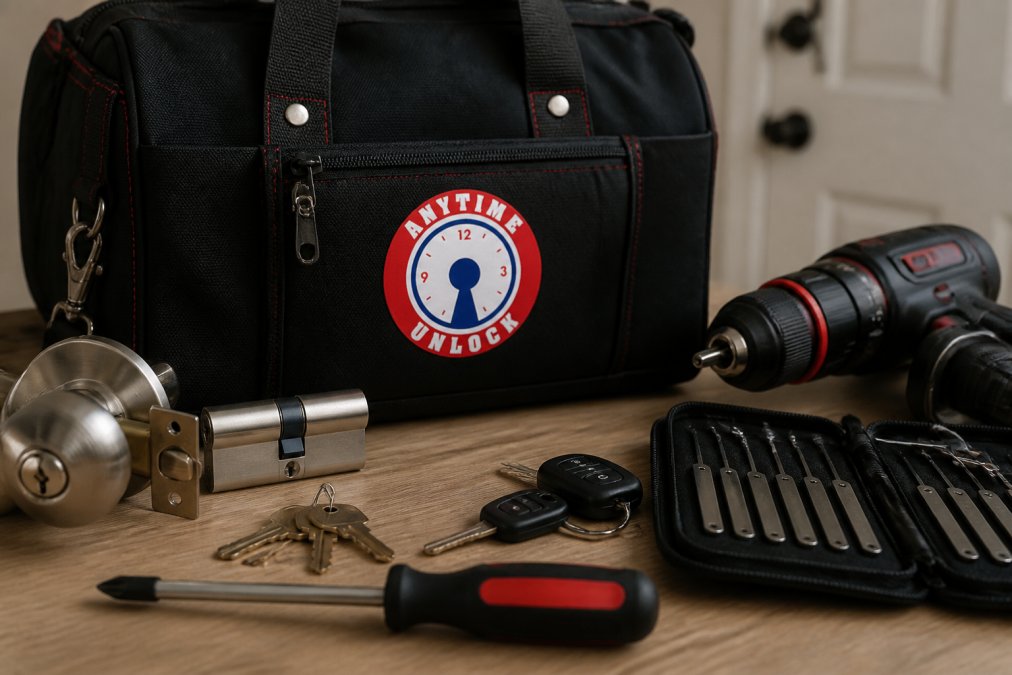
- Emergency lockout entry for homes and vehicles, including lock picking and key extraction
- Lock repair and replacement, from deadbolt installation to full door hardware swaps
- Rekeying services, which change the internal pins so old keys stop working
- Key duplication and key cutting, including transponder key programming
- Smart lock integration and high-security cylinder upgrades
What separates a professional technician from a call center dispatcher is simple: the technician who answers is the technician who shows up. No subcontracting, no surprise pricing at the door.
Emergency Home Lockout Service: What Happens When You Call
When you call an emergency home lockout service, a dispatcher confirms your address, asks for proof of residency, and gives you an estimated arrival window. A mobile service unit is dispatched immediately. Most legitimate providers stay on the phone or text updates until the technician reaches your driveway.
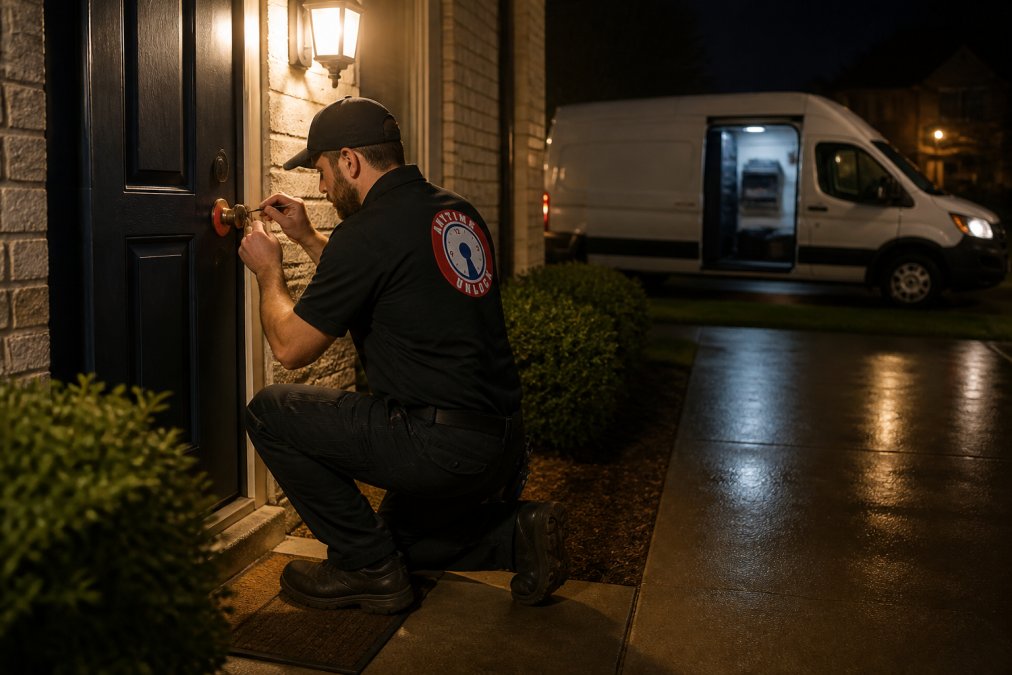
Here is the honest part most guides skip. Response time depends on technician proximity, traffic, and time of day. A company that promises 15 minutes at 2 AM is either exaggerating or has a technician parked nearby. Ask for a realistic window, not a marketing number.
Once on site, the technician verifies you live there. A driver's license with the matching address, a piece of mail, or a lease agreement all work. This step protects you as much as it protects the company.
How to Verify a Licensed Locksmith Before You Let Them In
Verifying a licensed locksmith takes about two minutes and prevents the most common locksmith scam: bait-and-switch pricing. Ask for the company's license number, insurance certificate, and physical business address. A legitimate operation answers all three without hesitation.
Watch for these red flags:
- A generic name like "Locksmith" with no company identity
- No physical address, only a phone number
- A quote that changes once the technician arrives
- Pressure to pay in cash only, with no receipt
- A vehicle with no company markings or license plate
The Federal Trade Commission's consumer guidance on service scams recommends getting a written estimate before work begins. Many states require locksmiths to carry a license or registration, and some municipalities add their own bonding requirements. Check your state's licensing board or consumer protection office to confirm credentials.
Locksmith Pricing Guide: What Drives the Cost of a Service Call
Most locksmith sites hide pricing behind a "call for a quote" button. This section gives you the exact questions to ask so the number you hear on the phone is the number you pay at the door.
Locksmith pricing depends on five variables:
- Time of day, a standard business-hours lockout costs less than the same job at 3 AM on a holiday
- Lock type, a basic pin tumbler lock costs less to open than a high-security cylinder with anti-pick pins
- Job complexity, a simple unlock is faster than a broken key extraction or a seized deadbolt
- Travel distance, mobile service units charge for the drive, and rural addresses cost more than in-town ones
- Parts, rekeying uses cheap pins; a new high-security cylinder or smart lock adds hardware cost
| Service | Typical Cost Drivers | Common Price Range | When It's Needed |
|---|---|---|---|
| Emergency lockout | After-hours surcharge, travel distance | $75-$200 | Locked out, no spare key |
| Rekeying | Number of locks, cylinder type | $20-$40 per lock | Moving into a new home |
| Lock replacement | Hardware grade, deadbolt type | $100-$300 installed | Broken or worn lock |
| Key duplication | Key type, transponder programming | $3-$10 standard; $50-$150 transponder | Spare keys, lost keys |
| Smart lock installation | Brand compatibility, door prep | $100-$250 labor plus hardware | Security upgrade |
These ranges are not a quote. They are a reality check. If a dispatcher quotes you $35 for a 2 AM lockout, that is a bait price. The technician will arrive, drill the lock, and hand you a bill for several hundred dollars. The Federal Trade Commission's consumer guidance on service scams warns that bait-and-switch pricing is one of the most common complaints in this industry.
Ask these four questions before you agree to dispatch:
- What is the service call fee, and is it credited toward the repair?
- Is the quote binding, or can it change on site?
- Is there an after-hours or holiday surcharge, and how much is it?
- Do you accept credit cards, and will I get an itemized receipt?
A legitimate provider answers all four without hesitation. A call center will dodge, transfer you, or quote a number that sounds too good to be true. Because pricing varies by market and job specifics, Consumer Affairs' guide to locksmith service costs notes that the safest approach is requesting a written quote before dispatch. Anytime Unlock and George's Key Shop provides free quotes so you know the number before the van arrives. That transparency is the whole point.
Residential Lock Repair, Rekeying, and Smart Lock Upgrades
Residential lock repair fixes what's broken. Rekeying changes who has access. Smart lock integration adds remote control and audit trails. These are three different jobs, and knowing which one you need saves money.
Rekeying is almost always the right call after moving into a new property. You keep the existing hardware but change the internal pins, so every old key becomes useless. It costs less than replacement and takes minutes per lock.
Lock repair applies when the mechanism still works but sticks, jams, or fails to latch. A worn deadbolt can often be rebuilt rather than replaced.
Smart lock integration makes sense when you want keyless entry, temporary access codes for contractors, or a record of who entered and when. Not every door is compatible. The technician checks door thickness, backset measurement, and existing bore hole size before recommending a model.
For high-security needs, ask about high-security cylinders and master key systems. These use restricted keyways that can't be duplicated at a hardware store, which matters for rental properties and multi-unit buildings.
DIY Temporary Fixes and a Home Security Audit Checklist
A temporary fix buys you time until a professional arrives. It does not replace one. This section covers what to do while you wait, how to spot a scam locksmith before you let one in, and a yearly audit that keeps your home secure.
What to do while you wait
If you're locked out and waiting, check every entry point first: back doors, garage service doors, and sliding patio doors are commonly left unlocked. If a key broke off in the cylinder, do not push the fragment deeper with a screwdriver. That turns a simple key extraction into a cylinder replacement.
For a broken lock that won't secure, a door wedge or a chair braced under the handle provides short-term resistance. It is not security. Treat it as a stopgap for a few hours, nothing more.
How to vet a legitimate locksmith before you let them in
This is the step most guides skip, and it is the one that saves you the most money. The locksmith industry has a well-documented problem with out-of-state call centers that dispatch unlicensed subcontractors and inflate prices on site. Here is how to tell the difference in about two minutes:
- Ask for a physical business address. A real company has a shop, a storefront, or a registered office. A call center has only a phone number and a generic name like "Locksmith" or "24 Hour Lock Service."
- Ask for a license or registration number. Many states require locksmiths to carry a license or registration, and some municipalities add their own bonding requirements. Check your state's licensing board or consumer protection office to confirm credentials.
- Ask whether the technician who answers is the one who shows up. Reputable local providers dispatch their own employees. Scam operations route your call to a national call center that sells the job to whoever is nearby.
- Ask for the total in writing before dispatch. A legitimate provider gives you a firm number. A scam operation gives you a lowball estimate and changes it at the door.
- Watch the vehicle. A marked van with a company name and license plate is a good sign. An unmarked car with no branding is a red flag.
Watch for these red flags:
- A generic name like "Locksmith" with no company identity
- No physical address, only a phone number
- A quote that changes once the technician arrives
- Pressure to pay in cash only, with no receipt
- A vehicle with no company markings or license plate
- A technician who arrives without tools or a uniform
The Federal Trade Commission's consumer guidance on service scams recommends getting a written estimate before work begins. If a technician refuses to give you a number before starting, send them away. You are not obligated to hire them.
Yearly home security audit checklist
Run this audit once a year:
- Test every exterior lock with the door closed, not just open
- Confirm deadbolts extend at least one inch into the strike plate
- Check strike plates are anchored with three-inch screws into the frame stud
- Verify sliding doors have a secondary latch or pin
- Rekey any lock that a former roommate, contractor, or tenant had a key to
- Replace worn or loose handles and cylinders
- Test smart lock batteries and backup key access
- Confirm garage door openers use rolling codes
For broader guidance on home entry point security, the National Crime Prevention Council's home security resources outlines additional reinforcement steps for doors and windows.
Frequently Asked Questions
How much does a 24 hour residential locksmith cost?
Pricing depends on the time of day, lock type, and whether the job requires a rekey or replacement. Emergency calls at night or on weekends usually cost more than standard business hours. Ask for a written estimate before work begins, and request a breakdown of the service call fee, labor, and any parts. Anytime Unlock and George's Key Shop provides free quotes so you know the total before the technician arrives.
How do I verify a licensed locksmith is reputable?
Ask for the technician's license number and confirm it with your state or local licensing board. Request proof of insurance, a physical business address, and a written estimate before any work starts. Legitimate locksmiths will not pressure you into a cash-only payment or refuse to show identification. A company with a long local history, like one established in 1971, gives you a verifiable track record to check.
What information should I have ready when calling an emergency locksmith?
Have your exact address, the type of lock or vehicle, and a description of the problem ready. Mention whether the door is deadbolted, if a key is broken inside the cylinder, and whether you own or rent the property. If you rent, your landlord may need to authorize the work. Providing these details helps the dispatcher send the right tools and give you an accurate arrival window for your emergency home lockout service.
Do residential locksmiths provide rekeying services 24/7?
Many do, though some companies schedule rekeys during standard hours unless it is an emergency. Rekeying is often the fastest way to secure a new home because it changes the internal pins so old keys no longer work. If you just moved in and do not know who has copies, ask about rekeying services when you call. A reliable 24 hour residential locksmith can typically handle a rekey during the same visit as a lockout.
How can I tell if a locksmith service is legitimate or a scam?
Watch for these red flags: no physical address, no license number on the website or truck, quotes that seem too low, and pressure to pay cash only. A legitimate locksmith will arrive in a marked vehicle, wear identification, and provide a written estimate before starting. If the price changes dramatically after the technician arrives, stop the work and call another provider. Verifying credentials upfront protects you from bait-and-switch pricing.