 how-to
5 Ways to Remove a Broken Key from a Lock
Last Updated: October 24, 2026
Quick Summary
To remove broken key from lock, first assess how far the fragment sticks out and what type of lock you have. If the key is exposed, use needle-nose pliers, tweezers, a paperclip hook, or a broken key extractor tool to grip and pull it straight out with steady pressure.
- Keys break most often at the thin shaft just below the head when the lock is stiff or the key is old.
- Needle-nose pliers work best when the key fragment sticks out enough to grip the teeth or widest part.
- A paperclip can be straightened and bent into a hook shape to catch key teeth and pull the fragment out.
- Broken key extractors come in three styles: spiral, hook, and rake extractors for different lock situations.
- Call a locksmith if the key broke flush with the lock face, the lock feels damaged, or the key won't budge after several attempts.
Table of Contents
- What to Do First: Assess the Broken Key and Lock
- Removing a Broken Key with Needle-Nose Pliers
- Remove Broken Key with Tweezers and Small Tools
- Get a Broken Key Out with a Paper Clip
- Using a Broken Key Extractor Tool for Stuck Fragments
- When to Call a Locksmith for Broken Key Removal
- Preventing Key Breakage and Future Lock Damage
- Get Your Lock Repaired or Rekeyed Today
- Frequently Asked Questions
What to Do First: Assess the Broken Key and Lock
When you need to remove broken key from lock, the first step is understanding what you're dealing with, even though it's frustrating. Before you grab pliers or call for help, take a moment to assess the situation. The key fragment's position and your lock type will determine which removal method works best.
How far is the key fragment sticking out?
The depth of the broken key matters. If most of the key is exposed outside the lock, you can likely grip it with pliers or tweezers.
A key that's flush with the lock face requires a different strategy than one jutting out visibly. Exposed fragments are your easiest targets for removal. Fragments buried deep inside the keyway need specialized tools or professional help.
Check the lock type and keyway
Different locks have different keyway shapes. A standard residential door lock has a wider keyway than a car ignition. Deadbolts differ from knob locks. The keyway depth and angle affect which tools fit and how you can angle an extractor.
Look inside the lock opening. Is it a standard pin-tumbler lock, or something else? Does the keyway have sharp edges or smooth sides?
Removing a Broken Key with Needle-Nose Pliers
Needle-nose pliers are one of the most effective tools for broken key removal. If the key fragment sticks out enough to grip, pliers give you use and control.
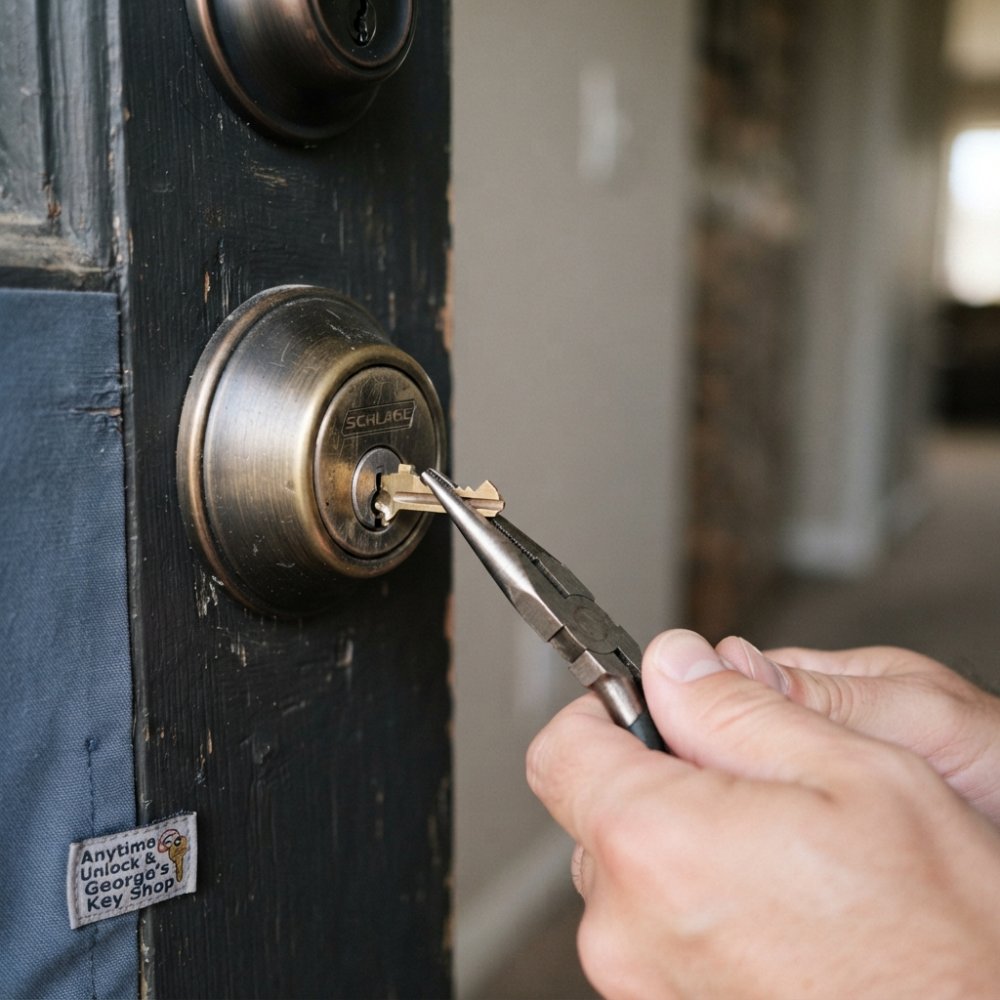
Here's how to do it:
-
Position the pliers carefully. Grip the exposed key fragment with the plier jaws, aiming for the teeth or the widest part of the key. Angle the pliers so they align with the key's length, not at a sharp angle that could bend it further.
-
Apply steady pressure. Pull slowly and deliberately. Don't yank. A sudden jerk can break the key again or push it deeper into the lock. Steady, firm pressure works better than force.
-
Wiggle gently if stuck. If the key doesn't budge, try small rocking motions. Rock the pliers slightly side to side while maintaining backward pressure. This loosens the grip the lock has on the fragment.
-
Pull straight out. Once the key starts moving, continue pulling in a straight line. Twisting or angling can snap the fragment again.
If the key won't budge after a few attempts, stop. Forcing it risks breaking it deeper into the lock or damaging the lock cylinder itself.
Remove Broken Key with Tweezers and Small Tools
Tweezers work when the key fragment is small and sticks out enough to pinch. They're gentler than pliers and give finer control.
Position the tweezers on either side of the key fragment. Pinch firmly and pull straight back.
Small household tools can also work:
- Bobby pins: Bend one into a hook shape and try to catch the key teeth from above or the side. This requires patience and a steady hand.
- Small screwdrivers: A flathead screwdriver can sometimes be wedged beside the key to help dislodge it. Use light tapping and use, not force.
- Dental picks: If you have one, the pointed end can hook the key teeth. Dentists' tools are designed for precision work in tight spaces.
These methods work best when the key fragment is shallow and accessible. If the key is buried deep or the lock is tight, you'll likely need a dedicated tool.
Get a Broken Key Out with a Paper Clip
A paperclip is a surprisingly effective improvised extractor. Straighten one end and bend a small hook at the tip. The hook catches the key teeth and pulls the fragment out.
Here's the process:
-
Straighten the paperclip. Leave one end slightly hooked or bent into a small "J" shape.
-
Insert the hook into the lock. Slide it in beside or above the broken key fragment, aiming to catch the teeth or the top edge of the key.
-
Hook the key and pull. Once the hook catches, pull steadily backward. The angle matters, if you pull too steeply, the hook will slip off the key.
-
Repeat if needed. If the first attempt doesn't work, reposition and try again. Patience beats force.
A paperclip works because it's thin enough to fit in tight keyways and flexible enough to bend into a hook shape. It won't damage the lock the way a screwdriver might.
Using a Broken Key Extractor Tool for Stuck Fragments
A broken key extractor is a specialized tool designed exactly for this problem. These tools have small teeth or hooks that catch the key fragment and pull it out.
Extractors come in different styles:
- Spiral extractors: A small spiral shaft that you insert into the lock and twist. The spiral catches the key fragment and withdraws it as you turn.
- Hook extractors: A thin metal rod with a small hook at the end. You insert it beside the key and hook the teeth or edge.
- Rake extractors: A flat tool with small teeth that you slide into the lock to catch the fragment.
To use an extractor:
-
Choose the right size. The extractor must fit into the keyway without forcing. If it doesn't slide in easily, try a smaller size.
-
Insert it carefully. Slide the extractor into the lock beside or above the key fragment. Position it to catch the key teeth or the top edge.
-
Engage and pull. For hook extractors, pull straight back once you've caught the key. For spiral extractors, turn slowly while pulling. The teeth should grip the key as you withdraw.
-
Don't force it. If the extractor doesn't catch after a few tries, stop. Forcing can damage the lock.
An extractor gives you the best chance to remove broken key from lock when it's deeply stuck.
Broken key extractors come in several styles, each designed to catch and remove stuck fragments.
| Extractor Type | How It Works | Best For |
|---|---|---|
| Spiral extractors | Insert and twist to catch fragment | Deeply stuck keys |
| Hook extractors | Insert beside key and pull back | Keys with accessible teeth |
| Rake extractors | Slide flat tool with teeth into lock | Fragments needing grip surface |
When to Call a Locksmith for Broken Key Removal
Sometimes DIY removal isn't the answer. Knowing when to stop and call a professional saves time, money, and lock damage. A locksmith has tools and experience you don't have at home.
Signs the key is too deep or the lock is damaged
Stop trying to remove the key yourself if:
- The key broke flush with the lock face. If no fragment sticks out, you can't grip it with standard tools. A locksmith has specialized extractors or can remove the lock cylinder entirely.
- The lock feels damaged or loose. If the lock housing is cracked, the cylinder spins freely, or the lock feels compromised, extraction could cause more damage. A locksmith can assess whether the lock needs repair or replacement.
- The key won't budge after several attempts. If you've tried pliers, tweezers, and a paperclip without success, the key is likely stuck tight. Continued attempts risk breaking it deeper or damaging the lock pins.
Door locked with someone inside or emergency situations
Call a locksmith immediately if:
- Someone is locked inside. A broken key in the lock from the outside traps the person on the other side. A locksmith can extract the key and let them out quickly.
- The lock is your only way in or out. If this is your front door, car, or the only access to a space, you need it working now. A locksmith can remove the key and restore access.
- It's after hours and you need immediate help. At Anytime Unlock and George's Key Shop, we offer 24/7 mobile locksmith service. When you need a broken key removed at 2 AM or on a Sunday, we're available. Call for a free quote and get your lock working again fast.
A locksmith arrives with the right tools and the knowledge to handle your specific lock. Learn why choosing a local locksmith is beneficial before calling for emergency help. They can remove the key without damaging the lock cylinder, and they can rekey or repair the lock if needed. The cost of professional removal is usually less than the cost of replacing a damaged lock.
Preventing Key Breakage and Future Lock Damage
A broken key is often a sign of a larger problem. Keys break because the lock is tight, the key is old, or the lock mechanism is worn. Preventing future breaks saves frustration and money.
Keys break most often at the thin shaft just below the head. This happens when:
- The lock is stiff or misaligned. A lock that's hard to turn puts stress on the key. If you have to force the key to turn, the lock needs lubrication or adjustment.
- The key is old or damaged. Worn keys are more brittle. If a key is bent, corroded, or has been used for years, replacement is safer than forcing it.
- The lock is dirty or corroded. Debris inside the lock creates friction. Rust or mineral buildup makes the lock tight.
To prevent future breaks:
- Lubricate your locks. A light graphite lubricant or silicone spray keeps the lock smooth. Apply it monthly to locks you use regularly. Avoid WD-40 or oil-based lubricants, which attract dirt.
- Replace worn keys. If a key is bent, corroded, or hard to insert, get a replacement copy before it breaks.
- Have stiff locks serviced. If a lock is hard to turn, don't force it. A locksmith can clean, lubricate, or adjust the mechanism.
Regular maintenance prevents most key breakage. A few minutes of care now saves hours of frustration later.
Get Your Lock Repaired or Rekeyed Today
Once you've removed the broken key, your lock may need attention. Even if the key came out cleanly, the lock might be damaged or worn.
At Anytime Unlock and George's Key Shop, we handle broken key removal and lock repair. If the lock is damaged, we can fix a jammed door lock. If you need to restore full security after the break, we can rekey your house locks to change who has access.
Whether the broken key was a one-time accident or a sign of a deeper problem, we have the tools and expertise to fix it. Get a free quote and find out what your lock needs.
Frequently Asked Questions
How do you remove a broken key from a lock with a paperclip?
Straighten a paperclip and create a small hook at one end. Insert the hooked end alongside the key fragment, position it to catch the key teeth, and gently pull backward toward the lock face. Work slowly to avoid pushing the fragment deeper. If the key doesn't budge after 2-3 attempts, stop and consider calling a locksmith to avoid lock damage.
Can you use tweezers to remove a broken key from a lock?
Yes, tweezers work well for key fragments sticking out far enough to grip. Grasp the exposed portion firmly and pull straight out with steady, even pressure. Needle-nose tweezers provide better grip than standard tweezers. This method works best when the fragment is at least 1/4 inch above the lock face.
When should you call a locksmith for broken key removal?
Call a locksmith if the key fragment is flush with the lock, if DIY attempts have failed, if the door is locked with someone inside, or if you hear grinding sounds suggesting lock damage. Professional locksmiths have specialized extraction tools and can assess whether the lock needs repair or replacement. Anytime Unlock and George's Key Shop offers 24/7 mobile service for emergency situations.
What's the best lubricant to use before removing a broken key?
Use a dry lubricant like graphite powder or silicone spray rather than oil-based products, which can gum up the lock mechanism. Apply sparingly around the key fragment and let it sit for 30 seconds before attempting extraction. Avoid WD-40 or similar penetrating oils in door locks, as they attract dust and debris that can jam the mechanism further.
A broken key is stressful, but it's fixable. The right tool and technique remove most fragments without damage. When DIY methods don't work, a professional locksmith saves time and prevents costly lock damage. At Anytime Unlock and George's Key Shop, we've handled thousands of broken keys. Call us for fast, reliable removal and repair. We're here 24/7 to get your lock working again.