 how-to
How to Fix a Jammed Door Lock: A Step-by-Step Guide
Table of Contents
- Tools Needed for Door Lock Repair
- Identifying the Type of Lock Mechanism
- Troubleshooting a Stuck Latch and Jammed Mechanism
- Door Lock Lubricant for Jammed Locks
- Removing the Door Handle Assembly
- Weather-Related Expansion Solutions
- When to Call a Professional Locksmith
- Frequently Asked Questions
Last Updated: September 27, 2026
Tools Needed for Door Lock Repair
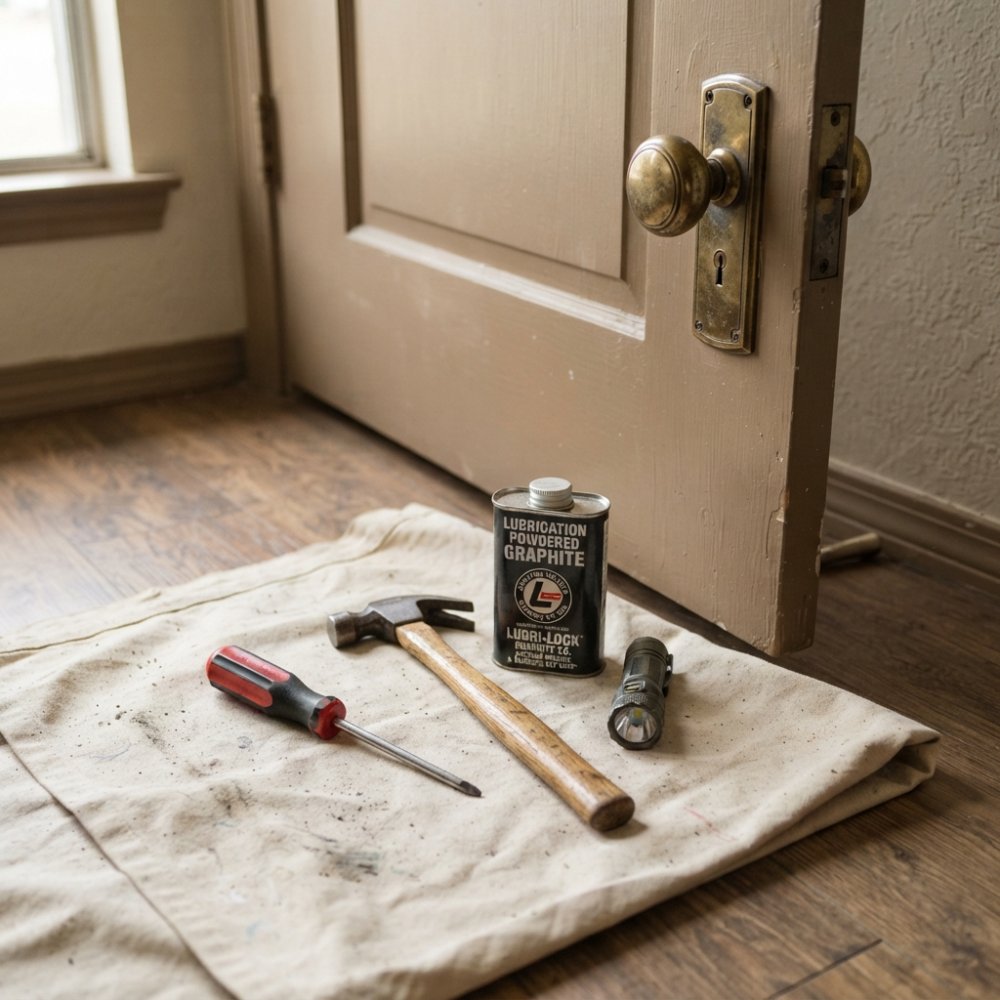
Here's what to have on hand:
- Screwdriver set (Phillips and flathead, small and medium)
- Powdered graphite or a silicone lubricant
- Hammer and a wood block for gentle taps
- Flashlight to see inside the keyway and latch cavity
- Needle-nose pliers for pulling out broken key pieces
- Allen wrench if your handle uses a retaining screw
Identifying the Type of Lock Mechanism
You cannot fix a jam you cannot name. Spraying lubricant into a lock that needs its strike plate moved, or unscrewing a smart lock that only needs a battery swap, wastes an afternoon.
Start with three questions
- What does the bolt look like when the door is open? A spring-loaded latch bolt with a beveled face is a passage or entry latch. A thicker, square-faced bolt that only moves when you turn a key or thumbturn is a deadbolt.
- How many separate pieces are on the door edge? One bolt = a single lockset. Two bolts stacked (a latch below, a deadbolt above) = a tubular setup, the most common residential configuration in the U.S.
- Where does the key go? A keyed cylinder set into the knob or a separate deadbolt housing is mechanical. A keypad, fingerprint reader, or app-controlled unit is electronic.
The four mechanisms you will actually encounter
- Cylindrical knob or lever lockset. A cylinder bored through the door, held by two through-bolts. Jams here are usually alignment or a worn spring, not the cylinder itself.
- Tubular deadbolt. A separate bolt assembly with its own cylinder. It throws a full inch or more into the strike, so it is far less tolerant of a shifted door, most "the door won't lock" calls trace back to this bolt hitting the strike plate edge.
- Mortise lockset. A rectangular box mortised into the door edge containing the latch, deadbolt, and often a thumbturn. Common in older homes and commercial doors. Do not force one apart, the internal linkage bends easily and is hard to source.
- Smart lock / electronic deadbolt. A motorized or solenoid-driven bolt controlled by a keypad, app, or credential. Mechanically it behaves like a tubular deadbolt, but the failure modes are different (see below).
Smart locks fail differently, diagnose them first
Before you touch a screwdriver on an electronic lock, rule out the non-mechanical causes:
- Dead or weak batteries. A motorized bolt that stalls partway, or a keypad that beeps oddly, is usually a power problem. Replace all batteries at once with the manufacturer's specified type, mixing old and new cells causes voltage sag under load.
- Bolt binding from misalignment. The motor has fixed torque. If the door has shifted even slightly, the bolt hits the strike and the motor times out mid-throw. Fix the alignment, not the lock.
- Handing and calibration. Many electronic deadbolts must be told which side of the door they are on and re-calibrated after a battery change. If the bolt extends when you want it retracted, run the manufacturer's re-calibration sequence.
- Firmware and app state. A lock that ignores the keypad but responds in the app, or vice versa, is often a pairing or firmware issue. Check the app's device status before disassembly.
Why the identification matters
Each mechanism tells you where the internal components live and how much you can safely open. A cylindrical lockset comes apart from the interior side with two screws. A mortise lock should generally not be opened by a homeowner. A smart lock has a serviceable battery compartment and a sealed motor/gear assembly.
Troubleshooting a Stuck Latch and Jammed Mechanism
A stuck latch usually means misalignment, not a broken lock: the latch bolt is hitting the strike plate instead of sliding into it.
Try these steps in order:
- Check the gap. Look at the space between the door and the door frame. If the latch catches on the strike plate edge, the door has shifted.
- Test the latch by hand. Push the latch bolt in with your thumb. If it moves freely, the lock is fine and the frame is the problem.
- Loosen the strike plate screws. Tap the plate slightly toward the door with a hammer and wood block. Retighten.
- Adjust the hinges. Tighten loose hinge screws. If the door sags, a longer screw into the stud can lift it back into line.
- File the strike plate opening. A metal file can widen the opening a millimeter at a time if the latch still binds.
Fixing a Jammed Lock Button
A stubborn lock button is almost always friction, not failure. Push the button while turning the knob slightly to free a binding spring-loaded pin.
Dealing with a Broken Key in the Lock
A snapped key is a lockout waiting to happen. The non-destructive approach:
- Never push the broken piece deeper. You'll jam it against the security pin stack.
- Spray graphite into the keyway to reduce friction.
- Use needle-nose pliers or a thin key extraction tool to grip the exposed edge.
- Pull straight out, not sideways.
- If the piece sits flush with the cylinder face, stop. Pushing further causes real damage.
Door Lock Lubricant for Jammed Locks
The right door lock lubricant for jammed locks depends on the lock type. Powdered graphite is standard for mechanical locks because it's dry and won't attract dust or gum up.
Silicone lubricant works better for:
- Exterior locks exposed to rain and temperature swings
- Smart locks and electronic keypads
- Any hardware with plastic internal parts
Removing the Door Handle Assembly
Sometimes the only way to reach the jammed mechanism is to pull the handle. Here's the sequence:
- Find the retaining screw. It's usually on the interior side, sometimes hidden under a decorative cap.
- Remove the doorknob or lever. On most modern sets, a small push pin releases the handle from the spindle.
- Take off the rose plate (the trim ring against the door).
- Unscrew the mounting plate from the door.
- Pull the assembly free and inspect the latch bolt and spring.
Weather-Related Expansion Solutions
The most misdiagnosed door lock problem is not a lock problem at all. Wood swells with humidity and shrinks as air dries. As the door and frame move, the strike plate drifts out of line with the latch bolt, and the lock feels "jammed" though nothing inside it has failed.
How to tell a swollen frame from a failing lock
Run this test before touching the lock hardware:
- Open the door and work the lock in mid-air. Turn the key, push the button, throw the deadbolt with the door open. If everything moves smoothly, the lock is healthy and the problem is alignment.
- Close the door and try again. If it now binds, the frame or strike plate is the culprit, not the mechanism.
- Look at the strike plate for fresh scratches. A latch hitting the plate edge leaves bright metal marks, confirmation the door has shifted.
- Check the season and humidity. A door that sticks only in summer, or after heavy rain, is almost certainly swelling. One that sticks only in winter is usually shrinking and dropping on its hinges.
If the lock works perfectly with the door open, stop looking inside the lock. You are chasing the wrong part.
Fixes that hold through the seasons
- Adjust the strike plate, then re-check it after the season turns. A July adjustment may need a touch-up in January. Mark the plate's position with a pencil to track the drift.
- Enlarge the strike opening slightly, not the latch. Filing the strike opening a millimeter at a time gives the latch room to seat without weakening the frame. Never file the latch bolt itself.
- Control moisture at the door edge. Weather stripping and a sealed, painted door edge slow how fast the slab takes on and releases moisture, flattening the seasonal swing.
- Tighten hinge screws on a schedule. Expansion and contraction work screws loose. Loose top hinges let the door sag, dropping the latch below the strike. A longer screw into the framing stud pulls a sagging door back into line.
- Lubricate exterior hardware before the cold arrives. Use a silicone-based lubricant on exterior locks ahead of winter, it resists the temperature swings that stiffen petroleum-based products.
Metal frames and doors
Metal expands and contracts too, just less dramatically than wood. On commercial doors and steel frames, a latch that works in the cool morning but sticks by mid-afternoon is classic thermal misalignment. The fix is the same, adjust the strike, not the lock, but the drift is smaller, so make smaller adjustments and re-test as the day warms.
When it is not the weather
If the lock binds even with the door open, or the key turns but the deadbolt will not extend, the problem is mechanical and seasonal adjustment will not help. Go back to the troubleshooting steps above; if the jam returns after every fix, treat it as a hardware failure.
When to Call a Professional Locksmith
- The key turns but the deadbolt won't extend
- A broken key is stuck flush inside the lock cylinder
- The lock has been drilled, pried, or tampered with
- You need a lockout resolved right now, not after a hardware store run
- The lock is a high-security or commercial grade unit
- You've already tried the fixes above and the jam returns
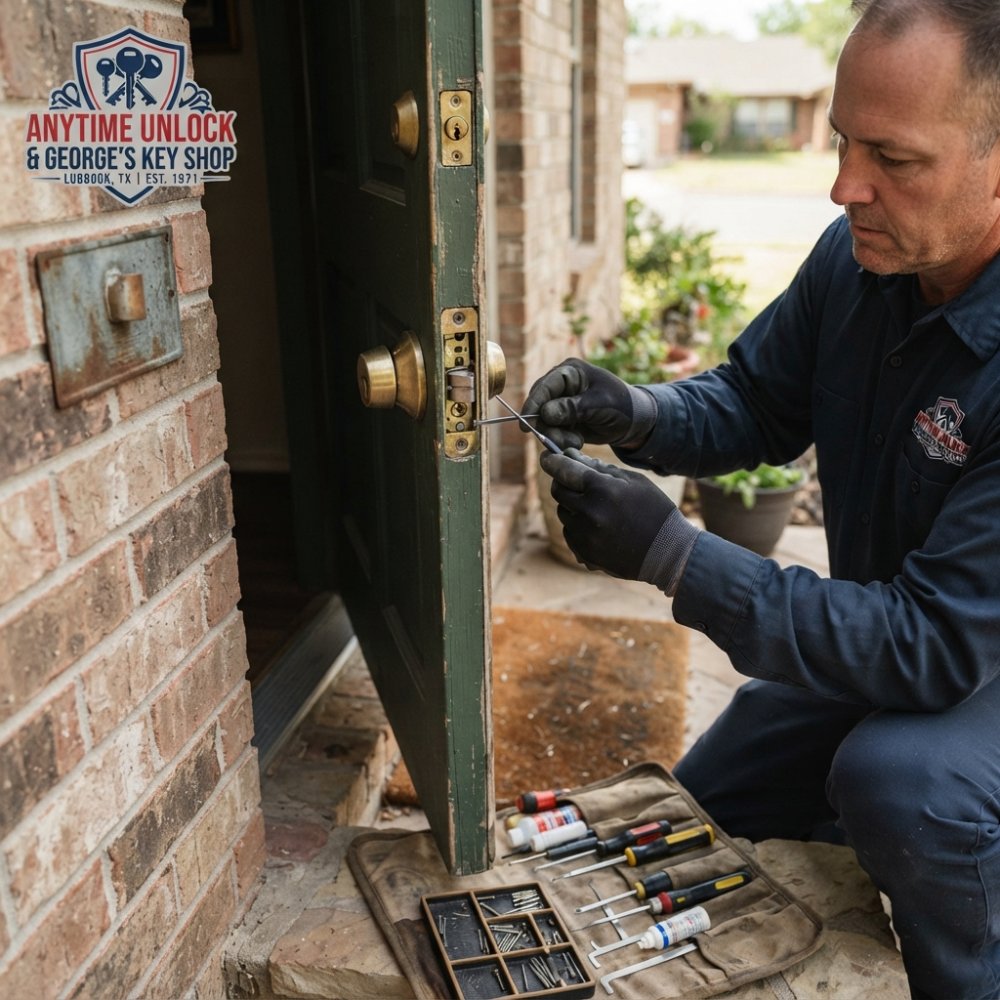
At Anytime Unlock and George’s Key Shop, we've handled lockouts and lock repairs since 1971. Our mobile team covers auto, residential, and commercial work, day or night.
Frequently Asked Questions
How can I unjam a stuck door lock quickly?
Start by checking for misalignment between the latch bolt and strike plate. If the door is swollen or the frame shifted, try pushing or pulling the door while turning the key. Apply powdered graphite or silicone lubricant to the keyway and latch. If the lock button is stuck, remove the handle assembly to access internal components. For a broken key, use key extraction tools. If these steps fail, call a professional locksmith to avoid damaging the lock cylinder.
Can I use WD-40 to fix a jammed lock?
WD-40 can temporarily free a jammed mechanism, but it attracts dust and dirt over time, which can cause the lock to jam again. For a long-term fix, use powdered graphite or a silicone-based lubricant designed for locks. These products dry without leaving a sticky residue. If you use WD-40 as a quick fix, follow up with a proper lock lubricant within a few days. For persistent jams, a locksmith can clean and re-lubricate the internal components.
What tools do I need for door lock repair?
You will need a screwdriver set (Phillips and flathead), a hammer, a punch or nail set, powdered graphite or silicone lubricant, and a wire brush. For removing a door handle assembly, a small Allen wrench may be required. If you have a broken key, key extraction tools are essential. A flashlight helps inspect the keyway and latch. Most hardware stores carry these tools. If you lack them or the repair feels risky, call a professional locksmith.
When should I call a professional locksmith instead of fixing it myself?
Call a professional if the lock cylinder is damaged, the key breaks off inside, or the door frame is misaligned beyond simple adjustment. If you have tried lubrication and tightening screws without success, or if the lock is part of a commercial security system, a locksmith has the tools and experience to fix it without causing further damage. Anytime Unlock and George’s Key Shop offers 24/7 mobile unlocking services for emergency lockouts.
A jammed lock rarely fixes itself, and the longer you wait, the worse the damage gets. Anytime Unlock and George’s Key Shop offers 24/7 mobile service, expert key programming, and full residential and commercial locksmith support backed by more than fifty years in business. Get a free quote today and get your door working again.