 how-to
Book Emergency Mobile Locksmith Service: 2026 Guide
Table of Contents
- What to Expect When You Book an Emergency Mobile Locksmith
- Step-by-Step: How to Book Emergency Mobile Locksmith Service
- What to Ask an Emergency Locksmith Before They Arrive
- Understanding Your Emergency Locksmith Cost Estimate
- Why a Reliable 24 Hour Residential Locksmith Matters for Home Lockouts
- DIY Temporary Security Fixes While You Wait
- Post-Lockout Security Audit: Protecting Your Home or Business
- Frequently Asked Questions
Last Updated: September 14, 2026
What to Expect When You Book an Emergency Mobile Locksmith
When you book an emergency mobile locksmith, expect a direct phone conversation, a clear arrival window, and a technician who confirms their identity and quoted price before starting work, getting you back inside your car, home, or business without damage or a surprise bill.
At Anytime Unlock and George's Key Shop, we've handled lockouts since 1971, and the questions we hear most are about timing and price, not technique.
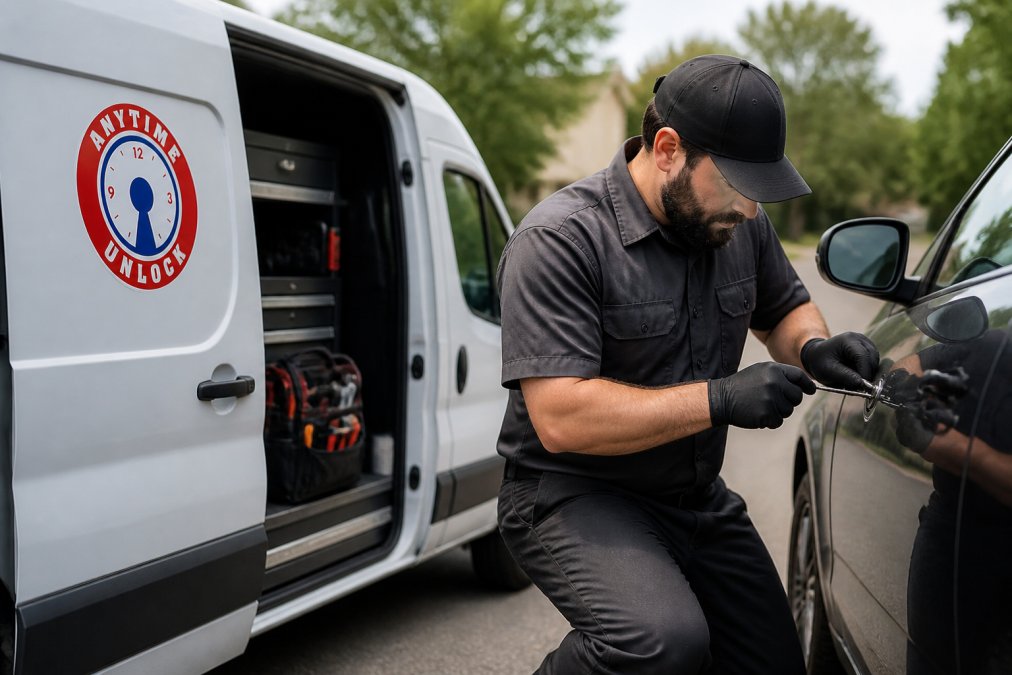
A mobile locksmith brings the full toolset, key-cutting equipment, and programming devices to your location instead of requiring you to tow a vehicle or bring a lock into a shop.
How Mobile Dispatch Works
Dispatch starts the moment your call connects. A trained person, not a voicemail system, gathers your location, vehicle or lock type, and situation, then routes the nearest unit.
Legitimate dispatch gives you a technician name and an arrival window before you hang up. If a company can't say who's coming or when, that's your first red flag.
- Call answered by a live dispatcher, day or night
- Location and lock details confirmed
- Nearest available technician assigned
- Arrival window and price range stated upfront
- Follow-up call if the technician is delayed
The Federal Trade Commission's consumer guidance on service scams flags locksmith fraud as a recurring problem, which is exactly why the dispatch conversation matters as much as the work itself.
Step-by-Step: How to Book Emergency Mobile Locksmith Service
Booking takes about five minutes with the right details ready. Lead with your location and lockout type, not a long explanation of how it happened.
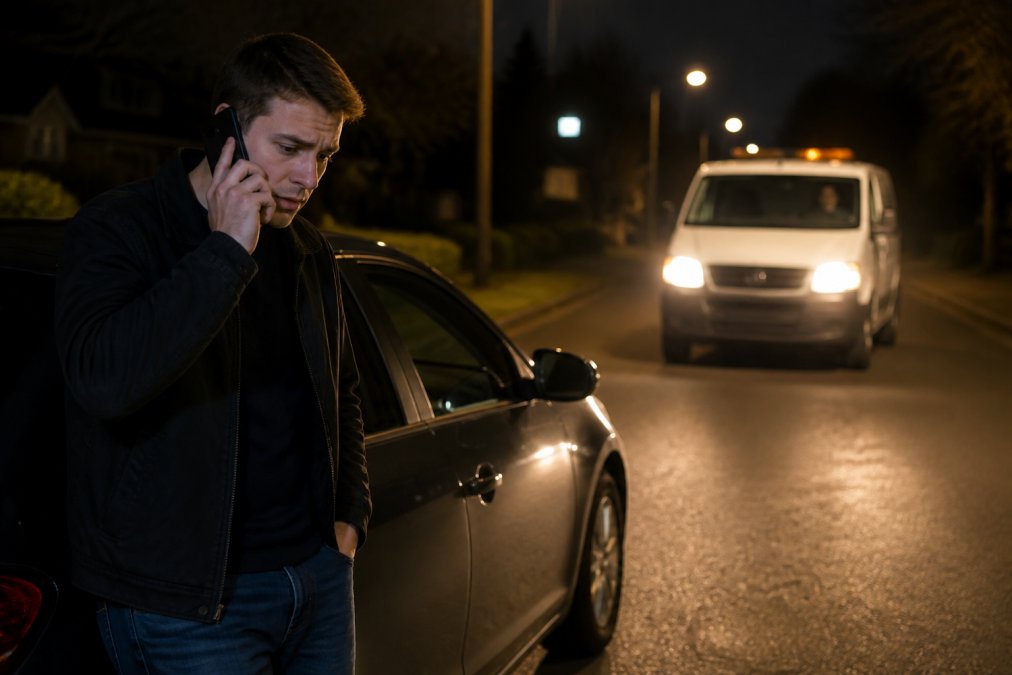
Follow these steps in order:
- Call a local, established company directly. Skip search ads that route to call centers in other states.
- State your exact location first. Cross streets, parking garage level, or apartment building number all help.
- Describe the lockout type. Car, home, or business, and whether the key is lost, broken, or locked inside.
- Give the vehicle year, make, and model if it's an automotive lockout. Key programming depends on it.
- Ask for the total price range before dispatch. Not a "starting at" figure. A range for your specific job.
- Confirm the technician's name and arrival window. Write both down.
- Ask what payment methods the technician carries. Many mobile units take cards on site.
- Stay with your vehicle or at the property so the technician isn't searching for you on arrival.
What Information to Have Ready
Have your driver's license or photo ID, proof of ownership or residency if available, and the vehicle's VIN for a car lockout. A technician may ask for ID before opening a vehicle or home, a sign of a professional operation.
What to Ask an Emergency Locksmith Before They Arrive
Ask four questions before you hang up: total cost, time until arrival, whether the technician is licensed and insured, and whether the quoted price changes if the job is more complex. Get all four answers in the same call.
The Better Business Bureau's tips on hiring locksmiths recommends confirming a physical business address and license before allowing work to begin. That advice holds up. A company with a real local address has something to lose.
The price question has two parts: what the service call costs and what the lock work costs. Some operations bundle them, some don't, and the difference is where disputes start.
Also ask whether the technician carries a key fob programming device for your vehicle's make. Not every mobile unit does, and finding out after arrival wastes an hour.
How to Verify the Technician Before You Let Them Work
A uniform and a logoed van prove nothing, verify before work starts.
- Get the technician's name and the company's license number on the dispatch call. If the dispatcher won't give a name, that's the answer.
- Ask for the company's physical address and look it up while you wait. A real storefront is a strong signal; a mail-drop suite is weaker.
- When the technician arrives, ask to see a photo ID and a business card or license. A professional hands these over without attitude. Reluctance is a red flag.
- Confirm the name on the ID matches the name dispatch gave you. If it doesn't, call the company's published number, not one the technician hands you.
- Check the vehicle. A marked van with a company name and phone number is normal; an unmarked personal car is not.
- Never pay before the work is done and you've tested the result. Test the key or fob, open and close the door, and confirm the lock works before you pay.
Red Flags That Should End the Call
- The dispatcher quotes a price but won't give a name or arrival window.
- The technician arrives in an unmarked vehicle with no ID.
- The price changes on arrival with no explanation of what changed.
- The technician insists on cash only and won't provide a receipt.
- The technician wants to drill immediately without attempting to pick or bypass the lock.
- The phone number on the van doesn't match the number you called.
A legitimate operation passes every check without friction. Catch the ones that won't before the drill comes out.
Understanding Your Emergency Locksmith Cost Estimate
An emergency locksmith cost estimate is a range, not a fixed number, because the final price depends on what the technician finds on site. A reputable company explains which factors move the number.
Lockout anxiety is usually about the bill, not the lock. Here's how a legitimate quote is built so you can sanity-check any number.
How a Quote Is Built
A mobile locksmith quote is typically three stacked numbers, not one:
- Service call / trip charge. A flat fee to get the van to your location, quoted first.
- Labor for the lock work. Priced per job type, a residential deadbolt pick, an automotive slim-jim or air-wedge entry, an ignition removal. Ask which category your job falls into.
- Parts and programming. Applies only if something is replaced or programmed: a new cylinder, transponder key blank, fob, or ignition. Ask whether your job is expected to need parts.
A single blended number is harder to audit. Ask the dispatcher to separate the three.
Factors That Affect the Final Price
- Time of day. Overnight, weekend, and holiday calls carry a higher rate. Ask whether the after-hours premium is flat or a percentage.
- Lock type. A standard residential deadbolt opens faster than a high-security cylinder or commercial panic bar. Restricted keyways may require dealer-only blanks.
- Key situation. A key visible inside is simpler than a lost key requiring a cut and programmed replacement.
- Vehicle technology. Transponder keys and push-to-start systems need programming equipment; older mechanical keys don't. Some vehicles need an on-board diagnostic connection, adding time.
- Access difficulty. A car in a tight garage, a door behind a security gate, or a vehicle in a paid lot with no van clearance adds time and sometimes a second trip.
- Parts required. Replacing a cylinder, ignition, or fob adds material cost. Ask whether the part is stocked on the van or sourced.
Questions That Expose a Bad Quote
- "Is that the total, or is that the trip charge?"
- "What would make the price go up after you arrive?"
- "Do you charge by the hour or by the job?"
- "If the lock can't be picked and has to be drilled, is the replacement included in that number or added?"
- "Is there a surcharge for card payment versus cash?"
A company that answers all five without hesitating is quoting from a real price sheet.
For a firm number on your specific situation, request a quote from Anytime Unlock and George's Key Shop before dispatch. We'd rather tell you the range on the phone than surprise you at the curb.
Why a Reliable 24 Hour Residential Locksmith Matters for Home Lockouts
A reliable 24 hour residential locksmith matters because home lockouts rarely happen at convenient hours, with groceries in hand, when a deadbolt jams in cold weather, or when a key snaps off at 11 p.m.
The difference between a good and bad outcome usually comes down to damage. A trained technician uses lock picking and bypass tools that leave the cylinder intact; an untrained one drills first and you pay for a new lock on top of the service call.
For new homeowners, the same call solves a different problem: you don't know who else has a copy of the old keys. Deadbolt installation or a full rekey closes that gap, a rekey changes the internal pins so old keys stop working, and costs less than replacing hardware.
Ask whether the company also handles ignition repair and transponder keys while they're on site. One trip for two problems beats two service calls.
DIY Temporary Security Fixes While You Wait
You can secure a property temporarily without damaging anything if the arrival window runs long. The goal is to keep the space safe, not fix the lock yourself.
- For a broken door latch: wedge a rubber doorstop under the door from the inside, then brace a chair under the handle.
- For a jammed deadbolt: don't force the key. Forcing it can snap the key off and turn a simple job into a cylinder replacement.
- For a car with the key locked inside: stay with the vehicle and keep the doors closed. Coat hanger and wedge techniques on modern cars damage weather stripping and door sensors.
- For a lost key with no spare: don't leave the vehicle or property unattended if the only key is gone. A missing key plus an empty building is a theft risk.
- For a business after hours: lock the perimeter as best you can and post someone at the entrance until the technician arrives.
What most people get wrong is trying internet tricks on a modern vehicle. Slim jims and inflatable wedges can trigger side-airbag sensors and bend door frames, and the repair bill dwarfs the lockout fee (nhtsa.gov).
Post-Lockout Security Audit: Protecting Your Home or Business
A post-lockout security audit is a five-minute walkthrough after the technician leaves to confirm nothing was damaged and no new vulnerabilities were introduced.
Start with the lock. Test the key or fob several times, confirm the deadbolt throws fully, and check the door closes without binding. If a cylinder was removed, verify the trim and screws are snug.
Then widen the check:
- Confirm every exterior door locks and unlocks smoothly
- Test any window locks near the entry point
- Check that no spare keys were left with the technician by mistake
- Note the technician's name and company for your records
- Ask about scheduling a full security audit if the lock is older than the rest of the hardware
For businesses, add one step: review who holds keys to the affected entrance. A commercial lockout often reveals more people have access than anyone realized.
If the lockout happened because a key was lost rather than locked inside, treat the audit as mandatory. A key replacement without a rekey leaves the lost key functional in someone else's pocket.
A lockout is stressful, but booking doesn't have to be. Companies that earn repeat business answer the phone at 2 a.m., quote a range before dispatch, and explain what's happening instead of drilling first. Anytime Unlock and George's Key Shop has operated that way since 1971, with 24/7 mobile service covering automotive, residential, and commercial lockouts. Get a free quote and know the price before the van rolls.
Frequently Asked Questions
How much should an emergency locksmith cost?
Emergency locksmith pricing depends on several factors: time of day, your location, the type of lockout (car, home, or business), and the complexity of the job. Most providers charge a base service call fee plus additional charges for after-hours work or specialized services like transponder key programming. Request a written estimate before work begins and ask about any potential add-ons. Reputable companies will explain their pricing structure upfront so there are no surprises when the technician arrives.
What information do I need to provide when booking an emergency locksmith?
Have your exact location, vehicle make and model or property address, and a description of the lockout ready. For vehicle lockouts, know whether your key is lost or locked inside. For home lockouts, confirm the type of lock and whether you own or rent. Provide your phone number and stay reachable. A professional locksmith will also ask for proof of ownership or residency before starting work, so have your ID or vehicle registration accessible.
How can I verify if a mobile locksmith is legitimate?
Check online reviews on platforms like Google or Yelp, and look for a physical business address. Legitimate locksmiths will provide a written estimate and won't pressure you into unnecessary services. Avoid anyone who answers with a generic greeting, refuses to give a company name, or quotes an unusually low price over the phone. Trust your instincts if something feels off.
What should I do while waiting for an emergency locksmith to arrive?
Stay in a safe, well-lit area near your vehicle or home. If you're locked out of your car, remain outside the vehicle and keep your phone charged. For home lockouts, avoid attempting to force the door open yourself, as this can cause costly damage. If you have a spare key with a neighbor or family member nearby, call them first. Otherwise, confirm the locksmith's estimated arrival time and keep your phone accessible for updates.