 comparison
Pop-A-Lock Alternatives for Local Residents
Table of Contents
- Why Local Locksmiths Often Beat Pop-A-Lock for Residents
- How to Verify a Locksmith Before You Hire Them
- Understanding Locksmith Estimate and Service Call Fee Structure
- Car Lockout Service: Local vs. Dealership vs. Franchise
- Finding a 24-Hour Locksmith Near Me: What Actually Matters
- Residential and Commercial Locksmith Services Beyond Pop-A-Lock
- Frequently Asked Questions
Last Updated: October 17, 2026
Why Local Locksmiths Often Beat Pop-A-Lock for Residents
Locked out at midnight or rekeying a new house, you need someone fast and reliable. Many residents default to national chains like Pop-A-Lock, but pop-a-lock alternatives deliver better response times, transparent pricing, and genuine expertise that franchises can't match.
Pop-A-Lock alternatives exist in nearly every city and are often better equipped for your situation.
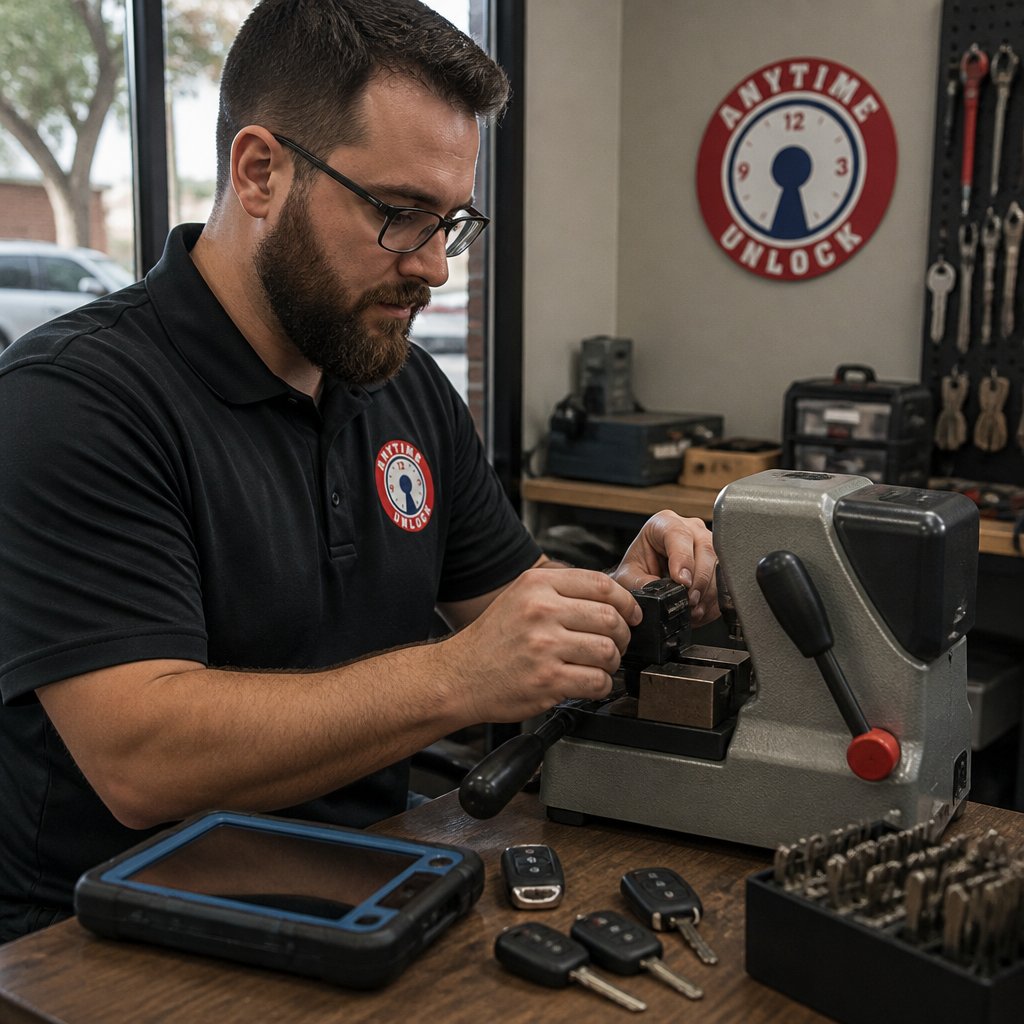
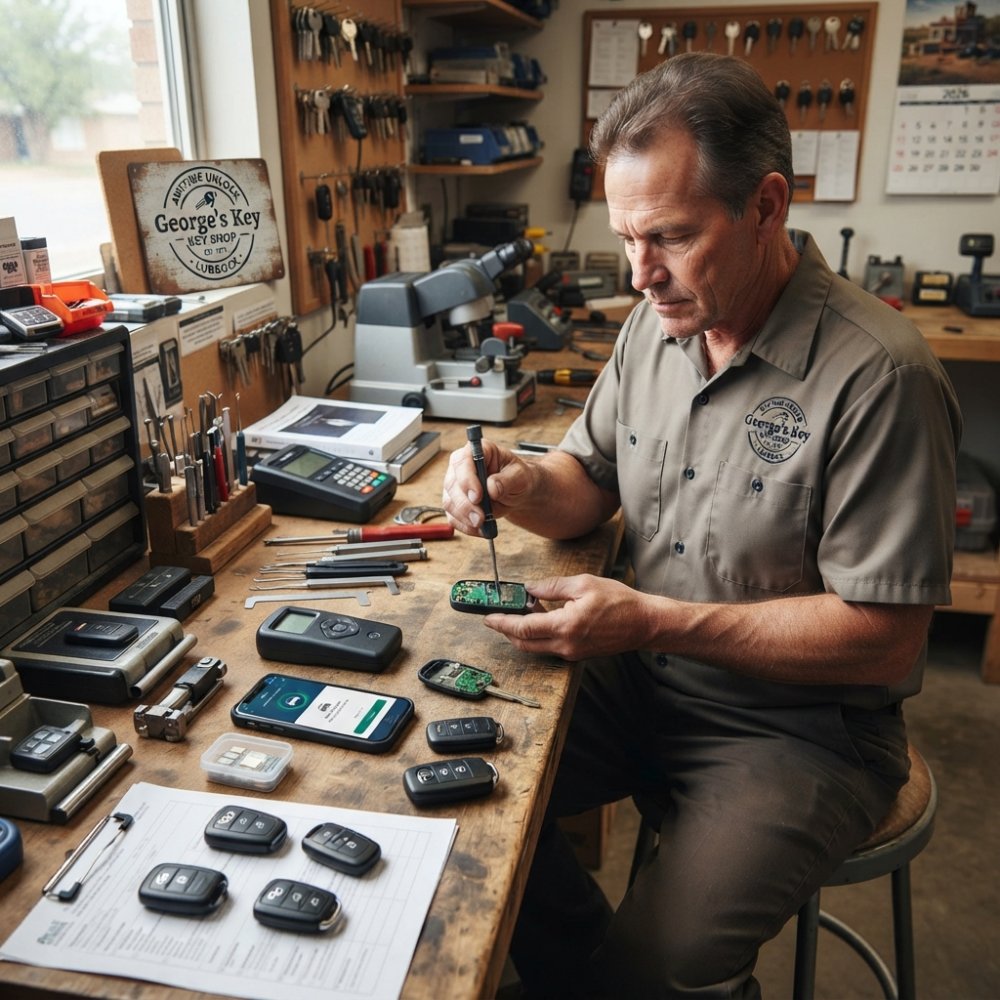
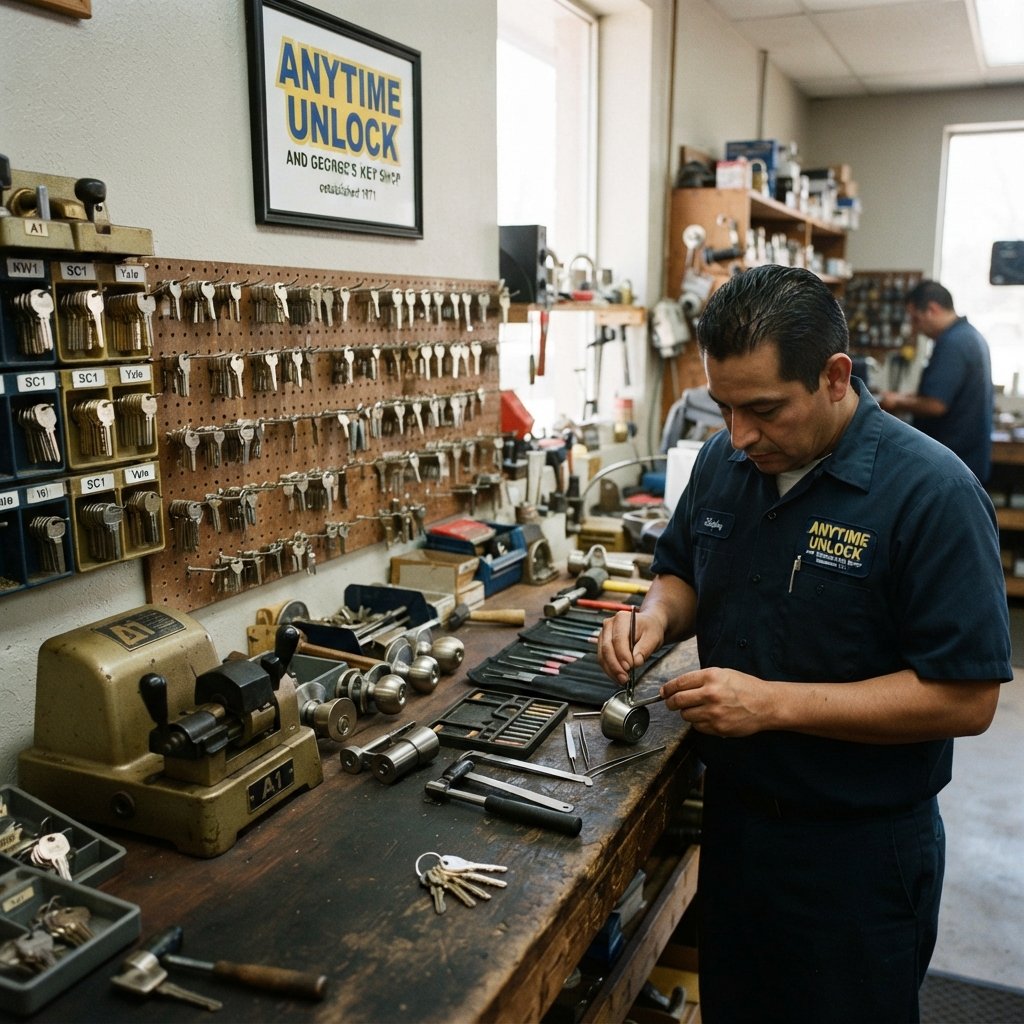
At Anytime Unlock and George's Key Shop, we've served our community since 1971, handling everything from 2 AM car lockouts to commercial security upgrades.
The real advantage of choosing a pop-a-lock alternative comes down to three things: response time, pricing transparency, and handling edge cases national scripts can't. A franchisee follows a playbook; a local locksmith solves your actual problem.
How to Verify a Locksmith Before You Hire Them
Before you hand someone your keys or let them into your home, verify they're legitimate. Scammers and unlicensed operators prey on people in crisis, locked out, stressed, and willing to pay whatever it takes.
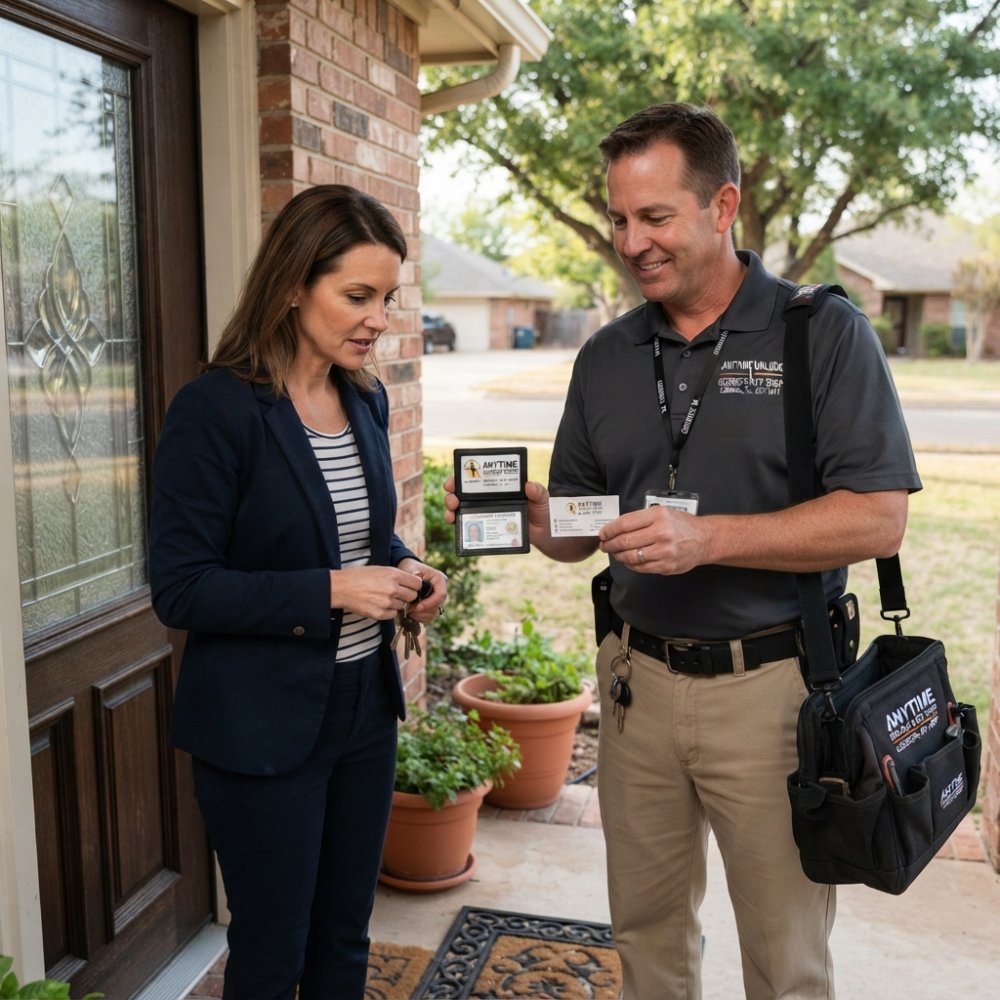
Licensing: what to actually ask for
Locksmith licensing is handled at the state level and varies widely. Ask two questions: "What license or registration number do you hold?" and "Which agency issued it?" A legitimate operator answers both without hesitation.
Write the number down and verify it through the regulator's searchable license lookup, often under the department of consumer affairs, department of licensing, or a dedicated locksmith board. If the number doesn't match the business name, or they can't name the agency, that's a red flag. Don't accept a phone photo of a license; look it up yourself.
Insurance, bonding, and business identity
Ask for a certificate of general liability insurance and confirm the business name matches your quote. Professional locksmiths carry coverage because lock work involves drilling, damage risk, and entry into your property. If they can't produce a certificate, walk away.
Bonding is separate from insurance and more common for commercial work, but worth asking about. Confirm a physical address and a phone number that isn't an out-of-state toll-free dispatch line, then read the one- and two-star reviews for mentions of bait-and-switch pricing, no-shows, or unmarked vehicles.
The five-minute pre-hire checklist
Run this before you're in crisis, ideally during business hours when you can actually reach someone:
- License or registration: number captured, issuing agency identified, and verified through the state or local lookup.
- Insurance: certificate of liability insurance requested and business name matched to the quote.
- Identity: company name, physical address, and a local phone number that reaches a person, not a national call center.
- Quote in writing: service call fee, estimated labor, and parts estimate sent by text or email before dispatch.
- Arrival confirmation: the technician's name and an estimated arrival window given at booking, and the technician's ID checked against it on arrival.
- Payment terms: confirm whether payment is due on completion, whether card is accepted, and whether a receipt itemizing labor and parts will be provided.
A locksmith who clears all six is trustworthy; one who hedges or can't produce a license number is one to avoid, no matter how fast they promise to arrive.
Understanding Locksmith Estimate and Service Call Fee Structure
Confusion costs money here, and some operators exploit it. Know the components of a bill before you call so you can tell a fair quote from a setup.
The four parts of a locksmith bill
A legitimate quote breaks into four pieces, and you should ask for each one separately:
- Service call fee (trip charge). What you pay for the locksmith to come to you. This is usually a flat amount and is often, but not always, credited toward the final bill. Ask directly: "Is the trip charge applied to the total, or is it on top?"
- Labor. Charged either as a flat rate per job (common for lockouts and rekeys) or hourly. Ask which model they use and what the flat rate covers.
- Parts and hardware. Keys, cylinders, deadbolts, and transponder chips. Ask whether parts are priced at list, and whether you can supply your own hardware.
- After-hours or emergency surcharge. A real and legitimate charge for nights, weekends, and holidays. It should be disclosed at booking, not added on arrival.
Typical cost ranges and what drives them
Pricing varies by market, but the pattern is consistent: a standard residential lockout during business hours is cheapest, and the price climbs with after-hours timing, lock complexity, and vehicle key technology. Ask the dispatcher to walk you through these factors:
- Time of day. Nights, weekends, and holidays carry a surcharge. A 2 AM call is priced differently from a 2 PM call, and you should know the difference before you agree.
- Lock type. A standard pin-tumbler deadbolt is straightforward. High-security cylinders, smart locks, and commercial hardware take longer and cost more.
- Vehicle key technology. A traditional cut key is the least expensive. A transponder or smart key requires programming equipment and a blank, which raises the price. Some late-model vehicles require dealer-only programming, and an honest locksmith will tell you that upfront rather than after arrival.
- Access difficulty. A locked door is easier than a broken lock, a damaged cylinder, or a lock that has been tampered with.
- Distance. Calls outside the primary service area may carry a mileage charge. Ask what the radius is.
The quote questions that separate fair from predatory
Ask these before dispatch and write down the answers:
- What's the service call fee, and does it apply toward the final bill?
- What's the flat rate or hourly rate for the specific service I need?
- Are parts included, or priced separately?
- Is there an after-hours surcharge, and how much is it?
- What's the total estimated cost, all-in, for my situation?
- What forms of payment do you accept, and will I get an itemized receipt?
- What's the estimated arrival window, and will I get the technician's name?
A locksmith who answers all of these clearly is trustworthy; one who hedges, says "we'll figure it out when we get there," or refuses a written number is one to avoid. The written estimate converts a verbal promise into something you can hold a company to.
Car Lockout Service: Local vs. Dealership vs. Franchise
Locked out of your car, you have three options, local mobile locksmith, dealership, or franchise, each with real trade-offs.
Local mobile locksmith: They come to you, typically within 30-45 minutes, and are usually the cheapest option. They handle most car lockouts and key replacements on the spot.
Dealership: Reliable, with your car's records on file, and they'll program a transponder key correctly.
Franchise operation: Quick dispatch in urban areas, pricing between local and dealership. The catch is inconsistent quality, the technician might be excellent or still learning, and less accountability since you're not dealing with the owner.
For most car lockouts, a local mobile locksmith is the smart choice: fast, affordable, and reliable if established and licensed. For transponder programming, the dealership costs more but guarantees compatibility.
Finding a 24-Hour Locksmith Near Me: What Actually Matters
Searching "24-hour locksmith near me" and picking whoever ranks first is exactly the wrong approach. Do this research before you're in crisis mode.
Find a local locksmith now and save their number.
When you call, ask specifically: "If I'm locked out at 2 AM on a Tuesday, can you actually get here?" The answer should be yes with a specific timeframe.
Location matters: a locksmith 20 minutes away is useless if they're in another city.
Response time is the real metric. "24-hour availability" means nothing if they take two hours to show up.
Check reviews for mentions of response time. Did people complain about wait times? Did the locksmith show up when promised? These details matter more than star ratings.
Residential and Commercial Locksmith Services Beyond Pop-A-Lock
Locksmiths do far more than lockouts. Residential and commercial locksmiths handle security, access control, and peace of mind.
Residential services include rekeying (changing the locks so old keys don't work), lock repair, deadbolt installation, and security consultation. Just moved in?
Commercial services are more complex: access control systems, master key systems, and emergency protocols, with different employees getting access to different areas.
The pop-a-lock alternative advantage here is specialization. A local locksmith in business for decades has handled thousands of residential and commercial jobs and can advise on security upgrades that make sense for your situation, not just what's in a standard playbook.
For residential rekeying, lock repair, and security upgrades, a local locksmith is typically cheaper and more thorough than a franchise.
| Service Type | Local Locksmith | Franchise | Dealership |
|---|---|---|---|
| Car Lockout | Fast, affordable | Moderate cost, variable quality | Not typically offered |
| Key Programming | Yes, competitive pricing | Yes, moderate pricing | Yes, premium pricing |
| Residential Rekeying | Excellent, thorough | Adequate, standardized | Not offered |
| Commercial Security | Specialized expertise | Limited scope | Not offered |
| 24/7 Availability | Often genuine | Varies by location | Limited hours |
| Pricing Transparency | Generally high | Moderate | High |
Choosing a pop-a-lock alternative isn't about loyalty to the underdog.
Verify before you need them.
At Anytime Unlock and George's Key Shop, we've built our reputation by showing up, solving the problem, and keeping communication clear until the job is done.
Frequently Asked Questions
What are the main differences between Pop-A-Lock and local locksmith alternatives?
Pop-A-Lock is a national franchise with standardized pricing and procedures, while local locksmiths often provide personalized service, faster response times in your area, and more flexible pricing negotiation. Local locksmiths typically have deeper roots in the community and may offer better familiarity with regional lock types and security systems. Many local providers also maintain transparent pricing structures and can discuss costs before arriving at your location.
How can I verify a locksmith's identity and credentials before they arrive?
Ask for the locksmith's license number and business registration before they arrive, then verify these details with your state's licensing board. Request their business address and phone number, and call back to confirm they match official records. Check online reviews across multiple platforms, ask for references, and confirm their insurance and bonding status. Legitimate locksmiths provide this information without hesitation and should arrive in a marked vehicle with professional identification.
What should a locksmith estimate and service call fee include?
A complete estimate should itemize the service call fee, labor charges, parts cost, and any emergency or after-hours surcharges. The estimate should be provided before work begins, with a clear explanation of what triggers additional charges. Reputable locksmiths separate the diagnostic fee from the final invoice and explain why charges may increase if the lock requires more complex work than initially assessed. Always request the estimate in writing and confirm the total before authorizing the work.
Is a car lockout service from a local locksmith cheaper than the dealership?
Local locksmiths typically charge significantly less than dealerships for car lockouts and key programming. Dealerships often charge premium rates because they're factory-authorized and use original equipment, but independent locksmiths can program most modern transponder keys at a fraction of the cost. For emergencies, local mobile locksmiths also arrive faster and don't require you to tow your vehicle, saving towing fees on top of service costs.
How do I find a reliable 24-hour locksmith near me?
Search for locksmiths with consistent 5-star reviews mentioning fast response times and transparent pricing. Verify they're licensed and insured, and call ahead to confirm they actually answer phones at odd hours rather than using voicemail. Ask current customers about their real response times and whether quoted prices matched final bills. Established local locksmiths with decades of community presence tend to maintain higher accountability than newer or franchise operations.