 how-to
How to Choose a Professional Smart Lock Installer Near You
Quick Summary
A professional smart lock installation includes inspecting the door and frame, fitting the lock hardware, setting up electronics and codes, testing every access method, and walking you through daily use. Measure door thickness and backset before booking, and request an itemized quote.
- Measure door thickness and backset before buying or booking, since mismatches stall installations.
- Common backset sizes are 2 3/8 and 2 3/4 inches; door thickness is usually 1 3/8 to 1 3/4 inches.
- Request an itemized quote separating labor, hardware and door preparation before work begins.
- Test the bolt throw, strike alignment and every access method before the installer leaves.
- Re-test the bolt after the first humid or rainy week, since doors can swell with weather.
Table of Contents
- What a Professional Smart Lock Installation Includes
- Checking Compatibility Before You Book
- Step-by-Step: How a Smart Lock Gets Installed
- Professional Smart Lock Installation Near Me Cost
- Reading Professional Smart Lock Installation Near Me Reviews
- Testing and Troubleshooting After Installation
- Booking Your Best Professional Smart Lock Installer in Lubbock
- Frequently Asked Questions
What a Professional Smart Lock Installation Includes
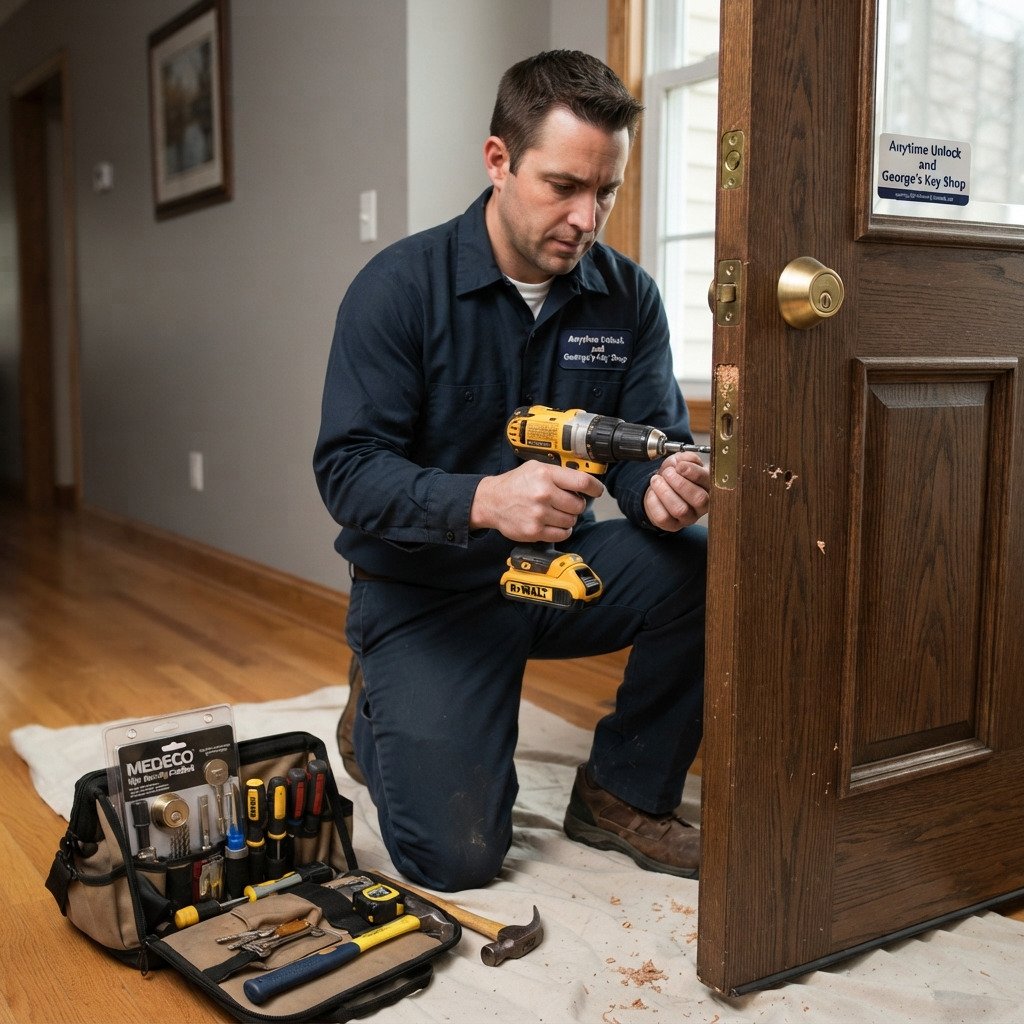
A professional smart lock installation covers more than screwing a new deadbolt into a door. At Anytime Unlock and George's Key Shop, we start by checking the door, frame and existing hardware before we open a single box. A reliable installation includes an inspection, the lock fitting, the electronic setup and a short walkthrough so you know how to use it.
Most homeowners expect the lock to be the only thing that changes. In practice, the door itself often needs attention. A warped door, a loose strike plate or a misaligned latch can keep a smart deadbolt from engaging properly, and a good installer will fix those problems or tell you about them before billing you for the job.
The core services usually include:
- Door and frame inspection to confirm the bore holes, backset and door thickness match the lock
- Hardware fitting of the lock body, deadbolt, strike plate and any required adapters
- Electronic setup including batteries, keypad codes and pairing with a hub or app if the lock uses one
- Testing to confirm the bolt throws fully and the lock responds to every access method
- A walkthrough showing you how to add or remove codes and what to do if the battery runs low
Federal Trade Commission guidance on home security products
Checking Compatibility Before You Book
Before you call anyone, confirm the lock will fit the door you have. Smart locks come in standard configurations, and mismatched hardware is one of the most common reasons an installation stalls or has to be redone. Checking a few measurements takes about ten minutes and can save a return trip.
Start with these details:
- Door thickness. Most residential doors are between 1 3/8 and 1 3/4 inches thick. Measure the edge of the door.
- Backset. Measure from the edge of the door to the center of the existing deadbolt hole. The common sizes are 2 3/8 and 2 3/4 inches.
- Door type. Solid wood, hollow core, steel and fiberglass doors each need different preparation.
- Existing bore holes. Check whether the cross bore and edge bore are already drilled.
- Power and hub needs. Some locks run on batteries only, while others need a hub or Wi-Fi bridge.
A watch-out: many people buy a lock before measuring and then find the backset is wrong. Measure first and bring the product model number to the installer.
Step-by-Step: How a Smart Lock Gets Installed
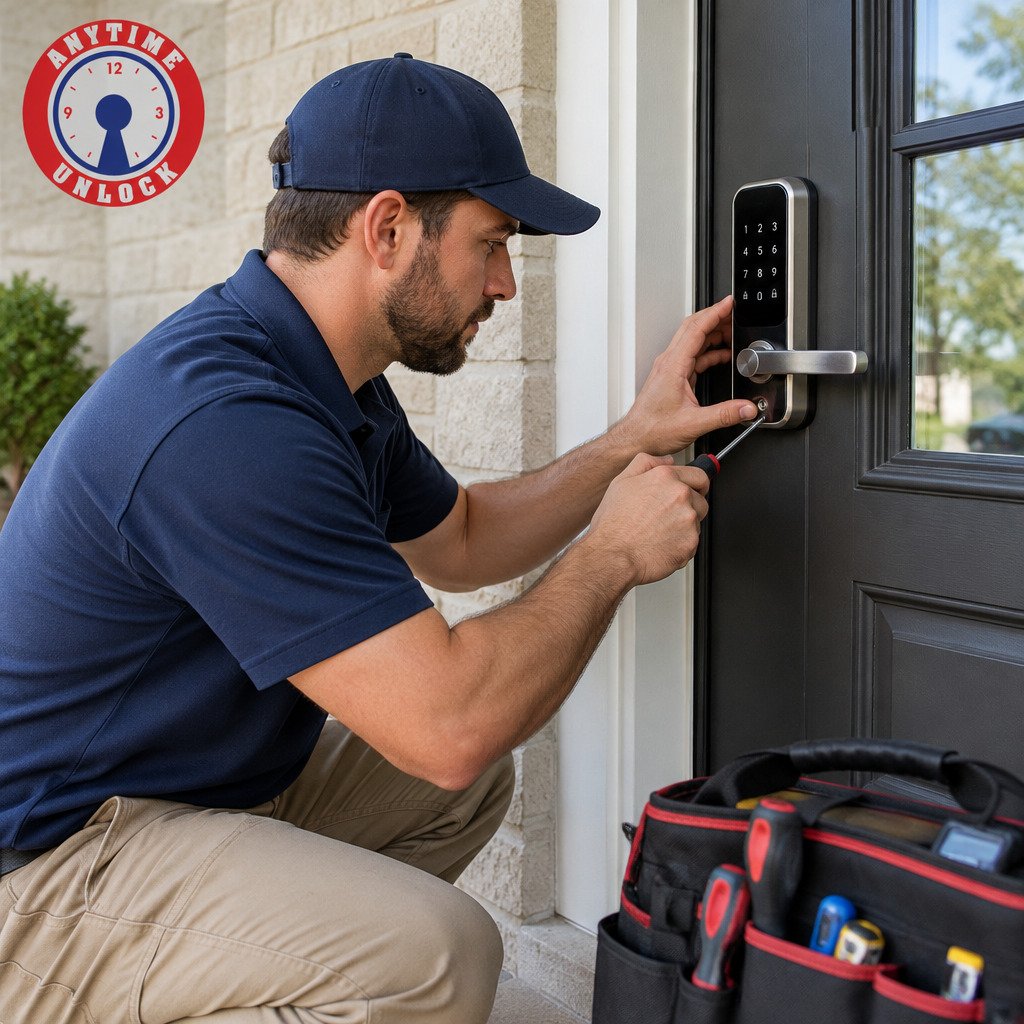
A typical installation follows a predictable sequence, though the details vary by lock model. Knowing the steps helps you judge whether an installer is working carefully.
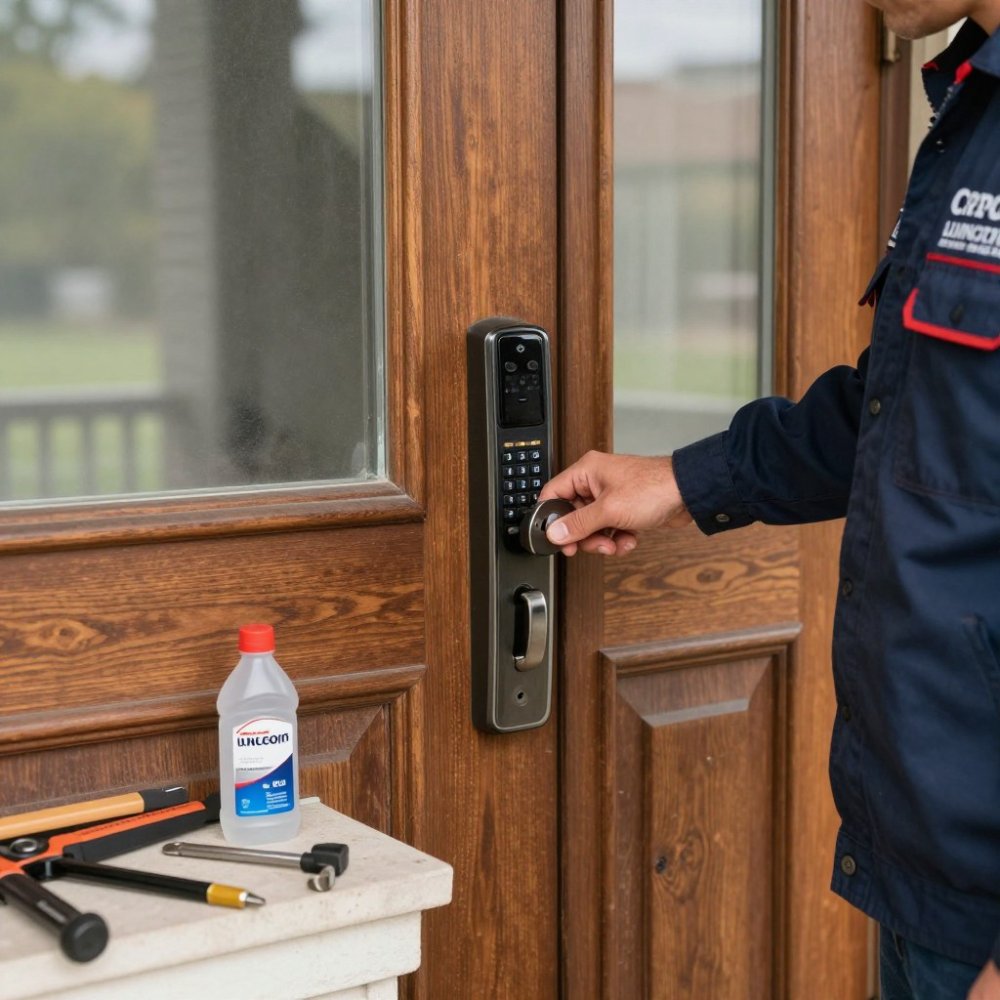
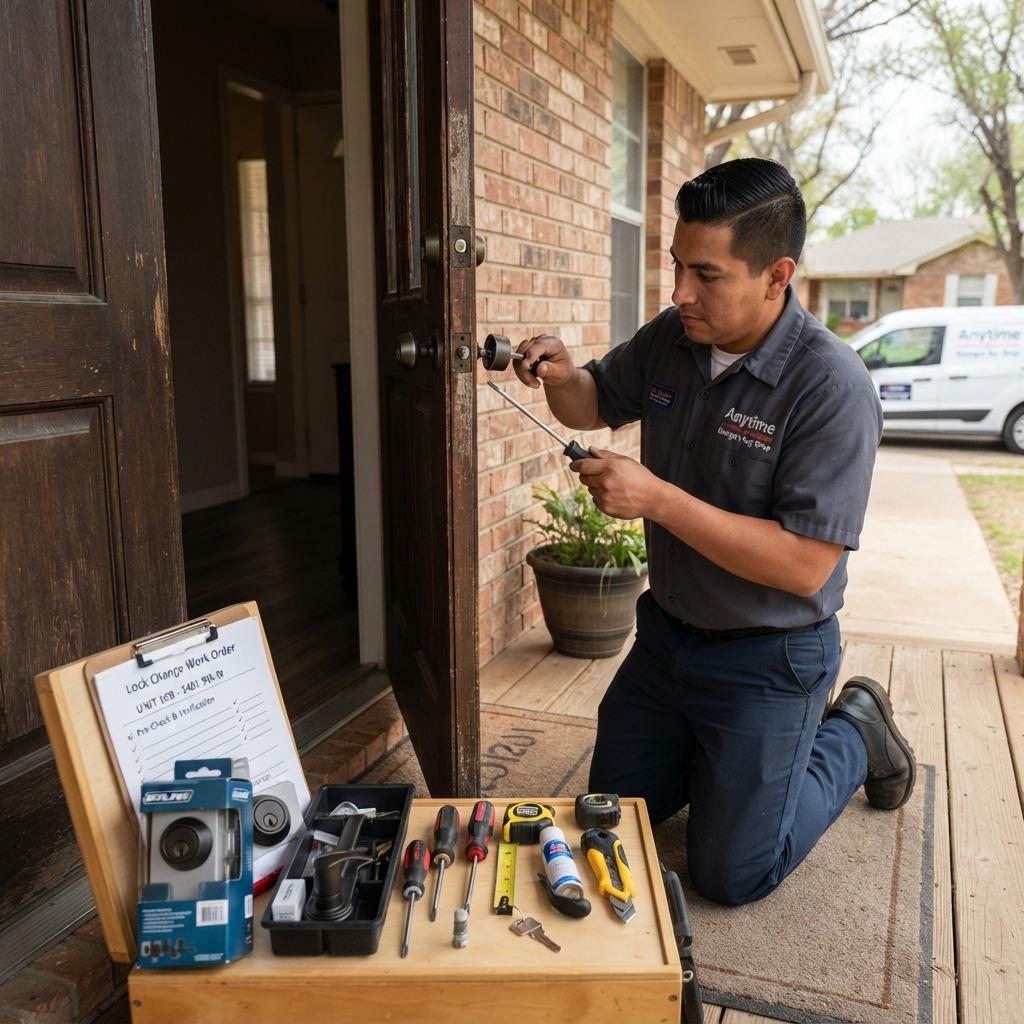
Step 1: Remove the old lock. The installer unscrews the existing deadbolt and strike plate and removes the latch if it is part of the set.
Step 2: Prepare the door. If the bore holes are missing or the wrong size, the installer drills or enlarges them. Hollow core doors often need reinforcement.
Step 4: Install the strike plate. Alignment matters here. A misaligned strike causes the bolt to bind.
Step 5: Set codes and connect the lock. The installer programs the master code, sets up user codes and pairs the lock with any app or hub.
Step 6: Test everything. The bolt should extend and retract smoothly, and every access method should work on the first try.
The installation follows a predictable sequence, and knowing these steps helps you judge whether an installer is working carefully.
| Step | What happens | Note |
|---|---|---|
| 1. Remove the old lock | Unscrew existing deadbolt and strike plate | Latch removed if part of set |
| 2. Prepare the door | Drill or enlarge bore holes | Hollow core doors often need reinforcement |
| 3. Mount assemblies | Keypad outside, motor and control unit inside | Cable runs between the two |
| 4. Install strike plate | Align strike with bolt | Misalignment causes binding |
| 5. Set codes and connect | Program master and user codes, pair app or hub | Pairing applies to app-connected locks |
| 6. Test everything | Check bolt extends and retracts smoothly | All access methods should work first try |
Professional Smart Lock Installation Near Me Cost
Pricing for a professional smart lock installation is not a single number. Our guide to avoiding hidden locksmith service fees covers phone quote scripts, price gouging warning signs and a verification checklist.
The quote rises when the door needs new bore holes, reinforcement, or a strike-plate adjustment that turns into frame work. Ask the installer to separate three lines on the estimate: labor, hardware or adapters, and any door preparation.
The factors that move the final bill:
- Lock type. A battery keypad with a manual thumbturn is the simplest labor. Fingerprint readers, app-connected models and locks with a Wi-Fi bridge or hub add pairing and setup time.
- Door condition. A solid wood door with clean 2 1/8-inch cross bore and 1-inch edge bore is fast. Hollow-core doors, steel doors and doors with a misaligned strike or a swollen frame take longer and may need parts.
- Number of doors. Multiple locks at one address usually lower the per-door labor because travel and setup are shared. Ask whether the second and third locks are priced at the same rate.
- Service timing. Ask whether scheduled weekday appointments differ in price from after-hours, weekend or emergency calls, and get that difference stated up front, not added at the invoice.
- Travel and service area. Confirm whether the quote includes travel or adds a separate fee for the trip.
Watch out: a quote that is dramatically lower than others often excludes the strike-plate work or the door preparation, which then appears as an add-on after the old lock is off the door.
Ask for an itemized quote before work begins and confirm three things in writing: the labor rate, whether parts and adapters are included, and whether the installer charges a return-trip fee if the lock needs a follow-up adjustment. For broader guidance on protecting yourself from unexpected service charges, the Federal Trade Commission consumer advice on home repair scams is a useful reference.
A practical way to compare two quotes is to give both installers the same inputs: the lock model number, the door thickness, the backset and a photo of the existing deadbolt. With identical inputs, the difference between quotes is labor and travel, not guesswork about the job.
Reading Professional Smart Lock Installation Near Me Reviews
Reviews can tell you a lot about how an installer handles problems, but they need careful reading. Look for patterns rather than single standout comments. Repeated mentions of punctuality, clean work and clear communication matter more than a five-star rating alone.
Pay attention to how the installer responded to negative reviews. A calm, specific reply that explains what was fixed is a better sign than a flood of generic praise. Also check whether reviews describe the same type of lock and door you have. A review about a commercial door says little about a residential keypad install.
A common mistake is treating review volume as proof of quality. A smaller number of detailed, recent reviews from customers with similar jobs is often more useful.
Testing and Troubleshooting After Installation
A finished installation should be tested before the installer leaves, and the test should follow a fixed sequence so nothing is skipped.
1. Mechanical throw. With the door open, throw the bolt by hand and by motor. It should extend fully without dragging.
2. Strike alignment. Look at where the bolt enters the strike.
3. Power and battery. Confirm the battery type and count the lock specifies, and check the low-battery warning behavior in the manual.
4. Every access method. Test the keypad code, the app, the physical key and any fingerprint reader separately.
5. User codes. Add a second code, unlock with it, then delete it and confirm it no longer works.
**6.
7. Backup entry. Confirm the physical key works from outside, and know where the backup key is kept.
Common problems and what they usually mean:
- The bolt sticks or drags. The strike plate needs adjusting or the door has shifted. This is a hardware alignment issue, not a lock defect.
- The keypad does not respond. Check the batteries first, then confirm the lock is in normal mode rather than pairing mode.
- Codes fail intermittently. Reset the codes and confirm no two users share the same code. Some locks also limit the number of codes, so check the count.
- The app does not connect. Confirm the hub or Wi-Fi bridge is powered and within range, and that the lock firmware is current.
- The lock works manually but not by motor. This usually points to battery level or a binding bolt, in that order.
Plan for outages before they happen.
National Institute of Standards and Technology guidance on access control
Booking Your Best Professional Smart Lock Installer in Lubbock
Choosing an installer in Lubbock comes down to a few checks: whether they inspect the door before quoting, whether they give a written estimate, whether they offer after-service support and whether they answer the phone. Anytime Unlock and George's Key Shop has been serving Lubbock since 1971 and provides residential, automotive and commercial locksmith services, including 24/7 mobile service.
Before you book, have these ready:
- The lock model number and door measurements
- A description of the current lock and any problems you have noticed
- Your preferred appointment window
For residential projects, our locksmith services in Lubbock overview explains the work we handle and how response times work. If you are weighing a rekey instead of a full replacement, our guide to the real cost of rekeying a home breaks down the factors that affect price. To see what is included in our service call, you can also review our towing and repossession offerings and the Halo Program if you want more information about how we work with customers.
When you are ready, contact Anytime Unlock and George's Key Shop for a free quote. We will check your door, confirm the lock fits and give you a clear answer before any work starts.
Frequently Asked Questions
How much does it cost to have a smart lock installed?
Installation pricing depends on the lock model, the door type, whether the existing deadbolt must be replaced or re-bored, and whether the job is a residential or commercial one. Because costs vary this much, Anytime Unlock and George's Key Shop provides quotes after reviewing your specific door and lock. Ask for an itemized quote that lists the hardware, the labor, any call-out fee and any extra work such as door alignment, so there are no surprises when the technician arrives. Get a Free Quote before the appointment to compare the total against what you expected.
Can a locksmith install a smart lock?
Yes. A professional locksmith can install residential and commercial smart locks, including keypad, keyless entry and electronic deadbolt models. The technician checks that the door is square, the strike plate lines up and the existing bore holes fit the new hardware. Anytime Unlock and George's Key Shop, which has served Lubbock since 1971, handles both the physical installation and the configuration of user codes and access settings, so the lock is ready to use when the technician leaves.
Will a smart lock fit my existing door and deadbolt?
Many smart locks fit standard doors with a common bore and backset, but compatibility depends on door thickness, door type, the existing bore hole spacing and the lock manufacturer's specifications. Check the door's thickness and backset measurements before buying hardware, and confirm that the model supports your door type. A locksmith can verify fit on site and tell you whether a different model or a minor door adjustment is needed. Bring the old lock or a photo of the door edge to speed up the check.
How long does professional smart lock installation take?
Installation time depends on the lock, the door and whether re-boring or alignment is needed, so ask at booking how long the visit is expected to take. The technician removes the old hardware, installs the new lock, tests the bolt and latch, programs the user codes and walks you through the app or keypad. Ask at booking how long the visit is expected to take so you can plan your time.