 how-to
How to Improve Home Security on a Budget
Table of Contents
- Start With a Free Security Walkthrough of Your Home
- Budget-Friendly Door Security: Where to Spend First
- Cheap Home Security Upgrades for Windows and Sliding Doors
- DIY Home Security Tips for Lighting and Landscaping
- How to Improve Home Security Without an Alarm System
- Renter-Friendly and Reversible Security Measures
- Protecting Valuables, Privacy, and Your Wi-Fi Network
- Conclusion
- Frequently Asked Questions
Last Updated: October 12, 2026
Start With a Free Security Walkthrough of Your Home
Learning how to improve home security on a budget starts with a free walkthrough of your own home. This guide covers the steps that matter most, from locks to lighting. A typical break-in takes only a few minutes, and most intruders enter through an unlocked door or window, so simple, cheap fixes often beat expensive gear.
Below, we'll show you how to find your weak spots and fix them in one weekend for far less than a monitored alarm contract.
Check Every Entry Point
Walk your home the way a stranger would, starting at the street.
- Front and back doors, including the garage door
- Sliding patio doors and their tracks
- Ground-floor windows and basement windows
Most people miss second-floor windows above a porch or garage roof, easy to reach with a ladder left outside.
Score Each Entry Point Instead of Just Listing It
Score every entry point from 1 to 3 on two questions:
- How easy is it to reach without being seen? (1 = fully visible from the street, 3 = hidden by a fence, hedge, or dark corner)
- How easy is it to open? (1 = locked deadbolt in a solid frame, 3 = unlocked, loose, or a hollow-core door)
Add the two numbers. Anything scoring 5 or 6 goes to the top of your list: a back door hidden behind an overgrown hedge with a loose latch is a 6, while a front door facing the street with a solid deadbolt is a 2. This ranks your to-do list so your first dollars land where an intruder would actually try first.
Test Existing Locks and Latches
Try every lock yourself. Jiggle the door. Push on it with your shoulder.
- Does the deadbolt extend at least one inch into the frame?
- Does the door wobble when you push it?
- Do any locks feel loose or turn too easily?
Write down what you find. That list becomes your shopping list.
Turn the Walkthrough Into a Tiered Budget Plan
Once your entry points are scored, sort the fixes into three spending tiers so a tight budget isn't wasted on the wrong item.
- Tier 1, Under $50, do this weekend. Longer hinge screws, a heavy-duty strike plate, dowels cut for sliding-door tracks, adhesive door and window alarms, and timer plugs for lamps. These are the highest-impact-per-dollar fixes and need only a screwdriver.
- Tier 2, Roughly $50 to $200, do this month. A quality single-cylinder deadbolt, a rekey of your existing locks, a plug-in motion floodlight for the darkest corner, and one entry camera. Spread these out; each one closes a specific gap from your scored list.
- Tier 3, Over $200, only after Tiers 1 and 2. A bolted safe, a video doorbell, or a monitored plan. These add convenience and records more than they add raw deterrence, so they come last.
Buying a smart lock first is backwards: a smart lock on a frame held by short screws fails the same as a cheap one. Fix the frame, then upgrade the lock.
Budget-Friendly Door Security: Where to Spend First
Doors deserve your first dollars because they are the most common entry point. A solid deadbolt, a reinforced strike plate, and longer hinge screws cost little and stop a hard kick without a whole new door.
Deadbolts, Strike Plates, and Hinge Screws
Upgrade in this order:
- Deadbolt. Choose one with a one-inch throw. A single-cylinder deadbolt is fine for most homes.
- Strike plate. Replace the short factory plate with a heavy-duty one. It comes with screws long enough to reach the wall stud.
- Hinge screws. Swap the short screws in your door hinges for three-inch screws. This ties the door to the frame.
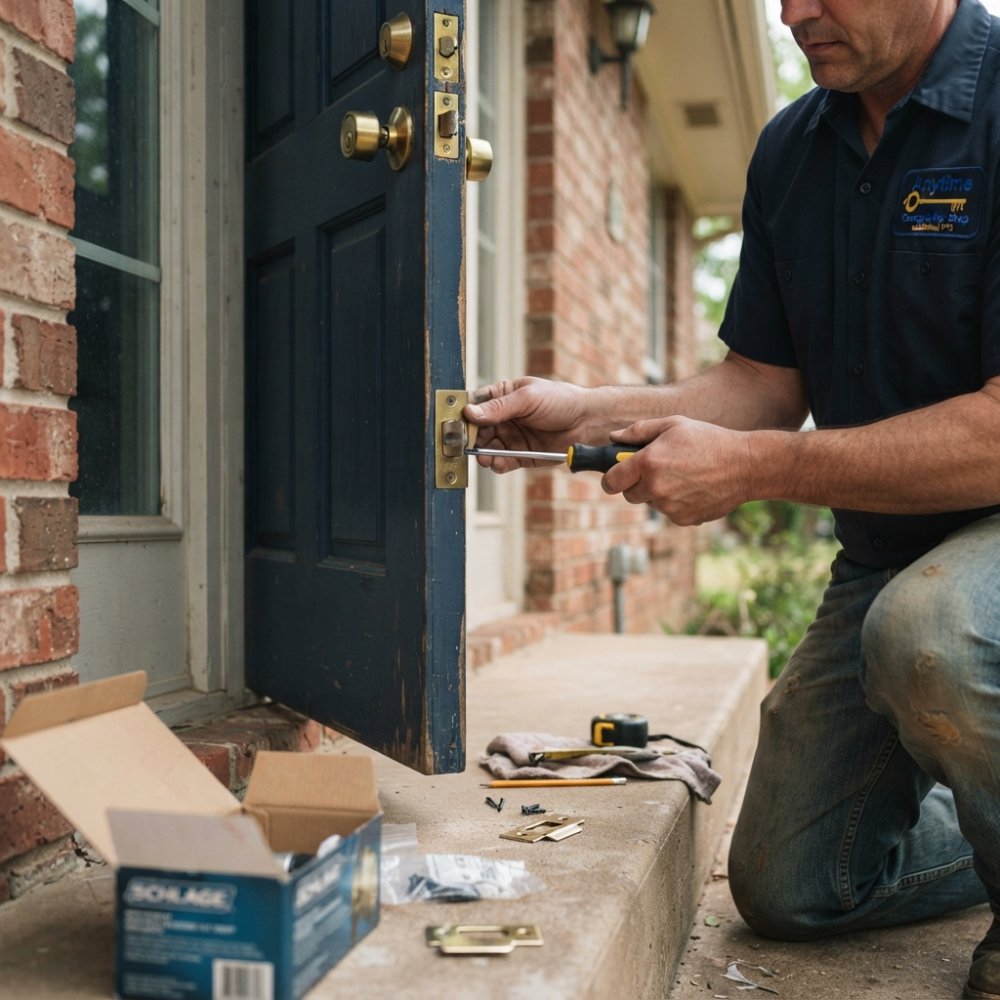
These three fixes take an afternoon. Fix the frame before buying a fancy smart lock.
When to Call a Locksmith for Rekeying
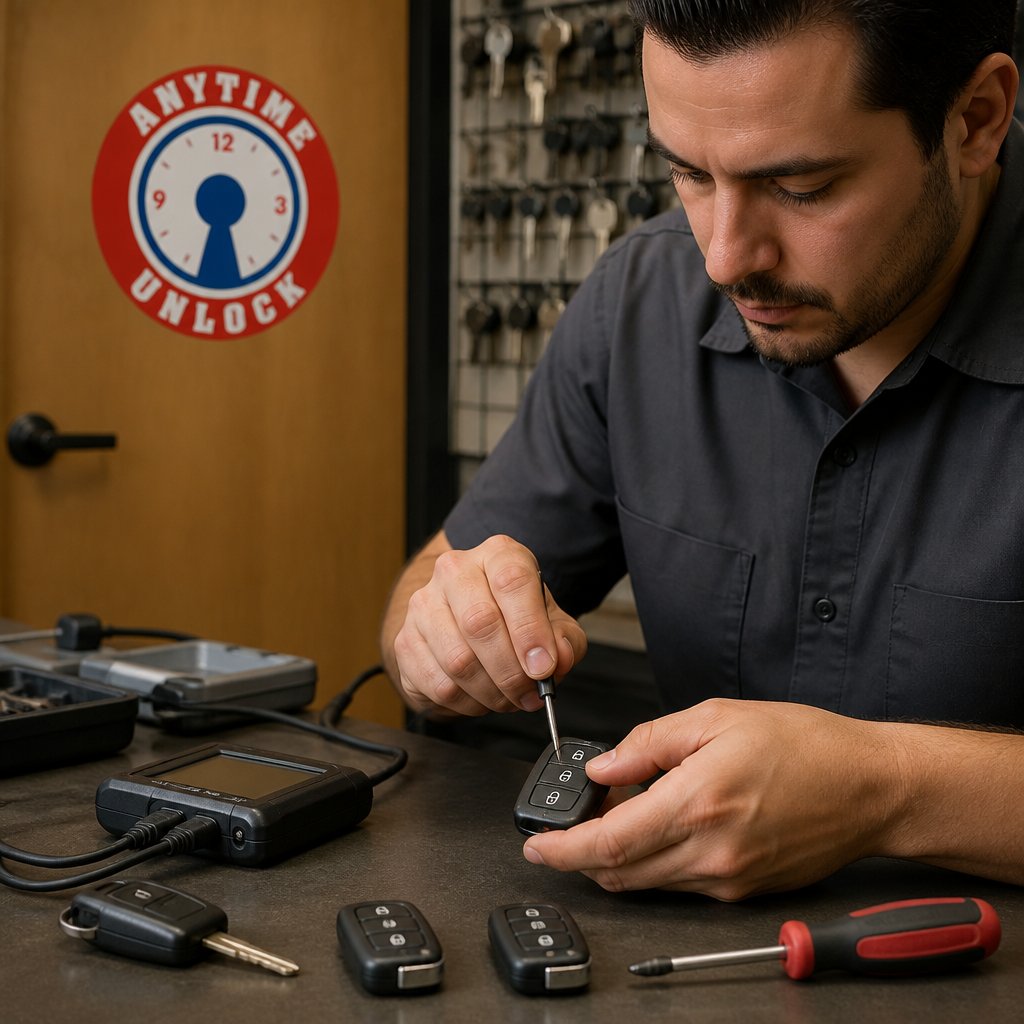
Rekeying changes the pins inside your existing lock so old keys stop working, costs less than replacing hardware, and takes minutes per lock. Call a locksmith when:
- You just moved in and don't know who has keys
- A roommate, contractor, or ex-partner still has a key
- You lost a key with your address attached to it
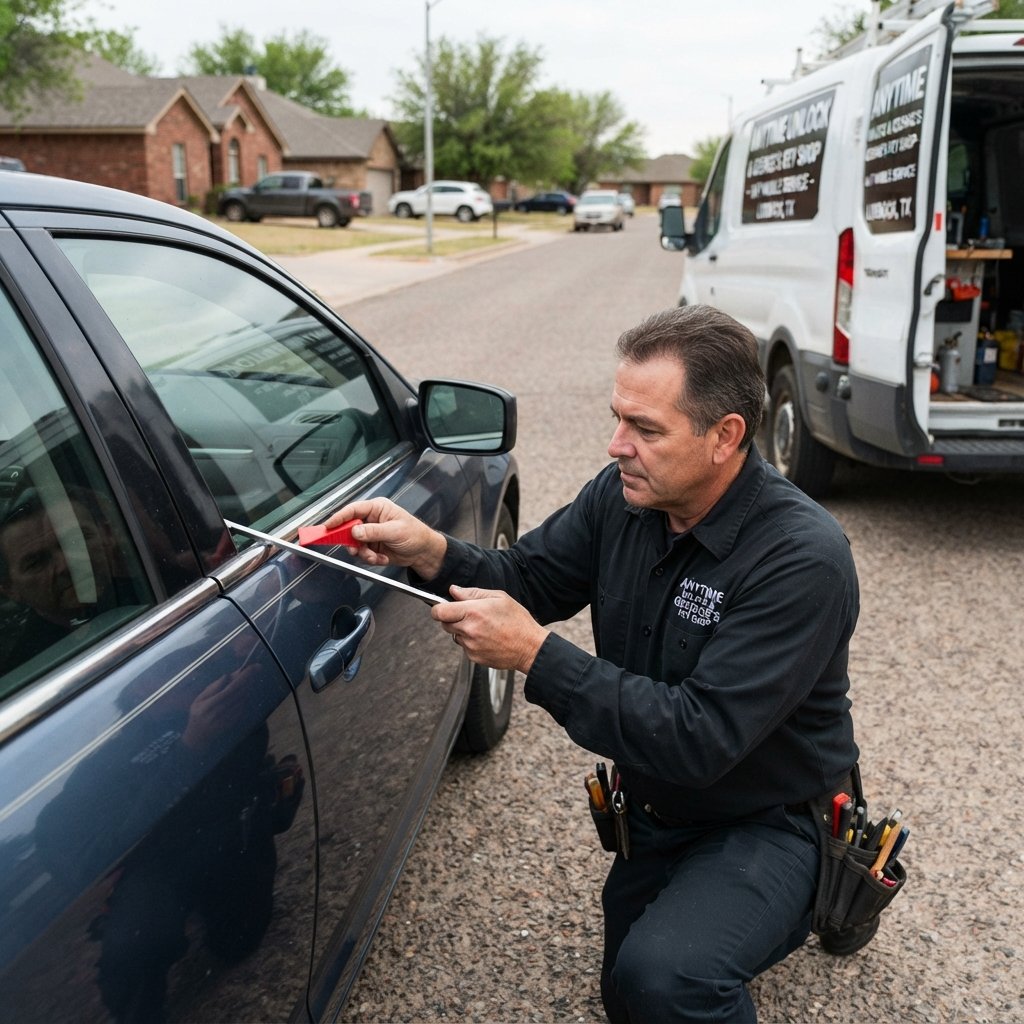
Our team at Anytime Unlock and George’s Key Shop handles residential rekeys and can match all your doors to a single key. We quote the job before we start, so the price you hear is the price you pay.
Cheap Home Security Upgrades for Windows and Sliding Doors
Windows and sliding doors are the second most common way in, and the fixes are among the cheapest. Most intruders avoid breaking glass because it makes noise, looking instead for an unlocked window or a sliding door that lifts out of its track.
- Add a window lock or a pin that stops the sash from sliding up
- Cut a dowel or wooden dowel to fit the track of every sliding door and window
- Place a charley bar or a metal bar in the track of a sliding patio door
For basement windows, a simple grate or strong screen adds another layer. None of these items cost much, and you can install them yourself with basic tools.
DIY Home Security Tips for Lighting and Landscaping
Light and clear sightlines are the most underrated cheap home security upgrades. Burglars pick homes that look empty and offer cover; light and open landscaping take both away cheaply.
Motion-Sensing Lights, Timers, and Floodlights
- Put motion-sensing lights at every exterior door and along dark walkways
- Add floodlights to the corners of the house and over the garage
- Use timer lights inside so a room lights up on schedule while you're out
Solar path lights are cheap and need no wiring. For porch and garage lights, a plug-in motion fixture is a quick swap.
Trim Hedges and Keep Sightlines Clear
Overgrown shrubs hide a person at a window. Keep hedges below window height and trim tree limbs that reach the second floor.
- Trim bushes near doors and windows to under three feet
- Keep the front entry visible from the street
- Remove ladders, tools, and trash bins that help someone climb
How to Improve Home Security Without an Alarm System
You can build real home security without an alarm by using standalone devices and simple habits. A monitored system is a subscription, not a requirement; standalone alarms, cameras, and occupied-home routines cover most of what a full system does for far less.
Door and Window Alarms That Stand Alone
These run on batteries and stick to the door or frame. When the contact breaks, a loud siren sounds. No monthly fee, no wiring.
- Door alarms for entry doors and the garage-to-house door
- Window alarms for ground-floor and basement windows
- Glass-break sensors for large panes near a door
A loud siren is the point. It draws attention, and attention is what a burglar wants to avoid.
Security Cameras and Occupied-Home Habits
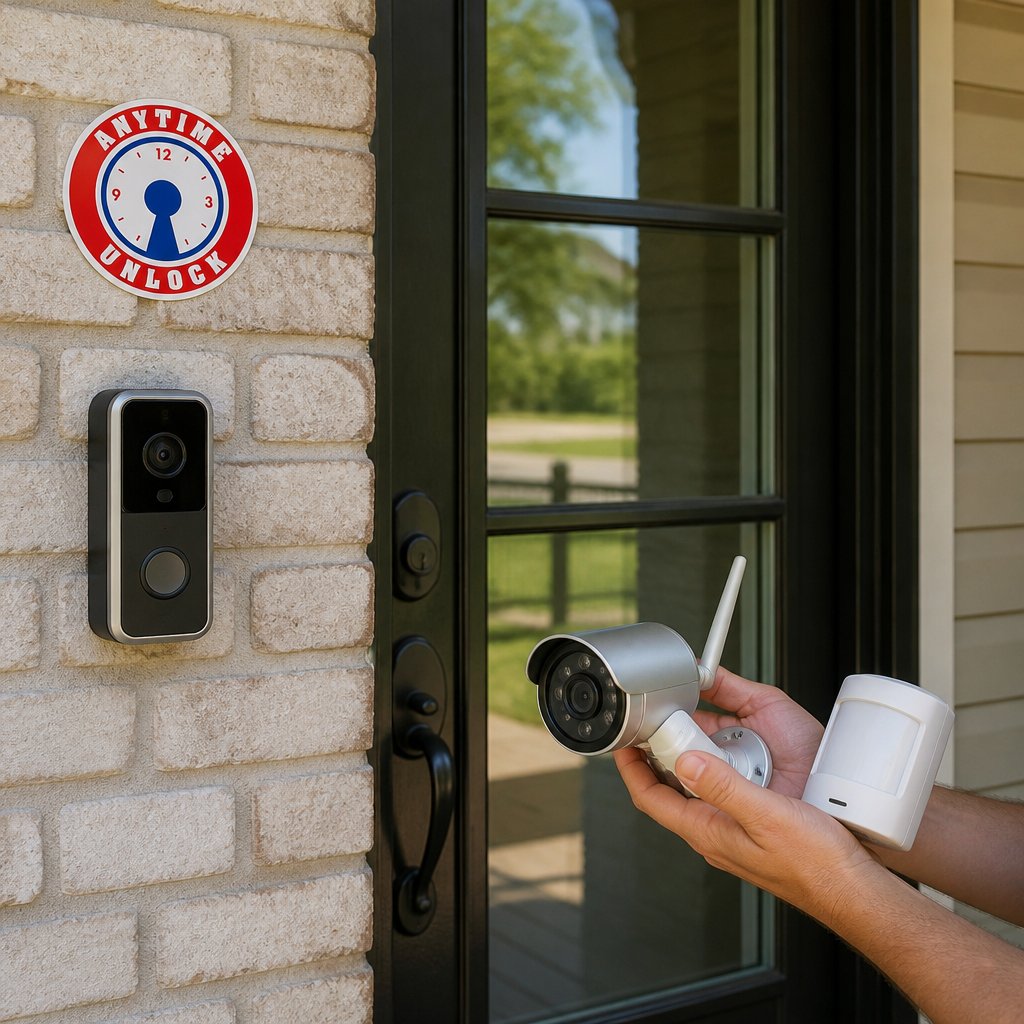
A camera is a deterrent and a record, even a cheap wireless camera at the front door helps. Cover the door, driveway, and any side gate.
Habits matter just as much:
- Leave a car in the driveway when you travel
- Ask a neighbor to collect mail and flyers
- Put interior lights and a TV on timers
Renter-Friendly and Reversible Security Measures
Renters can improve security without losing a deposit using gear that comes off clean and needs no new holes.
- Portable door locks that wedge under the handle and plate
- Window and door alarms that stick on with adhesive
- Dowel rods in sliding door tracks
Ask your landlord before any change. A rekey is the one upgrade most landlords approve, because it protects their property too.
Protecting Valuables, Privacy, and Your Wi-Fi Network
Your valuables and your network both need protecting, and the fixes are cheap. A safe, a locked cabinet, and a few router settings cover the basics. Don't skip the digital side: a smart lock or camera is only as safe as your Wi-Fi, and a cheap camera that leaks your video is worse than none.
Secure the Physical Valuables First
- Store valuables and spare electronics in a safe or a bolted cabinet. Bolt it down; an unbolted safe is a carry-out box.
- Photograph serial numbers and keep the list in the cloud, not on the same device a thief would take.
- Put passports, titles, and small high-value items in a fire-rated box or a bank safe-deposit box.
The Connected-Device Risks Most Guides Ignore
Every camera, doorbell, and smart lock is a small computer on your network, creating three risks worth understanding before you buy:
- Account takeover. If someone guesses your camera login, they can watch your home live. Change the default username and password on day one, and never reuse a password from another site.
- Network exposure. A cheap device with outdated firmware can be a doorway into your whole network. Put smart devices on a separate guest Wi-Fi network so a compromised camera can't reach your laptop.
- Privacy and data. Many budget cameras send clips to a cloud server and may share footage with third parties. Read the privacy settings, turn off anything you don't need, and prefer local storage (an SD card) when the camera supports it.
Cheap Settings That Close the Digital Gaps
- Use a strong, unique router password and turn on WPA3 encryption (or WPA2 if your router is older).
- Change the default login on every camera and smart lock, and enable two-factor authentication where offered.
- Keep device firmware updated; most budget brands push security fixes through firmware.
| Risk | Cheap Fix | Why It Works |
|---|---|---|
| Kicked door | Heavy strike plate + 3-inch screws | Ties the frame to the stud |
| Open window | Window lock or pin | Stops the sash from lifting |
| Sliding door | Dowel in the track | Blocks the panel from sliding |
| Dark yard | Motion floodlight | Removes cover, draws attention |
| Old keys | Rekey | Retires every old key |
| Weak Wi-Fi | WPA3 + new password | Blocks network access |
| Camera account hacked | Unique password + 2FA | Stops remote live viewing |
| Device on main network | Guest Wi-Fi for smart gear | Limits what a breach can reach |
Conclusion
Every home has a weak spot, and most are cheap to fix. Start with a walkthrough, then spend your first dollars on doors, windows, and light. If you need a rekey, a lock upgrade, or a commercial door fixed fast, Anytime Unlock and George’s Key Shop is here around the clock with 24/7 mobile service, expert residential and commercial locksmithing, and clear quotes before we start.
Frequently Asked Questions
What are the cheapest ways to improve home security?
Start with the entry points. Replacing short hinge screws with 3-inch screws costs a few dollars and makes doors far harder to kick in. Add a dowel or pin in sliding door tracks, upgrade strike plates, and install motion-sensing lights at every exterior door. These cheap home security upgrades deliver the biggest return for the least money, and most can be finished in a single afternoon.
How can I secure my home without an alarm system?
You do not need a monitored alarm to make a home harder to break into. Reinforced door hardware, window locks, standalone door and window alarms, exterior lighting on timers, and keeping the home looking occupied cover the basics. A locksmith can rekey your locks so old keys stop working, which is one of the most effective steps after moving in. Layer these measures so a burglar has to defeat several defenses, not just one.
What security measures do burglars avoid most?
Burglars skip homes that look occupied and take too long to enter. Motion-sensing floodlights, visible cameras, trimmed hedges that remove hiding spots, and reinforced doors with deadbolts all add time and risk. A home where someone is clearly around, with a car in the driveway and lights on timers, gets passed over. The goal is not a fortress; it is making your house the harder target on the block.
Should I rekey my locks after moving into a new home?
Yes. You have no way of knowing how many copies of the old keys exist or who holds them. Rekeying changes the internal pins so old keys stop working while you keep the same lock hardware, which usually costs less than replacing every lock. A mobile locksmith can rekey all exterior doors in one visit, and it pairs well with other budget-friendly door security upgrades like new strike plates and longer hinge screws.